

Thinking of adding a new garden shed? It’s an exciting step towards a tidier, more stylish outdoor space. But with so many options, the journey can feel overwhelming. Wood, metal, or plastic? What size will actually fit your garden? And what are the rules around UK planning permission? It’s easy to feel stuck before you’ve even started, worried about making a costly mistake.
At Living Chic, we believe transforming your garden should be a joy. That’s why we’ve created this definitive guide to help you find the perfect shed with complete confidence. We’ll walk you through everything, from comparing the pros and cons of different materials to understanding the crucial steps of preparing a solid base. By the end, you’ll have all the expert knowledge you need to choose a durable, high-quality shed that fits your space, suits your style, and becomes a long-lasting investment.
Key Takeaways
- Choosing the right material is key. Compare wood, metal, and plastic to find the perfect balance of style, durability, and value for your garden.
- Avoid costly mistakes by learning how to accurately measure your space and understand common shed sizes before you make a purchase.
- Navigate UK planning permission with ease and master the essential steps for preparing a solid, level base for your new structure.
- A garden shed is more than storage; it’s a stylish extension of your home. Discover how it can become your new office, gym, or creative retreat.
Beyond Storage: Unlocking the Potential of Your Garden Shed
When you think of a garden building, what comes to mind? For many, it’s a simple space for tools and a neglected lawnmower. But today, the humble shed has transformed. It’s no longer just about storage; it’s about adding stylish, functional living space to your property without the expense and hassle of a full extension. Ask anyone What is a Shed?, and while the classic definition holds true, its potential has grown immensely. A well-chosen structure can become a chic focal point in your garden, a versatile room that adapts to your family’s changing needs.
The Classic Storage Solution
Of course, the primary role of a garden building remains invaluable. It provides a secure, dry place to organise your outdoor essentials, decluttering your home and garage. A quality shed is perfect for:
- Storing garden tools, lawnmowers, and bulky equipment safely.
- Keeping patio furniture and BBQs protected from the harsh UK winter.
- Organising bicycles, sports gear, and children’s outdoor toys.
The Hobbyist’s Workshop or Studio
Imagine a dedicated space where you can pursue your passions without interruption. A garden building offers a blank canvas to create your personal sanctuary. It can be transformed into a productive workshop for DIY projects, a peaceful art studio filled with natural light, a private home gym for your daily workout, or a tranquil yoga and meditation room. It’s your space, designed for your hobbies.
The Modern Garden Office or ‘She Shed’
With the rise of working from home in the UK, creating a separation between work and home life is crucial. A garden office provides a quiet, professional environment just steps from your back door. Beyond work, these spaces are perfect as relaxing ‘she sheds’ or ‘man caves’ – a private retreat to read, relax, or entertain a friend. Just as you would carefully select bedroom furniture to create a personal sanctuary indoors, furnishing your garden office thoughtfully will make it a true haven. Top Tip: To make it a year-round haven, consider adding insulation and having a qualified electrician install power and lighting for comfort and connectivity.
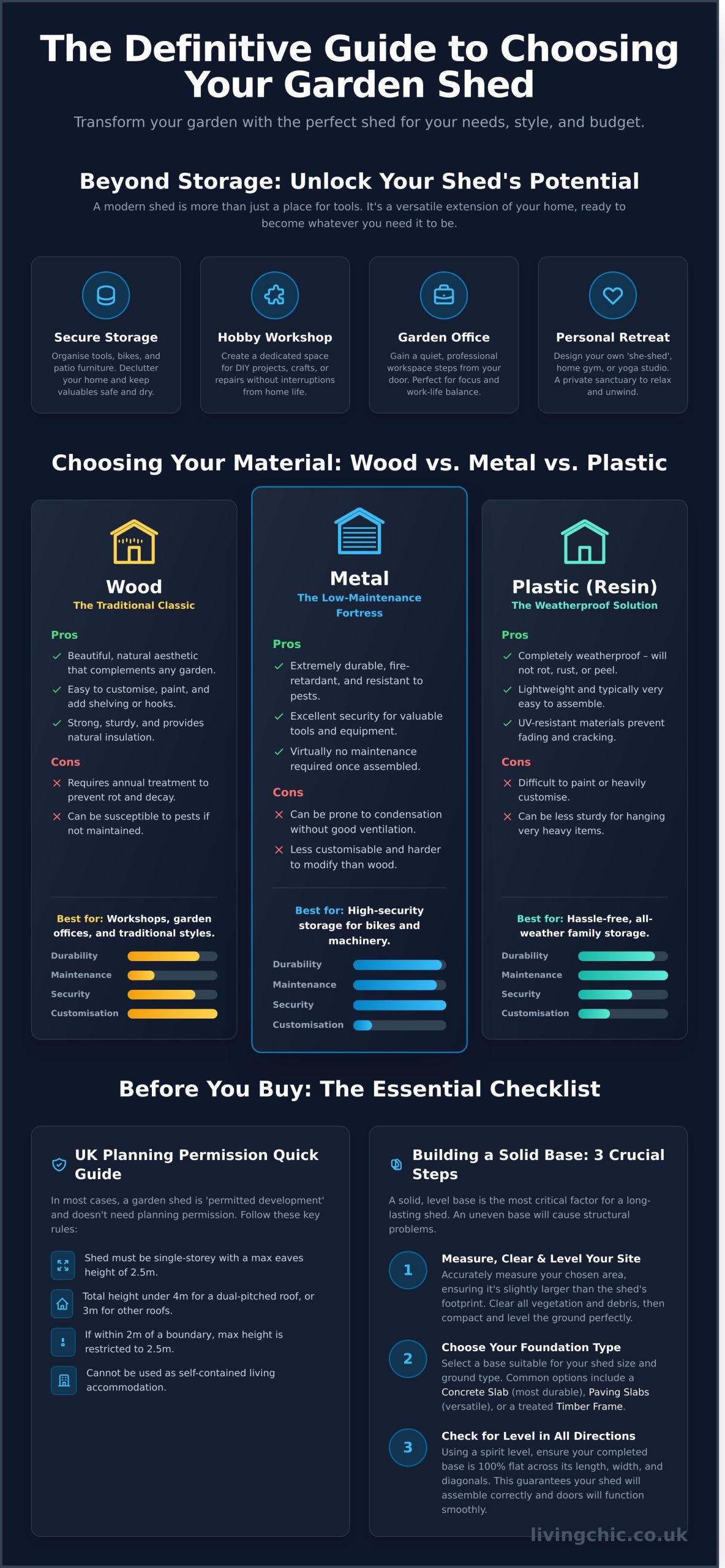
Choosing Your Shed Material: Wood vs. Metal vs. Plastic
Once you know what size shed you need, your next big decision is the material. This is arguably the most important choice you’ll make, as it directly impacts your shed’s cost, durability, appearance, and the amount of maintenance it will require over its lifetime. From the timeless appeal of timber to the modern convenience of plastic, each material offers a unique set of benefits.
To help you find the perfect match for your garden, budget, and lifestyle, we’ve broken down the three main options. Use this simple comparison to see which material ticks the right boxes for you. For a comprehensive breakdown of every factor to consider — from cladding types to roof styles — the ultimate guide to choosing the perfect garden shed is an excellent resource to read alongside this article.
| Material | Pros | Cons |
|---|---|---|
| Wood | Classic aesthetic, easy to customise, strong & sturdy. | Requires regular maintenance, can be prone to rot. |
| Metal | Excellent security, highly durable, low maintenance. | Prone to condensation, less traditional look. |
| Plastic (Resin) | Weatherproof, no rot or rust, lightweight & easy to build. | Less customisable, can be less sturdy than alternatives. |
Wooden Sheds: The Traditional Choice
For a classic garden look, nothing beats a wooden shed. Its natural aesthetic blends beautifully with outdoor spaces, and it’s incredibly easy to customise with a coat of paint, shelves, or window boxes. The sturdy construction makes it ideal for use as a workshop, a potting shed, or even a stylish garden office. However, this timeless charm requires upkeep; you’ll need to treat the wood annually to protect it from rot and weather damage.
Best for: Garden offices, workshops, and creating a traditional garden focal point.
Explore our classic Wooden Sheds
Metal Sheds: The Secure & Low-Maintenance Option
If security and durability are your top priorities, a metal shed is an outstanding choice. Built from robust galvanised steel, these sheds are fire-retardant and offer superior protection for valuable tools and equipment. They require virtually no maintenance and won’t fall victim to rot or pests. The main drawback can be condensation, so good ventilation is key. While less customisable than wood, their modern, industrial look is a popular and practical choice.
Best for: Secure storage for bikes and tools, especially in high-risk areas.
Plastic (Resin) Sheds: The Weatherproof & Easy-Care Solution
For a truly hassle-free storage solution, look no further than plastic. Made from high-quality, UV-resistant resin, these sheds will not rust, rot, or fade, and only need an occasional wash to look their best. They are typically the easiest to assemble, often featuring a simple click-and-lock panel design. While they may not feel as substantial as wood or metal, their lightweight yet durable nature makes them perfect for smaller gardens and anyone seeking a low-maintenance life. For a deeper dive into what today’s resin options can offer, our plastic shed ultimate UK buyer’s guide covers everything from sizing to base preparation in detail.
Best for: Hassle-free storage, smaller gardens, and modern homes.
Shop our low-maintenance Plastic Sheds
Getting the Size and Style Right for Your Garden
A new shed is more than just storage; it’s a stylish and practical extension of your home. Choosing the right one starts with two key decisions: size and style. A little planning now ensures your new garden building is a perfect fit for your space and your needs, transforming your garden into a more organised, chic, and usable area.
How to Measure Your Space
Understanding Roof Styles
The roof doesn’t just keep the rain out; it defines the building’s character and usability. The most popular styles offer distinct, practical benefits to suit any garden layout:
- Apex Roof: The classic, triangular ‘V’ shape. This design provides maximum headroom down the centre, making it ideal for a workshop or for storing tall items like rakes and strimmers.
- Pent Roof: A modern, single-sloping roof panel. This contemporary style is perfect for positioning against a wall or fence, as it neatly directs rainwater away to one side.
- Reverse Apex Roof: A clever variation of the apex style where the door is placed on the longer side, offering a wider entrance and different internal layout options.
Considering Doors, Windows, and Layout
The final details make all the difference to how you use your storage. Consider how access and light will work for you.
A single door is often sufficient for hand tools and smaller items. However, if you’re storing a lawnmower, bicycle, or bulky garden furniture and equipment, wide-opening double doors are essential for hassle-free access. For natural light, windows are a fantastic addition, creating a pleasant space for potting shed activities like nurturing plants or pursuing hobbies. For storing valuable equipment, however, a windowless design offers superior security, keeping your tools safely out of sight.
Before You Buy: The Crucial Steps of Planning & Preparation
A little preparation goes a long way in transforming your garden space. Before you choose the perfect shed, taking care of these essential planning steps will ensure your new garden building is stylish, stable, and lasts for years to come. This is the crucial homework that guarantees a successful project.
Do You Need Planning Permission for a Shed in the UK?
For most garden buildings, the good news is you likely won’t need it. Outbuildings often fall under ‘permitted development’ rights, meaning you don’t need to apply for planning permission. However, to comply, you must follow key rules:
- Height: The structure must be single-storey with a maximum eaves height of 2.5 metres if it is within two metres of your property boundary.
- Size: It must not, along with other garden buildings, take up more than 50% of the total land around your original house.
- Usage: The building cannot be used as self-contained living accommodation.
Rules can differ for listed buildings or in Conservation Areas. If you have any doubts, a quick call to your local council’s planning office is always the best course of action.
Why a Solid Shed Base is Essential
A perfectly level and solid base is the most critical factor for the longevity and functionality of your new structure. It is a non-negotiable step that protects your investment by:
- Preventing structural stress that can cause the frame to twist and panels to misalign.
- Ensuring doors and windows open and close smoothly without sticking or jamming.
- Raising the floor off the damp ground, which is vital for protecting the timber from rot and decay.
Choosing the Best Shed Base: Concrete, Paving Slabs, or Wood
The right base depends on your shed’s size, your ground conditions, and your budget. Here are the most popular and effective options to consider:
- Concrete Slab: The most durable and permanent solution. A concrete base is ideal for larger, heavier structures and provides maximum stability for a lifetime of use.
- Paving Slabs: A fantastic and versatile alternative that is often easier for a DIYer to install. Slabs provide a solid, level surface and can be adjusted or removed in the future if needed.
- Timber Bearer Frame: A cost-effective choice for smaller, lighter sheds on ground that is already fairly level. It also allows for good air circulation beneath the floor.
- Plastic Grid Systems: A modern, eco-friendly option. These interlocking grids are simple to lay and, when filled with gravel, create a strong and free-draining foundation.
Shed Assembly, Maintenance, and Long-Term Care
Your new garden storage is an investment in both the style and functionality of your outdoor space. With the right approach to assembly and a little ongoing care, your chosen structure will serve you beautifully for years to come, keeping your garden organised and looking chic.
DIY Assembly: What to Expect
Most quality sheds arrive as a manageable flat-pack kit, complete with detailed instructions. While it’s a straightforward project, we always recommend treating it as a two-person job for safety and ease. Before you begin, lay out all the components to ensure everything is present. You’ll typically need a basic toolkit:
- A drill with a screwdriver bit set
- A spirit level to ensure a perfectly square build
- A sturdy stepladder for roof and high-level work
Maintaining Your Shed for Years to Come
Protecting your shed from the unpredictable British weather is key to its longevity. Maintenance needs vary by material, but a few simple checks will keep any model in top condition.
- Wooden Sheds: Treat your shed annually with a quality wood preservative, stain, or paint. This vital step prevents rot and keeps the timber looking its best.
- Metal Sheds: Regularly check for any scratches in the paintwork. Touching these up quickly with a suitable metal paint will prevent rust from taking hold.
- Plastic (Resin) Sheds: The ultimate in low maintenance. A simple wash with warm, soapy water once or twice a year is all that’s needed to keep it looking new.
- General Checks: For all types, periodically clear debris from gutters, check roofing felt for any tears after strong winds, and lubricate door hinges for smooth operation.
Security and Organisation Tips
Find Your Perfect Garden Shed Today
As we’ve explored, choosing a garden shed is about much more than just storage. It’s a journey of matching the right material and size to your garden’s unique style, and carefully planning to ensure your new structure is a perfect fit. From a simple storage solution to a stylish home office or a creative workshop, the right shed truly unlocks your garden’s hidden potential and becomes a valuable extension of your home.
Armed with this knowledge, you’re now ready to find the perfect model that will serve you for years to come. At Living Chic, we make that final step both easy and exciting. We offer a wide range of styles and materials to match any aesthetic, all at competitive prices to suit every budget. With our reliable UK-wide delivery direct to your door, transforming your outdoor space has never been more accessible.
Ready to bring your vision to life? Explore our complete collection of stylish garden sheds and discover the perfect addition for your home. Your dream garden is just a click away.
Frequently Asked Questions
Do I need planning permission to build a shed in my garden in the UK?
In most cases, you do not need planning permission for a garden shed, as it falls under ‘permitted development’. However, there are rules to follow. The shed must be single-storey with a maximum eaves height of 2.5 metres. It cannot be placed forward of the principal elevation of your house. If you live in a conservation area or a listed building, different rules apply, so it’s always wise to check with your local council for complete peace of mind.
What is the best and most durable material for a garden shed?
The best material depends on your needs for style, maintenance, and durability. Metal sheds offer excellent security and are very low-maintenance, resisting rot and pests. Plastic (resin) sheds are lightweight, easy to assemble, and will not rust or rot. For a classic, customisable look, a quality wooden garden shed is a fantastic choice, though it does require regular treatment to protect it from the elements and ensure a long life.
What is the best base for a shed to be placed on?
A solid, level base is crucial for the stability and longevity of your shed. A poured concrete slab is the most permanent and durable option, perfect for larger structures. Paving slabs laid on a bed of sand and cement are another excellent, long-lasting choice. For a quicker and more eco-friendly solution, a plastic grid base filled with gravel provides a strong, level, and well-draining foundation that’s simple to install.
How long does it take to assemble a flat-pack garden shed?
Assembly time depends on the shed’s size, material, and your DIY skill level. As a general guide, two people can typically assemble a small or medium metal or plastic shed in around 3-5 hours. A larger wooden shed might take a full day. We always recommend reading the instructions fully before you begin and having a friend on hand to help, as it makes handling the panels much safer and easier.
Can you put a shed directly on the grass or soil?
We strongly advise against placing any shed directly onto grass or soil. An unprepared surface will be uneven, causing the frame to twist and preventing doors from closing properly. More importantly, direct contact with the damp ground will cause a wooden floor to rot quickly and a metal base to rust. Investing in a proper, level base is the single best way to protect your new garden storage and ensure it lasts for years to come.
How do I stop condensation from forming in my metal shed?
Preventing condensation in a metal shed is all about managing airflow and moisture. Ensure your base has a damp-proof membrane to stop moisture rising from the ground. Good ventilation is key, so open the door on dry days or consider adding vents if your shed doesn’t have them. Avoid storing damp items inside and consider using an anti-condensation lining kit or standalone dehumidifiers for extra protection.