
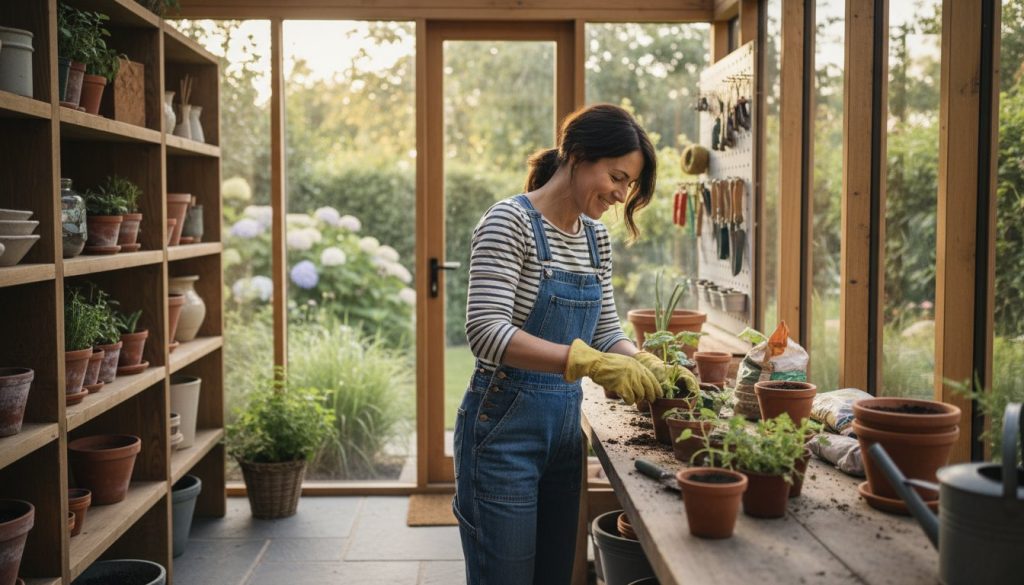
Tired of tripping over garden forks and searching for that missing trowel? If your gardening supplies are scattered and you dream of a dedicated, weatherproof space to nurture your plants, you’re not alone. A cluttered patio or a damp garage corner simply can’t compare to the organised bliss of a purpose-built workspace. This is where the perfect potting shed comes in, transforming not just your gardening habits but the entire look and feel of your outdoor sanctuary. It’s more than just storage; it’s a stylish hub for creativity and cultivation.
In this ultimate guide, we demystify the entire process of finding your ideal garden haven. We’ll walk you through choosing the right size and materials, understanding the key features to look for, and providing chic design inspiration to make it your own. Get ready to discover how to create a functional, beautifully organised space that will elevate your garden and bring joy to every planting season. Your dream potting shed is closer than you think.
Key Takeaways
- Define your garden’s needs and available space to select the perfect shed material and size for long-lasting style.
- Transform your interior by making the potting bench a stylish focal point and using clever vertical storage to maximise your workspace.
- A solid and level base is the non-negotiable first step to guarantee your potting shed stands strong for years to come.
- Elevate your garden’s aesthetic by choosing a shed design that seamlessly complements your home’s existing style.
What is a Potting Shed? (And Why Every Gardener Dreams of One)
For any passionate gardener, the dream of a dedicated space to nurture plants is a powerful one. Enter the potting shed: a stylish and practical hybrid that combines the light-filled benefits of a greenhouse with the sturdy storage of a garden shed. Its primary purpose isn’t just storage; it’s a purpose-built workspace designed for sowing seeds, potting on plants, and escaping into your hobby. While a standard garden shed (for a full definition, see Wikipedia’s article on What is a Shed?) is a fantastic place to keep your lawnmower and tools, a potting shed is built for creation. It’s defined by its key features: large windows to welcome sunlight and a sturdy potting bench ready for work.
More Than Just Storage: Key Differences
A potting shed is engineered specifically for gardening, setting it apart from a simple storage unit in several crucial ways:
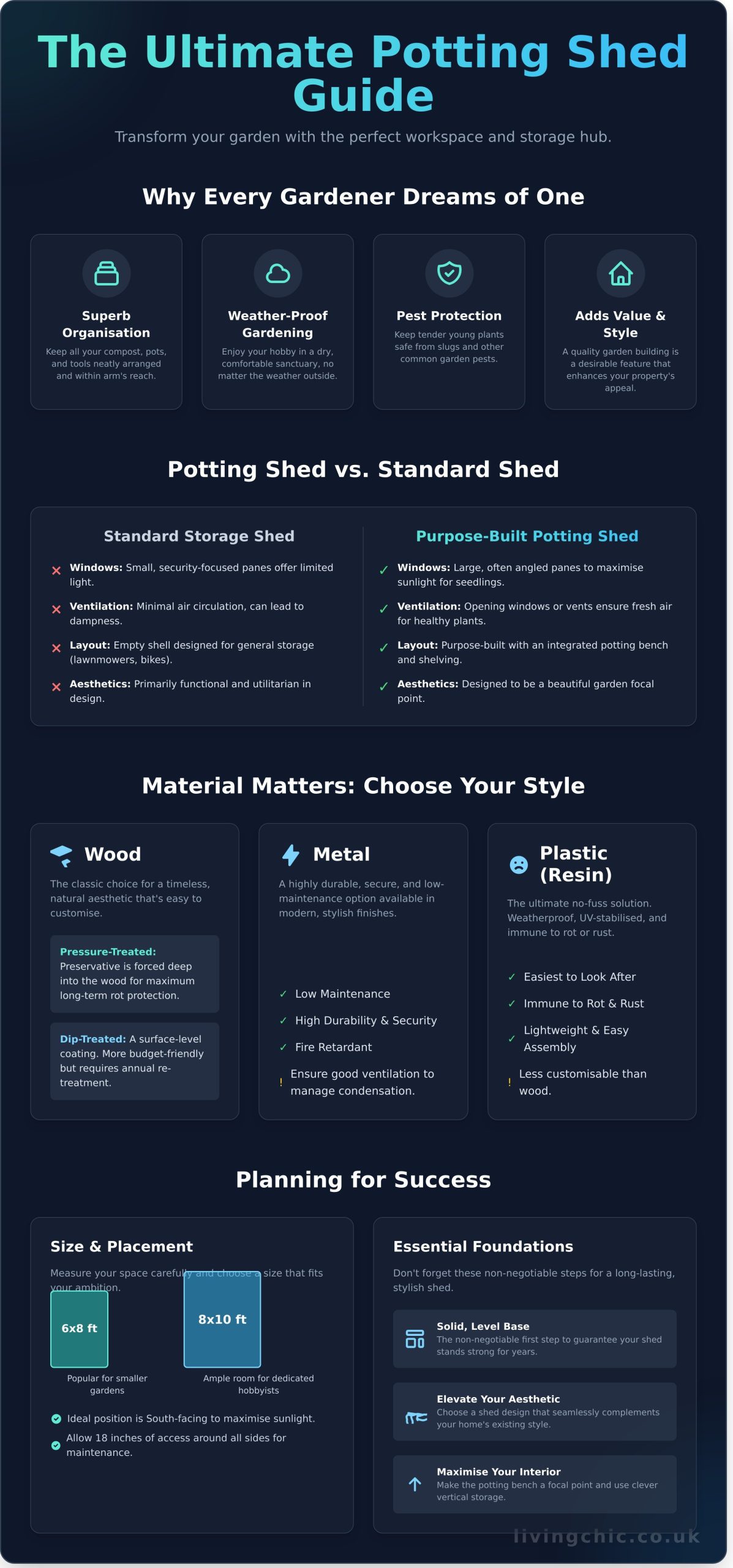
- Windows and Light: Unlike the small, security-focused windows of a typical shed, a potting shed boasts large panes of glass, often angled or south-facing, to maximise natural light for healthy seedling growth.
- Ventilation: Good air circulation is vital for preventing damp and disease. Most designs include opening windows or vents to keep the air fresh and your plants thriving.
- Layout: The interior is designed for activity. A built-in potting bench at a comfortable working height is standard, often with shelving above and storage below for compost and tools.
- Aesthetics: These structures are often designed to be a beautiful focal point in your garden, with charming features like stable doors, decorative finials, and stylish paint finishes.
The Benefits of a Dedicated Gardening Space
Investing in a dedicated gardening hub brings a wealth of practical advantages that can transform your hobby and your garden.
- Superb Organisation: Imagine all your compost, pots, seeds, and hand tools neatly organised and within arm’s reach. No more cluttered kitchen worktops or trips back and forth to the garage.
- Weather-Proof Gardening: Don’t let the classic British rain stop you. Your new hub provides a dry, comfortable sanctuary to enjoy your hobby, whatever the weather.
- Pest Protection: Keep your tender young plants safe from common garden pests like slugs and snails, giving them the best possible start in a controlled environment.
- Adds Value and Style: A well-chosen, quality garden building is a highly desirable feature that can enhance the appeal and even the value of your property.
How to Choose the Perfect Potting Shed: A Buyer’s Guide
Choosing the perfect potting shed transforms a simple garden structure into a hub of creativity and growth. It’s about finding the right balance between your gardening ambitions, your available space, and your budget. This guide will walk you through the key considerations to help you select a stylish and practical sanctuary for your plants.
Size and Placement: Planning Your Space
Before you fall in love with a design, measure your intended location carefully. Remember to allow at least 18 inches of access around all sides for construction and future maintenance. For optimal plant growth, a south-facing position is ideal to maximise sunlight through the windows. Inside, ensure there’s enough room for a potting bench, tool storage, and space to move comfortably. A 6×8 ft model is a popular choice for smaller gardens, while an 8×10 ft provides ample room for the dedicated horticulturist.
Material Matters: Wood, Metal, or Plastic?
The material you choose affects both the look and longevity of your potting shed. Each has distinct advantages, allowing you to prioritise either traditional style, low maintenance, or value. If you’re weighing up the pros and cons of each option in more detail, our ultimate guide to choosing the perfect garden shed covers everything from cladding types to UK climate considerations.
- Wooden Sheds: The classic choice for a timeless, natural aesthetic. Wood is easy to customise with paint and accessories. For maximum durability, look for pressure-treated timber which forces preservative deep into the wood for long-term protection. Dip-treated models offer a more budget-friendly alternative but will require annual re-treatment.
- Metal Sheds: A highly durable, secure, and low-maintenance option. Modern metal sheds come in a range of stylish finishes and are fire-retardant, but it’s important to ensure they have good ventilation to manage condensation.
- Plastic (Resin) Sheds: The ultimate no-fuss solution. These sheds are weatherproof, UV-stabilised, and completely immune to rot or rust, making them incredibly easy to look after.
Essential Features to Look For
The right features can elevate your gardening experience from a chore to a joy. When comparing models, keep an eye out for these practical details:
- Windows: Large panes are essential for light. Toughened glass offers premium clarity and durability, while shatterproof styrene is a safe and cost-effective alternative.
- Stable Door: This split-door design is a fantastic feature, allowing you to ventilate the interior on warm days while keeping pets or young children safely out.
- Integral Potting Bench: Check if a bench or shelving is included. A built-in workspace saves you time and ensures you have a dedicated area for potting from day one.
- Roofing Material: Standard mineral felt does the job, but an upgrade to high-quality roof shingles or translucent polycarbonate panels can offer superior weather protection and a more polished look.
Designing Your Dream Interior: Layout & Organisation
A great potting shed is more than just storage; it’s a dedicated hub for your gardening passion. Thoughtful design transforms the interior into an efficient, inspiring workspace. The key is to create distinct zones for your tasks-potting, storing, and relaxing-and to make the potting bench the true star of the show.
The Perfect Potting Bench Setup
This is your primary workstation, so comfort and function are paramount. Aim for a bench at waist height with a depth that keeps everything within easy reach. A surface made from galvanised steel or treated wood is durable and simple to wipe clean. For ultimate convenience, incorporate a cut-out for a soil tray or bin to make potting and clean-up a breeze. Add a shelf just above the bench to keep small tools, pots, and labels organised and accessible.
Smart Storage Solutions for Tools & Supplies
Maximise every inch of wall space to keep your floor clear and your tools handy. An organised system saves time and frustration, letting you focus on your plants.
- Vertical Racks: Use wall-mounted hooks or racks for long-handled tools like spades, rakes, and forks.
- Open Shelving: Sturdy shelves are perfect for storing stacks of pots, seed trays, and watering cans.
- Clear Containers: Keep seeds, fertiliser, and twine in labelled, clear bins so you can see what you have at a glance.
- Secure Storage: A small, lockable cabinet is a wise addition for storing sharp tools or garden chemicals safely.
Adding Comfort and Personal Touches
Make your potting shed a place you genuinely want to spend time in. Paint the interior in a light, bright colour like white or a soft pastel to make the space feel larger and more inviting. Lay down durable rubber matting for a comfortable, non-slip floor. Add a comfortable stool for taking a well-deserved break, and finish the space with string lights or a small radio to create a truly personal garden retreat.
By blending practical organisation with personal style, you can create a sanctuary that is both highly functional and a joy to be in. Ready to build your own haven? Find the perfect structure to start with in our collection of garden sheds.
Potting Shed Styles: Find an Aesthetic to Match Your Garden
A potting shed is more than just a practical workspace; it’s a key feature that enhances your garden’s overall landscape. Choosing a style that complements your home and outdoor space transforms it from a simple utility building into a beautiful, cohesive focal point. Whether your taste is timelessly traditional or sleekly modern, there’s a high-quality design ready to elevate your garden and provide the perfect sanctuary for your horticultural pursuits.
Classic & Traditional Charm
For a look that will never go out of style, the classic potting shed is the perfect choice. It evokes the charm of a traditional English country garden, creating a picturesque and inviting workspace. This style works beautifully alongside period properties and lush cottage gardens, adding a touch of timeless elegance and character.
- Key Features: A traditional apex roof, sturdy shiplap cladding, and elegant sash-style windows for a light, airy feel.
- Colour Palette: Soft sage greens, classic creams, or a quality natural wood stain to blend with nature.
- Finishing Touches: Accessorise with stacks of terracotta pots, vintage gardening tools, and charming hand-painted wooden signs.
Modern & Contemporary Designs
If your home and garden have a clean, contemporary feel, a modern design will integrate seamlessly. These structures prioritise function and form, with sharp lines and an uncluttered aesthetic that makes a chic statement. They are an ideal fit for urban gardens, minimalist landscapes, or as a stylish contrast to modern architecture.
- Key Features: A sloped pent roof, minimalist clean lines, and large panes of glass or bi-fold doors to maximise natural light.
- Colour Palette: Sophisticated greys, bold black, or a pop of an accent colour for a truly striking impact.
- Finishing Touches: Style with sleek metal shelving, monochrome pots, and high-quality, ergonomic tools.
Rustic & Reclaimed Looks
Create a wonderfully quaint and natural vibe with a rustic or reclaimed look. This style celebrates the beauty of natural materials and charming imperfections, giving your garden a relaxed, lived-in feel. It’s the perfect hideaway for those who love a more organic, wild, or naturalistic garden design that feels connected to the earth.
- Key Features: Characterful reclaimed wood, charming stable-style doors, and weathered, rustic finishes that improve with age.
- Colour Palette: Natural wood tones and muted, earthy colours that blend harmoniously with the surrounding greenery.
- Finishing Touches: Complete the look with galvanised metal containers, antique finds from local markets, and rambling climbing plants.
No matter your aesthetic, the right design can turn a practical space into your garden’s crowning glory. Explore our curated collection of stylish garden accessories and buildings to find the perfect match for your home.
Getting Started: Base, Assembly & Essential Maintenance
You’ve chosen the perfect potting shed to transform your garden into a stylish and productive space. Now for the practical steps to ensure it stands strong for years to come. A little preparation and ongoing care are key to protecting your investment and making the most of your new garden hub.
Preparing the Perfect Base
A solid, perfectly level base is non-negotiable. It’s the foundation for the entire structure, preventing the timber from warping over time, which can cause issues with door alignment and window fitting. Ensure your base is slightly larger than the shed’s footprint to promote water runoff. Key options include:
- Concrete Slab: The most durable and permanent solution for a lifetime of stability.
- Paving Slabs: A popular and effective choice, often simpler to lay than a full concrete base.
- Timber Frame: A cost-effective and practical option, especially for slightly uneven ground.
For best results, always consult the manufacturer’s specific recommendations for your chosen model.
Assembly: DIY vs. Hiring a Professional
Most of our sheds arrive as a flat-pack kit with comprehensive instructions, making DIY assembly a manageable project for two people with basic tools. Before committing, honestly assess your skills and the time you have available. If you’re short on either, hiring a local handyman or joiner is an excellent alternative. Remember to factor the cost of professional assembly, which can range from £150 to over £400 depending on size, into your total budget.
Please note: While Living Chic offers reliable delivery across the UK, we do not provide an installation service for our garden buildings.
Essential Maintenance for Longevity
A little annual care will keep your new potting shed in prime condition. To protect the timber and maintain its quality finish, apply a high-quality wood preserver or treatment every year. It’s also wise to check the roofing felt for any damage after strong winds or storms and keep gutters clear of leaves and debris. A quick spray of lubricating oil on door hinges and window latches will keep everything operating smoothly through the seasons. For a broader look at garden shed types, materials, and planning considerations, our comprehensive guide covers everything you need to know before making your final decision.
Your Stylish Garden Haven Awaits
As we’ve explored, a potting shed is far more than just a place for tools-it’s a dedicated sanctuary for your green-fingered passions. By carefully considering the right size, style, and interior layout, you can create a space that is not only highly practical but also a beautiful extension of your home and garden, perfectly tailored to your needs.
Ready to turn your dream into a reality? At Living Chic, we make it easy. We offer a fantastic selection of high-quality garden buildings, with a wide variety of styles to suit any aesthetic and competitive prices to fit every budget. With our reliable UK-wide delivery, your perfect garden retreat is closer than you think.
Explore our stylish range of garden sheds and buildings and start creating your personal haven today. Happy gardening!
Frequently Asked Questions About Potting Sheds
Do I need planning permission for a potting shed in the UK?
In most cases, you will not need planning permission for a potting shed in the UK, as it falls under ‘permitted development’. This generally applies if the shed has a single storey with a maximum eaves height of 2.5 metres and is located behind your house. However, rules can vary, especially in conservation areas or if the structure will cover more than 50% of your garden. It is always a wise precaution to check with your local planning authority before you begin construction.
What is the difference between a potting shed and a greenhouse?
The key difference lies in their primary function and design. A greenhouse is a fully glazed structure designed to maximise sunlight for growing plants. In contrast, a potting shed is a stylish hybrid. It combines the solid walls and roof of a traditional shed, providing storage and a sheltered workspace, with a bank of windows on one side. This allows you to pot plants and nurture seedlings in a protected, light-filled environment, offering the best of both worlds for any keen gardener.
How can I get electricity and water to my potting shed?
Getting utilities to your shed requires professional installation for safety. For electricity, a qualified electrician must run a steel-wired armoured cable from your home’s consumer unit, burying it at the correct depth. For water, a simple solution is to install a water butt to collect rainwater from the shed roof. For a mains supply, a plumber can lay a lagged, outdoor-grade pipe underground to prevent it from freezing during colder months, connecting it to an outdoor tap.
What is the best way to heat a potting shed in winter?
To protect tender plants from frost, several heating options are available. If your shed has electricity, a thermostatically controlled electric fan heater or a small oil-filled radiator provides efficient, adjustable warmth. For off-grid sheds, a quality paraffin heater is a reliable choice for maintaining a frost-free temperature. Insulating the windows with horticultural bubble wrap is also a very cost-effective way to retain heat and keep your plants safe through the winter.
How do I secure my potting shed and the tools inside?
Securing your potting shed is essential for protecting your valuable tools. Start by fitting a high-quality, close-shackle padlock to a strong hasp and staple. Reinforce the door hinges with security screws that are difficult to remove. Inside, consider chaining expensive items like lawnmowers together or storing them in a lockable cabinet. A motion-activated security light or a simple battery-powered shed alarm can also act as an effective deterrent for would-be thieves.
What are the best flooring options for a potting shed?
The best flooring is both durable and practical. A solid concrete base is the most robust option, easy to sweep and resistant to rot. For a timber shed, a floor built from pressure-treated bearers and exterior-grade plywood is a popular choice. To enhance this, you can lay interlocking rubber tiles or heavy-duty vinyl on top. These surfaces are non-slip, waterproof, and provide a comfortable, easy-to-clean workspace for all your gardening projects.