

Choosing the perfect garden shed can feel overwhelming. You’re faced with a world of options-wood, metal, or plastic? What on earth is ‘shiplap’ cladding? And how can you be sure you’re picking a size that will fit everything from the lawnmower to your garden furniture? It’s enough to make anyone put the project on hold. But a quality shed is more than just storage; it’s a stylish and practical extension of your home that can transform your garden.
That’s why we’ve created this ultimate guide. Consider this your friendly expert, here to cut through the jargon and simplify the entire process. We’ll walk you through everything, from choosing the right material for the UK climate to understanding planning permission and preparing the perfect base. By the end of this article, you’ll have the confidence and knowledge to select a durable, stylish shed that perfectly suits your needs, enhances your garden, and will last for years to come.
Key Takeaways
- Understand the key differences between wood, metal, and plastic to choose the perfect material for your garden style and needs.
- Discover how to accurately assess your space and storage needs to select a garden shed size you won’t regret later.
- Get the essential pre-purchase checklist, covering the non-negotiable solid base and when you might need planning permission in the UK.
- Master the details, from choosing the right roof style to simple maintenance tips that will protect your investment for years to come.
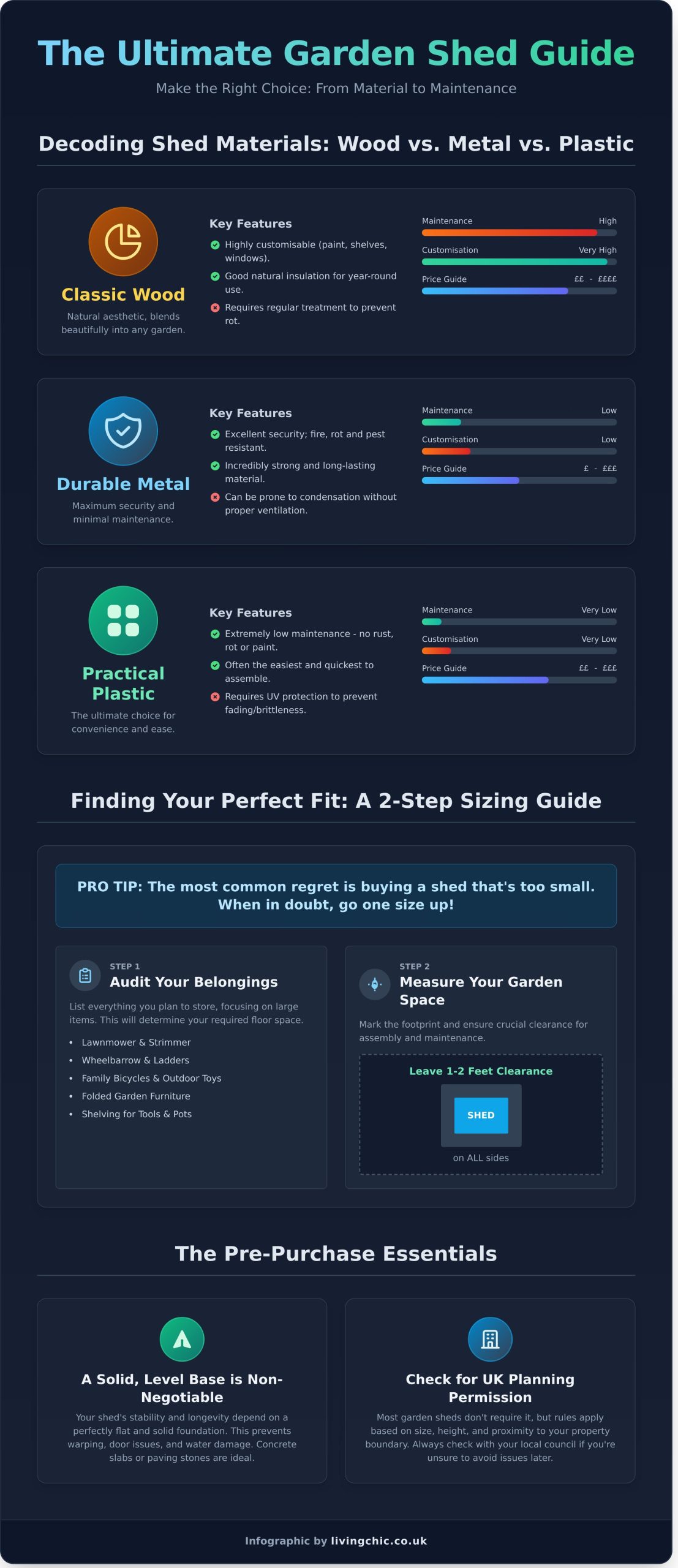
Decoding Shed Materials: Wood vs. Metal vs. Plastic
Your journey to finding the perfect garden shed starts with one crucial decision: the material. This choice will define its look, longevity, and how much time you’ll spend on upkeep. But before we compare the main options, it’s helpful to understand exactly What is a garden shed? and its potential. The three leading contenders are classic timber, modern metal, and practical plastic, each offering a unique blend of style, durability, and value to transform your outdoor space.
Classic Wooden Sheds
For a timeless, traditional look, nothing compares to wood. A timber shed blends beautifully into any garden setting, offering a natural and warm aesthetic. Its greatest strength is customisation; you can easily paint it to match your home, add internal shelving, or even install new windows. Wood also provides better natural insulation, making it the ideal choice for a year-round workshop or hobby room. However, this classic charm requires commitment, as it needs regular treatment to protect against rot and pests.
Durable Metal Sheds
If security and low maintenance are your top priorities, a metal shed is an excellent choice. Typically made from galvanised steel, these structures are incredibly strong, fire-retardant, and resistant to rot and insects. They offer a sleek, industrial aesthetic that complements contemporary homes perfectly. While they require very little upkeep, it’s essential to ensure proper ventilation and a solid, level base to prevent condensation from forming inside. They provide robust, long-lasting storage you can rely on.
Practical Plastic (Resin) Sheds
For the ultimate in convenience, look no further than a plastic shed. Made from durable, high-density resins, these sheds are the definition of low maintenance-they will never rust, rot, or need a coat of paint. They are also lightweight and often the easiest to assemble, with many models featuring simple click-together panels. When choosing a plastic shed, always look for models with UV protection to prevent the material from fading or becoming brittle in the sun. While less customisable than wood, they deliver unbeatable practicality.
.shed-table {
width: 100%;
border-collapse: collapse;
margin-top: 20px;
}
.shed-table th, .shed-table td {
border: 1px solid #dddddd;
text-align: left;
padding: 8px;
}
.shed-table th {
background-color: #f2f2f2;
}
| Material | Pros | Cons | Price Guide | Maintenance |
|---|---|---|---|---|
| Wood | Natural aesthetic, highly customisable, good insulation. | Requires regular treatment, can be prone to rot if neglected. | ££ – ££££ | High |
| Metal | Excellent security, fire/rot/pest resistant, durable. | Can be prone to condensation, may dent, less traditional look. | £ – £££ | Low |
| Plastic (Resin) | Extremely low maintenance, easy to assemble, weather-resistant. | Less customisable, can fade if not UV-protected, less robust feel. | ££ – £££ | Very Low |
Finding Your Perfect Fit: How to Choose the Right Shed Size
When it comes to buying a new garden shed, the most common regret we hear is, “I wish I’d bought a bigger one.” It’s easy to underestimate how much you’ll store. To find your perfect fit, think about not just what you need to store today, but what you might accumulate over the next few years. Our simple rule of thumb? Once you’ve decided on a size, consider going one size up. You’ll thank yourself later!
Step 1: Audit Your Belongings
Before you even look at shed designs, grab a notepad and list everything you plan to keep inside. Be realistic and think beyond just a few hand tools. Consider the larger, bulkier items that take up significant floor space. Don’t forget to factor in enough room to walk around and access items at the back without having to empty the entire shed.
- Your lawnmower and strimmer
- A wheelbarrow and ladders
- Family bicycles and outdoor toys
- Folded garden furniture and cushions
- Shelving units for pots, paints, and tools
Step 2: Measure Your Garden Space
Once you know what’s going inside, it’s time to measure the space outside. Mark out the footprint where your shed base will go. Crucially, you must leave clearance around the structure-we recommend at least 1-2 feet on all sides. This space is essential for assembly, future maintenance, and treating the wood. Look up, too! Check for overhanging tree branches or cables that could limit your shed’s height. Getting these dimensions right is vital, as the size and position can determine if you need planning permission for your shed, especially concerning height and proximity to property boundaries.
Understanding Shed Dimensions (e.g., 6×4, 8×6)
Shed sizes are typically described in feet, so an ‘8×6’ shed is 8ft by 6ft. It’s important to check whether these are external or internal measurements, as the thickness of the walls can reduce your usable space. To give you an idea of what fits:
- 6×4 Shed: Perfect for general tool storage, wellies, and gardening essentials.
- 8×6 Shed: A popular choice that comfortably fits a standard lawnmower, tools, and a bicycle.
- 10×8 Shed and larger: Ideal for storing bulky garden furniture, multiple bikes, or creating a small workshop space. If you’re passionate about growing plants, this size also gives you enough room to set up a dedicated potting shed area for nurturing seedlings and organising your gardening supplies.
The Pre-Purchase Checklist: Base Preparation and Planning Permission
You’ve chosen the perfect style and size, but before you click “buy”, a little groundwork will ensure your new garden shed stands strong for years to come. Getting the foundations right-both legally and literally-is the most important step in protecting your investment. Just as you might discover Lin Inspects for professional property evaluations, this practical checklist covers the two crucial pre-purchase tasks for your garden: checking planning permission and preparing a solid base.
Do You Need Planning Permission for a Shed?
In the UK, most sheds are considered ‘permitted development’, meaning you don’t need to apply for planning permission. However, this is only true if you meet specific conditions. Your outbuilding must:
- Be single-storey with a maximum eaves height of 2.5 metres.
- Have a maximum overall height of 4 metres for a dual-pitched roof, or 3 metres for any other roof type.
- Not be built forward of the principal elevation of your home.
- Not take up more than 50% of the total land around your original house.
If your property is listed or in a conservation area, different rules may apply. When in doubt, a quick visit to the UK government’s Planning Portal or your local council’s website is the best course of action.
Disclaimer: This information is for guidance only and does not constitute legal advice. Please check with your local planning authority before starting any work.
Why a Solid, Level Base is Essential
A perfectly level and solid base is non-negotiable. It’s the foundation for your shed’s entire lifespan. A proper base prevents timber from sitting on damp ground, which causes rot and decay. It also ensures the structure remains square, allowing doors and windows to open and close smoothly without jamming. Most importantly, it provides the stability needed to withstand high winds and prevent warping over time.
Comparing Shed Base Options
- Concrete Slab: The ultimate foundation. A concrete slab offers maximum durability and longevity. While it’s the most expensive option and requires more labour, it provides an unbeatable, permanent base.
- Paving Slabs: A versatile and budget-friendly choice that is very DIY-friendly. When laid correctly on a sub-base of sand and hardcore, paving slabs create a stable and reliable surface that drains well.
- Timber Frame (Portabase): A clever and convenient option, especially for smaller sheds or slightly uneven ground. These adjustable, pressure-treated timber frames are quick to assemble and raise the shed floor off the ground.
Key Features & Styles: From Roofs to Cladding
Once you’ve settled on the size and material for your garden shed, it’s time to focus on the details that define its style, durability, and day-to-day functionality. From the slope of the roof to the construction of the walls, these features are crucial for creating a shed that not only looks great but also stands up to the British weather.
Roof Styles Explained: Apex vs. Pent
The roof is one of the most defining features of a shed, impacting both its appearance and internal space. The two main styles you’ll encounter are:
- Apex Roof: The traditional choice, an apex roof has two slopes meeting at a high point in the middle. This classic triangular shape provides maximum headroom along the centre, making it ideal for a workshop where you’ll be standing and moving around frequently.
- Pent Roof: A pent roof features a single, gentle slope from one side to the other. Its modern, minimalist look is perfect for positioning against a fence or wall, as the higher side can face outwards. This design also ensures efficient rainwater drainage away from the door.
Wooden Cladding Types: Overlap vs. Shiplap
For wooden sheds, the type of cladding determines both the finish and its ability to protect the contents from the elements.
- Overlap Cladding: This is a cost-effective and rustic option where rough-sawn wooden boards are simply overlapped to allow water to run off. It provides basic protection and is great for simple storage sheds on a budget.
- Shiplap Tongue & Groove: For a premium, highly weatherproof finish, shiplap is the superior choice. The boards are designed to interlock with a tongue-and-groove system, creating a tight seal that offers excellent protection against wind and rain-a must-have for our unpredictable UK climate.
Windows and Doors: Light vs. Security
Your choice of windows and doors should be guided by how you plan to use your shed. If you’re creating a hobby room or potting station, windows are essential for letting in natural light. However, for storing valuable tools and equipment like lawnmowers or bicycles, a windowless design offers the best security by keeping your belongings out of sight.
Similarly, consider access. A standard single door is fine for general storage, but if you need to move large items in and out, double doors provide the wide, practical access you need. Finding the right balance will ensure your new garden shed is both functional and secure. Explore our range of stylish and secure garden sheds to find the perfect configuration for your home.
Long-Term Care: How to Maintain Your Garden Shed
A quality garden shed is a fantastic investment, providing valuable storage and becoming a stylish feature in your outdoor space. To ensure it serves you well for decades to come, a little regular maintenance goes a long way. These simple, actionable steps will protect your shed from the elements and keep your belongings secure, preserving its value and appearance year after year.
Annual Maintenance for Wooden Sheds
The natural charm of a wooden shed requires a bit of care to keep it looking its best. The most crucial task is protecting the timber from the unpredictable British weather. A simple annual check-up can prevent small issues from becoming major problems.
- Treat the Timber: Every few years, apply a fresh coat of quality wood treatment, stain, or paint. This repels moisture, prevents rot, and protects against sun damage, keeping the wood healthy and vibrant.
- Inspect the Roof: After strong winds or heavy rain, check the roofing felt for any tears or lifting. Small repairs can be made easily with roofing adhesive, preventing costly water damage to the structure and its contents.
- Ensure Good Airflow: Clear away any fallen leaves or debris from around the base and trim back encroaching plants. If you have gutters, ensure they are clear to allow water to drain away effectively and prevent damp from setting in.
Caring for Metal and Plastic Sheds
One of the key benefits of metal and plastic sheds built for the UK climate is their low-maintenance design. They are built to withstand the elements with minimal upkeep, but a few quick checks will keep them in prime condition. A simple wash with soap and water is usually all that’s needed to remove dirt and grime. For metal sheds, it’s wise to periodically check for deep scratches that expose the metal underneath. Touching these up with a suitable metal paint will stop rust from taking hold. For both types, always ensure ventilation points are clear of obstructions like cobwebs or leaves to help manage condensation inside.
Essential Security Tips
Keeping your tools, garden furniture, and equipment safe is paramount. Enhancing your shed’s security doesn’t have to be complicated or expensive, and these simple measures provide excellent peace of mind.
- Upgrade the Lock: For real security, fit a high-quality, weatherproof padlock and a heavy-duty hasp and staple. This is one of the most effective and affordable security upgrades you can make.
- Light It Up: A motion-activated security light is a powerful deterrent for would-be thieves. Solar-powered options are easy to install and cost nothing to run. For added protection, consider a simple, battery-operated shed alarm.
- Obscure the View: Don’t advertise your valuables. Use curtains, blinds, or an inexpensive translucent privacy film on the windows to prevent people from seeing what’s stored inside your garden shed.
Your Perfect Garden Shed is Just a Click Away
You’re now equipped with all the expert knowledge needed to make a brilliant choice. From selecting the right material for the UK climate to measuring your space and preparing a solid base, you understand what it takes to find a shed that’s both practical and stylish. This preparation is the key to enjoying your new garden feature for years to come.
The next step is the most exciting one. At Living Chic, we’ve curated a fantastic collection to bring your vision to life. Whether you’re looking for classic wood, durable metal, or modern plastic, you’ll find the perfect garden shed in our range. We combine quality and style with competitive prices to suit every budget, and with free UK delivery on all orders, transforming your garden is simpler than ever.
Ready to find your perfect match? Explore our stylish and practical range of garden sheds today!
Frequently Asked Questions
What is the best material for a low-maintenance garden shed?
For a truly low-maintenance solution, high-quality plastic (resin) or metal sheds are excellent choices. These materials are incredibly durable, resisting rot, rust, and pests that can affect wooden structures. They do not require annual treatments like staining or painting. A simple wash down with soap and water once or twice a year is typically all that’s needed to keep them looking clean and stylish, giving you more time to enjoy your garden.
How long does a wooden shed last in the UK?
The lifespan of a wooden shed in the UK climate depends heavily on the type of treatment and its upkeep. A dip-treated shed typically lasts 5-10 years but requires annual preservative treatment. A pressure-treated shed, which has preservative forced deep into the timber, can last for 15-20 years or more with good care. Ensuring your shed has a solid, level base and good roof felt will also significantly extend its life against the damp British weather.
Can I build a garden shed by myself?
Absolutely! Most sheds are sold as self-assembly kits designed for DIY enthusiasts. The panels are pre-cut, and they come with all necessary fixings and comprehensive instructions. While it’s possible for one person to build a small garden shed, we recommend having a second person to help, especially when lifting panels and securing the roof. With basic tools and a free weekend, you can have your new shed built and ready for use in no time.
What is the difference between a garden shed and a summerhouse?
The primary difference lies in their intended use and design. A garden shed is a functional, practical building designed mainly for storage of tools, equipment, and outdoor furniture. In contrast, a summerhouse is designed as a space for leisure and relaxation. Summerhouses typically feature more windows to let in natural light, often have more decorative features like a veranda, and are built to be an attractive focal point in your garden retreat.
Do I need to treat a pressure-treated shed?
A key benefit of pressure treatment is that the wood is already protected against rot and insect infestation, so it does not require immediate treatment after assembly. However, the timber will still weather and can be affected by sun and rain. To maintain its appearance and add an extra layer of water-repellent protection, we recommend applying a quality timber oil or waterproof stain within the first year and then periodically as needed.
How much does a good quality garden shed cost?
The cost of a good quality garden shed in the UK can vary significantly based on size, material, and features. A small, sturdy 6x4ft dip-treated wooden or metal shed might start from £300 to £500. For a more durable, medium-sized pressure-treated shed (e.g., 8x6ft), you can expect to pay between £600 and £1,200. Larger, more premium models with thicker cladding and extra features can cost £1,500 or more, representing a long-term investment in your garden. For a comprehensive overview of all your options, our ultimate guide to garden sheds covers everything from materials and sizes to features and budgeting in detail.
What is the best base for a garden shed on soil or grass?
Placing a shed directly onto soil or grass is not recommended as it leads to damp and instability. The best base is a solid, level, and square foundation. Excellent options include a concrete slab, which offers maximum durability, or a base made of paving slabs laid on a sharp sand and hardcore foundation. For a simpler DIY option, a treated timber frame or a plastic grid system filled with pea shingle also provides a stable and reliable base. If you’re planning to use your structure as a potting shed with a dedicated workspace for plants and seedlings, a concrete slab base is particularly recommended for its durability and ease of cleaning.