

What if the legendary “charcoal taste” you’ve been chasing has nothing to do with the charcoal itself? Most enthusiasts believe that choosing a gas grill means sacrificing depth of flavour for the sake of convenience. It’s a common worry when you’re looking to upgrade your outdoor setup; nobody wants to invest in a premium garden BBQ only to end up with bland, uninspired food.
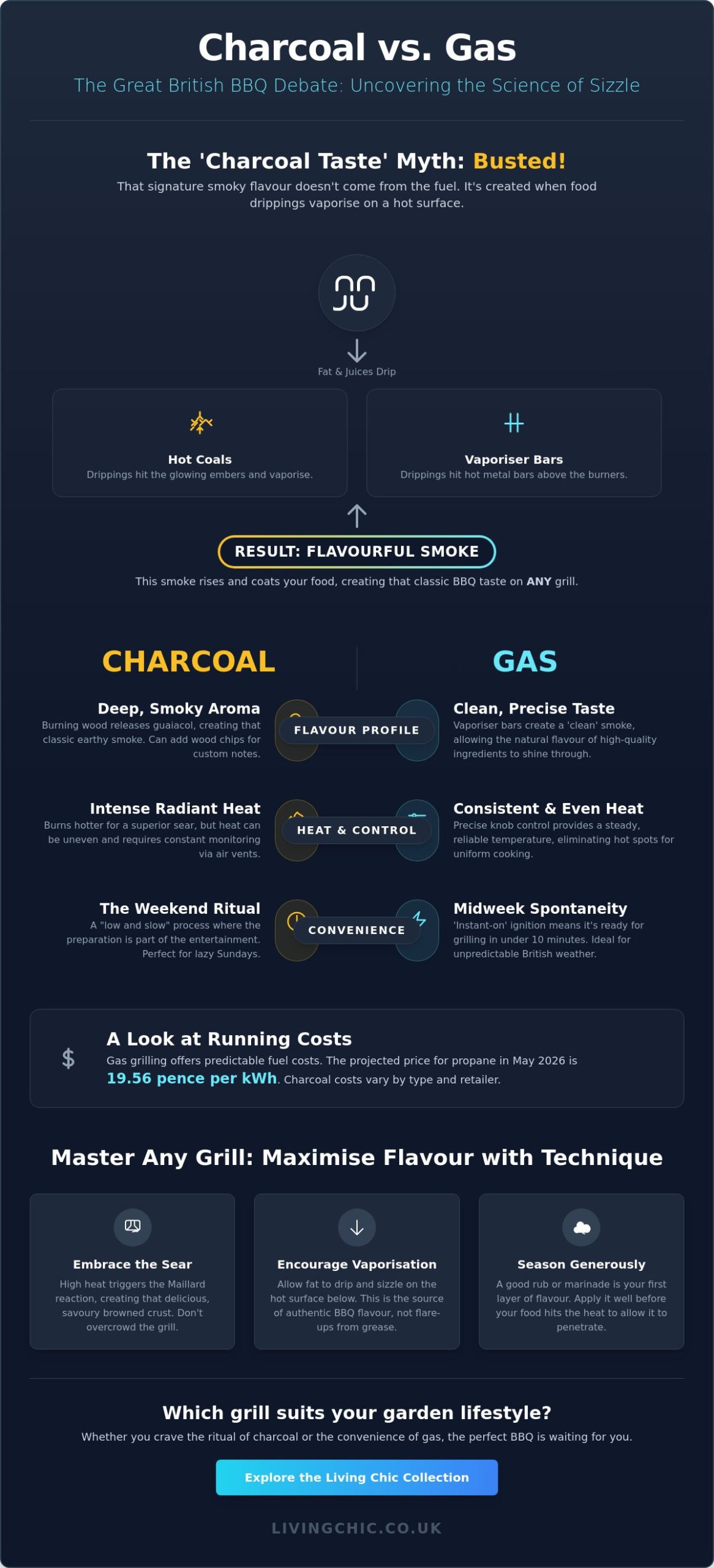
The truth revealed in a scientific charcoal vs gas bbq taste test might surprise you. That signature smokiness actually comes from drippings vaporising on a hot surface, which is a process both fuel types can achieve with the right technique. In this guide, we’ll demystify flavour profiles and compare running costs, such as the May 2026 propane price of 19.56 pence per kWh. You’ll gain the confidence to pick the best model from Living Chic and learn practical tips to master the grill. We’ll ensure your next garden purchase delivers the delicious results your family expects, helping you create a better living space outdoors.
The Great British BBQ Debate: Can You Truly Taste the Difference?
The quintessential British summer revolves around the garden, yet the debate over fuel continues to divide patio enthusiasts. Authentic BBQ flavour isn’t a single element; it’s a complex chemical marriage of wood smoke, surface char, and the Maillard reaction. This reaction occurs when amino acids and sugars react under high heat to create that savoury, browned crust we all crave. There’s also a significant psychological component at play. For many, the ritual of stacking coals and waiting for the embers to glow makes the final meal feel more rewarding, even before the first bite. It’s about the atmosphere as much as the ingredients.
In a professional charcoal vs gas bbq taste test, the results often hinge on how heat is delivered to the food. Charcoal provides intense radiant heat, whilst gas grills typically rely on convection or heat tents. Understanding these different types of grills helps you decide which method suits your cooking style. For quick-seared items like thin burgers, sausages, or halloumi, the flavour difference is often negligible. The food simply isn’t on the grill long enough to absorb significant smoke, meaning the primary taste comes from the quality of the meat and your seasoning.
To better understand this concept, watch this helpful video:
The Anatomy of Flavour: Smoke vs Sear
Charcoal is the king of aroma thanks to guaiacol. This specific molecule is released when wood or charcoal burns, providing that classic “smoky” scent that defines traditional outdoor cooking. It’s a deep, earthy profile that’s hard to replicate with gas alone. However, gas grills offer superior temperature consistency. Whilst charcoal can be temperamental and requires constant monitoring, a gas burner provides a steady, reliable heat source. This makes it much easier to achieve a perfect, uniform sear on a thick ribeye or delicate fish without worrying about hot spots or sudden flare-ups.
Why the Fuel Choice Matters for Your Garden Lifestyle
Your decision often reflects how you like to spend your weekends and organise your outdoor space. The “low and slow” charcoal ritual is perfect for a lazy Sunday where the process is part of the entertainment. Conversely, the unpredictable British weather often makes the “instant-on” convenience of gas more practical for midweek meals. If you’ve invested in high-quality Living Chic garden furniture, you likely want a setup that encourages frequent, spontaneous use. Gas allows you to transition from indoor living to outdoor dining in under ten minutes, ensuring you don’t miss a single ray of sunshine whilst waiting for coals to catch.
The Science of Sizzle: How Fuel Affects Flavour Profiles
Developing complex, savoury flavours starts with the Maillard reaction. This chemical process occurs when proteins and sugars in your food are exposed to high heat. It’s what creates the golden-brown crust on a steak or the charred edges of a corn cob. When conducting a charcoal vs gas bbq taste test, many people assume the fuel is the primary source of flavour. However, the real secret lies in “vaporisation”. When fat and juices drip from the meat and hit a scorching hot surface, they instantly turn into flavour-filled smoke that rises back up to coat the food. Understanding the science of grilling flavor reveals that both fuel types can trigger this process effectively.
The intensity of this flavour is also dictated by oxygen flow. By opening the vents on a charcoal grill, you increase the combustion rate, which alters the concentration of smoky particulates that adhere to your food. This control allows you to manage the depth of the aromatic profile, ensuring it complements rather than overpowers your ingredients.
Charcoal: The Traditional Smoke Powerhouse
Charcoal offers two distinct fuel paths: lumpwood and briquettes. Lumpwood is essentially pure carbonised wood. It burns hotter and faster, providing a cleaner aromatic profile. Briquettes are compressed with binders to offer a more consistent, long-lasting burn. You can customise the profile by adding oak or hickory chips to the embers for specific wood-smoke notes. Charcoal combustion releases complex organic compounds that physically coat the surface of the food, creating a deep, unmistakable smokiness that many purists adore.
Gas: The Myth of the “Outdoor Oven”
Some critics dismiss gas grills as nothing more than outdoor ovens, but this ignores the role of vaporiser bars. These metal shields sit directly above the burners. As juices hit these hot bars, they vaporise exactly like they would on hot coals, infusing the food with that classic BBQ essence. Gas provides incredible precision. Because the heat is consistent, you don’t risk the acrid, soot-heavy flavours that can occur when charcoal isn’t managed correctly. This reliability is why many professionals choose gas when they want to highlight the natural quality of the ingredients without overwhelming them with smoke.
Whether you prefer the ritual of charcoal or the efficiency of gas, the goal is always a delicious meal shared with friends. If you’re still weighing up your options, you can explore our range of BBQs and heating to find the perfect fit for your garden. If you have specific questions about a model’s features, feel free to get in touch with our team for expert advice.
Putting it to the Test: Charcoal vs Gas Taste Metrics
Moving from chemical theory to the dinner plate requires a structured way to measure success. When conducting your own charcoal vs gas bbq taste test, you should focus on three primary metrics: flavour intensity, surface texture, and moisture retention. Many enthusiasts point to the “smoke ring” as proof of superior taste. This pink layer, caused by a reaction between nitric oxide and myoglobin in the meat, is a visual hallmark of traditional BBQ. However, it’s a common misconception that the ring itself carries flavour; it is purely an aesthetic indicator of a specific combustion environment.
Texture also varies significantly between the two methods. Charcoal provides high levels of radiant heat, which is excellent for creating a thick, caramelised “crunch” on the exterior of food. Gas grills often rely more on convection heat, which can be gentler. This often results in superior juiciness, particularly for delicate items like chicken breasts or Mediterranean vegetables that can dry out quickly under the aggressive heat of glowing embers.
Blind Taste Test Results: Burgers and Hot Dogs
For short-cook items, the results are often surprising. In blind tests, most people find it incredibly difficult to distinguish between a burger cooked over gas and one cooked over charcoal. This is because the food isn’t on the heat long enough to absorb significant aromatic compounds. The “char” produced by gas vaporiser bars is often indistinguishable from that of charcoal. If you want to master these basics, The Ultimate BBQ Guide offers excellent tips on timing and temperature for these family favourites.
The Long Game: Steaks and Slow-Roasts
The divide becomes much clearer once you move to thicker cuts of meat. For any cook lasting over 30 minutes, charcoal starts to pull ahead in terms of flavour complexity. The extended exposure allows the organic compounds from the wood or briquettes to deeply penetrate the meat. Conversely, gas provides a “clean” taste profile. This is often preferred by those who want the natural quality of a premium dry-aged steak to shine without any interference from smoke. If you’re looking to upgrade your setup for these longer sessions, you can browse our latest BBQs and heating collection to find a model that offers the precision you need for your garden lifestyle.
Beyond the Fuel: Maximising Flavour on Any Grill
Achieving a gold-standard result in a charcoal vs gas bbq taste test often comes down to your preparation rather than the burner. Whilst the fuel provides the foundation, your technique and maintenance habits dictate the final quality of the meal. One of the most effective ways to give a gas grill a charcoal edge is by using a smoker box. By placing wood chips like hickory, oak, or applewood into a stainless steel box over the burners, you introduce those complex aromatic compounds that gas lacks. This simple addition allows you to enjoy the convenience of gas whilst capturing the traditional scent of a wood-fired cook.
Grill maintenance is equally vital for preserving a clean flavour profile. Old grease and carbonised food scraps from previous sessions don’t add “seasoning”; they produce acrid, bitter smoke that ruins the natural taste of fresh ingredients. Regularly cleaning your grates and vaporiser bars ensures that every sear is fresh and vibrant. To enhance the Maillard reaction discussed earlier, use high-quality dry rubs containing a small amount of sugar or honey. These ingredients caramelise quickly, creating a professional-looking crust that provides a satisfying textural contrast to the juicy interior of the meat.
Always remember the “lid-down” rule. Keeping the hood closed is essential for both grill types. It traps the heat and any smoke produced by vaporising drippings, ensuring the food is bathed in flavour throughout the cooking process. It also prevents oxygen spikes that lead to flare-ups, which can char the outside of your food before the inside is safely cooked.
Accessories that Bridge the Flavour Gap
If you find your gas grill lacks that aggressive sear, consider adding a cast iron griddle. Cast iron retains heat far better than standard stainless steel wire racks, allowing for a superior, edge-to-edge crust on steaks and burgers. Whilst older gas models often used lava rocks to distribute heat and catch drippings, modern high-performance grills use precision-engineered vaporiser bars. These bars are designed to maximise the vaporisation of juices, turning fat into flavour-enhancing smoke instantly. You can find a wide range of specialised BBQ accessories and premium fuel options at Garden Chic to help customise your outdoor cooking experience.
Technique Over Tools
Mastering the “reverse sear” is a game-changer for thick cuts of meat. By cooking the meat slowly at a low temperature first and finishing with a high-heat sear, you ensure perfect edge-to-edge pinkness regardless of whether you use gas or charcoal. Perhaps the most important step for taste is resting your meat. Allowing a steak to sit for at least five to ten minutes after cooking lets the muscle fibres relax and reabsorb juices. This step has a greater impact on the final eating experience than the fuel source ever will. If you’re ready to upgrade your garden setup, explore the latest high-performance models in our BBQs and garden heating collection. If you need help choosing the right size for your patio, contact our expert team for personalised advice.
Finding Your Perfect Match amongst the Living Chic Collection
The ultimate outcome of our charcoal vs gas bbq taste test isn’t about finding a single winner, but rather identifying which method aligns with your personal values. Charcoal remains the gold standard for the purist who loves the sensory experience of fire and the deep, wood-fired aroma it provides. Gas is the superior choice for the host who values consistency and wants to spend more time with guests than managing embers. Both can produce spectacular results when you apply the techniques we’ve discussed, such as the reverse sear or the clever use of smoker boxes. It’s the best of both worlds.
Your choice should also reflect your broader garden design and how you intend to use the space. A high-performance gas station integrates beautifully with contemporary outdoor furniture, creating a seamless transition from your indoor kitchen to your patio. For those who refuse to compromise, hybrid models are an excellent investment. These versatile grills allow you to enjoy the convenience of a quick gas-fired meal on a Tuesday whilst retaining the ability to slow-smoke over charcoal on a lazy Saturday afternoon. This flexibility ensures you’re never restricted by your equipment, regardless of the occasion or the unpredictable British weather.
The Living Chic Approach to Outdoor Living
We take a collaborative approach to home improvement because we believe your garden is an extension of your home. Our commitment is to provide UK households with style, quality, and exceptional value. We curate our collections to ensure every product helps you create a better living environment. If you’re planning a larger garden transformation, we can help there too. Our sister site Simply Log Cabins offers an extensive range of premium structures, from sheds to summer houses, providing the perfect backdrop for your new BBQ setup. We’re part of a wider expert ecosystem designed to support your lifestyle goals.
Next Steps for Your Summer Kitchen
Finishing your outdoor cooking area requires more than just a high-quality grill. Visit our house and home category to find matching accessories and decor that elevate your hosting space. Whether you need ergonomic seating or stylish lighting, we offer practical solutions that make your garden feel like a true sanctuary. Our knowledgeable team is always on hand to help you organise your purchase and provide personalised advice based on your garden’s layout. Browse our full BBQ and Outdoor Heating range today and start creating the outdoor kitchen you’ve always wanted.
Ready to Master Your Garden Kitchen?
The results of our charcoal vs gas bbq taste test show that the “best” grill is simply the one that fits your unique lifestyle. Whether you choose the traditional ritual of charcoal or the precision of a modern gas setup, the secret to incredible flavour lies in mastering heat and vaporisation. Both methods offer the potential for professional-quality results that will impress your guests all summer long. You don’t have to compromise on taste to enjoy the convenience of a modern outdoor space.
Living Chic is proud to be part of a specialised expert ecosystem, offering an expertly curated UK range that prioritises both style and functional value. We combine competitive pricing with reliable nationwide delivery to ensure your home improvement journey is as seamless as possible. Whether you’re looking for a compact grill or a full outdoor kitchen setup, we have the expertise to guide your choice amongst our many collections. If you’re ready to transform your patio, upgrade your garden kitchen with our premium BBQ range and speak to our friendly team today. We look forward to helping you create the perfect setting for many memorable, flavour-filled meals with your favourite people.
Frequently Asked Questions
Can you really taste the difference between charcoal and gas?
Yes, you can, but the intensity depends on the cooking time. For quick items like thin burgers or halloumi, the difference is often negligible because the food isn’t on the grill long enough to absorb smoke. However, for thicker cuts like ribeye or slow-roasts, charcoal provides a deeper, wood-fired aroma that is hard to replicate. In a blind charcoal vs gas bbq taste test, most guests only notice the smoky profile on cooks lasting over 30 minutes.
Does a gas BBQ give food a chemical taste?
No, modern gas grills use clean-burning propane or natural gas which doesn’t leave any chemical residue on your food. Any “off” flavours usually come from a build-up of old grease and carbonised food on the vaporiser bars rather than the fuel itself. Keeping your grill clean ensures that every meal tastes fresh. If you maintain your equipment correctly, your gas-grilled food will have a clean, savoury profile that highlights the quality of your ingredients.
How can I make my gas BBQ taste like charcoal?
You can achieve a traditional smoky profile by using a stainless steel smoker box filled with wood chips. Hickory, oak, or applewood chips release the aromatic compounds that gas lacks. It’s also vital to keep the lid down whilst cooking to trap the smoke around the food. This simple technique allows you to enjoy the instant-on convenience of gas whilst capturing the signature scent and depth of a wood-fired cook.
What is the healthiest way to BBQ: gas or charcoal?
Gas grilling is generally considered the healthier option because it produces fewer smoke-related carcinogens. When fat drips onto glowing coals, it can create polycyclic aromatic hydrocarbons (PAHs) that rise back into the meat. Gas grills allow for much tighter temperature control, which helps you avoid the excessive charring that leads to HCA formation. This makes gas a great choice for those who grill frequently and prioritise a balanced lifestyle.
Why do some chefs prefer gas grills over charcoal?
Many professional chefs favour gas for its unparalleled precision and consistency. The ability to control heat instantly allows them to cook delicate items like sea bass or asparagus without worrying about unpredictable hot spots. Gas grills also reach cooking temperature in under ten minutes, making it easier to organise large garden parties. This reliability ensures that the natural flavour of premium ingredients remains the star of the show without being overpowered by heavy smoke.
What happens if I use wood chips on a gas BBQ?
Using wood chips turns your gas grill into a versatile smoker that can compete in any charcoal vs gas bbq taste test. When the chips are heated in a dedicated box, they smoulder and release flavour-enhancing smoke that coats the food. This bridges the gap between the two fuel types perfectly. It’s an excellent way to add complexity to your meals without the long setup times and messy ash associated with traditional charcoal cooking.
Is lumpwood charcoal better for flavour than briquettes?
Lumpwood is often preferred by purists because it provides a cleaner, more authentic wood-smoke profile. It’s made from natural hardwood and contains no chemical binders or fillers. Briquettes are designed for a longer, more consistent burn, which is helpful for slow-cooking, but they can produce more ash. If you’re planning a hosting space near one of our garden buildings, choosing high-quality lumpwood will provide the most fragrant results for your guests.
Can I use a charcoal tray in my gas BBQ?
You should only use a charcoal tray if your grill is specifically designed as a hybrid model. Placing charcoal directly into a standard gas grill can clog the burners and cause permanent damage to the tubes. If you want the flexibility of both fuel sources, we recommend exploring dedicated hybrid grills. These are engineered to safely manage the intense radiant heat and ash of charcoal whilst offering the speed of gas burners when you’re in a hurry.