
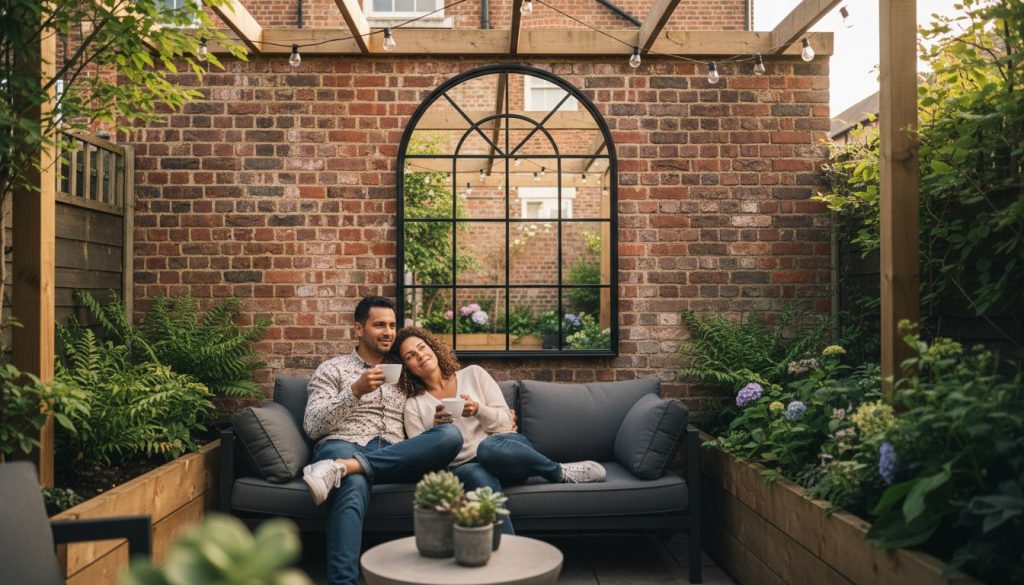
What if you could double the footprint of your patio without spending thousands on landscaping or structural work? It’s frustrating when a small lawn feels more like a corridor than a sanctuary, especially when high fences cast long shadows over your favourite seating area. Using a garden mirror to create illusion of space is a designer-approved secret that transforms cramped corners into expansive retreats for a fraction of the cost of a renovation.
With modern acrylic options being ten times stronger and 80 per cent lighter than glass, achieving that high-end look is now safer and more affordable than ever. In this guide, we’ll show you how to position your mirror to avoid reflecting the wheelie bins, keep the local bird population safe, and select the perfect style from our collection at Living Chic or our sister site Garden Chic. We’ll also explore how to pair these features with structures from Simply Log Cabins to create a truly cohesive outdoor living area that feels professionally curated and wonderfully bright.
Table of Contents
- The Science of Space: How a Garden Mirror to Create Illusion of Space Works
- Selecting Your Style: Materials and Frames for the UK Climate
- Step-by-Step: Positioning Your Mirror for Maximum Impact
- Safety and Longevity: Protecting Wildlife and Your Investment
- Integrating Mirrors with Garden Buildings and Furniture
The Science of Space: How a Garden Mirror to Create Illusion of Space Works
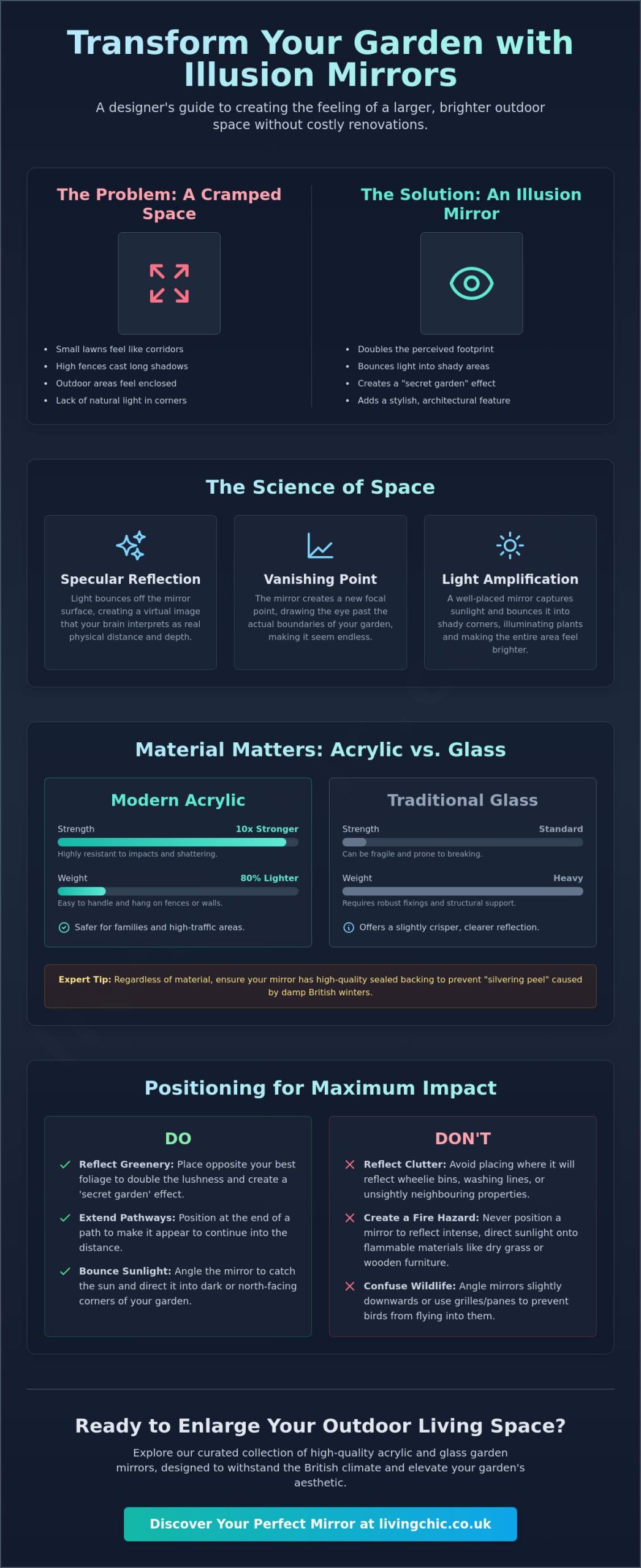
A garden illusion mirror is far more than a simple decorative accessory; it is a precision-engineered, weatherproof tool designed to manipulate your perception of depth. Unlike indoor mirrors, these exterior versions are built to withstand the British elements whilst maintaining a crystal-clear reflection. By understanding the science of how mirrors create illusions, you can turn a flat, uninspiring brick wall into a gateway that appears to lead into another world. The trick lies in specular reflection, where light bounces off the surface to create a virtual image that your brain interprets as physical distance.
In 2026, the trend has shifted decisively away from basic, flat glass toward “Architectural Illusions.” These designs use clever framing to mimic the appearance of windows, gates, or doorways. This adds a layer of psychological realism that basic mirrors lack. When you use a garden mirror to create illusion of space, you aren’t just adding a reflection; you’re creating a “vanishing point” that draws the eye past the actual boundaries of your property. This technique is particularly effective in walled-in courtyards where the vertical lines of the mirror’s frame can break up the monotony of masonry.
To better understand this concept, watch this helpful video:
Doubling Your Depth with Reflective Symmetry
Strategic placement can make a short garden path appear to continue indefinitely. By positioning a mirror from our garden decor range at the very end of a walkway, you reflect the path back on itself. This creates a symmetrical view that suggests a “secret garden” lies just beyond the wall. It’s a classic design choice seen frequently across the Garden Chic community to solve the problem of “boxy” plots. Mirrors trick the human eye by extending the perspective lines of your garden into a reflected world.
Maximising Natural Light in Shady Corners
Light reflection is often just as important as the visual illusion. Many British gardens suffer from north-facing shadows or high fences that block the sun for most of the day. A well-placed mirror can catch the afternoon sun and “bounce” it into these dark, damp corners. This doesn’t just make the space feel larger; it highlights the intricate textures of your foliage and can even provide a modest boost to shade-loving plants. The extra brightness makes the entire outdoor area feel more inviting and less enclosed, regardless of its actual square footage.
Selecting Your Style: Materials and Frames for the UK Climate
Choosing the right material is vital for longevity in the unpredictable British weather. While glass offers a crisp reflection, many homeowners in 2026 prefer acrylic for its durability and safety. Acrylic mirrors are approximately ten times stronger and 80 per cent lighter than traditional glass, making them a safer choice for hanging on standard timber fences or masonry. Regardless of the material, ensure your selection features high-quality backing. Without proper sealing, damp UK winters can cause silvering peel, where the reflective coating detaches from the substrate, ruining the effect of your garden mirror to create illusion of space.
Frame choice dictates the maintenance level and the overall aesthetic of your outdoor sanctuary. Powder-coated steel provides a sleek, rust-resistant finish that lasts for years without intervention. In contrast, treated timber frames offer a natural look but require periodic staining to prevent rot. Expert designers often suggest using visual tricks to make your garden appear larger by matching the frame material to existing elements in your landscape. If you’re unsure which material best suits your specific wall type, our team at Living Chic is always happy to provide expert advice on your selection.
Traditional Arches and Window Illusions
The Gothic Arch remains a timeless favourite for those looking to create a faux-gateway. These mirrors mimic the look of an old chapel window or a hidden stone entrance, adding a sense of history to your garden. For a cohesive design, try matching the frame colour to your garden structures, such as pergolas or arches. Using a garden mirror to create illusion of space is most effective when the frame mimics a real architectural feature, as the multi-pane grid helps break up the reflection and makes the “window” look more convincing.
Contemporary Rattan and Metal Finishes
If your outdoor area leans towards a modern aesthetic, consider industrial-inspired black iron frames. These pair beautifully with minimalist garden furniture, creating a sophisticated outdoor room feel. For a softer touch, rattan-framed mirrors are gaining popularity amongst urban gardeners. They blend seamlessly with woven seating sets and help to diffuse the “hard” edges of a reflection. This is particularly useful in very tight patios where a large, bare mirror might otherwise feel overwhelming or clinical.
Step-by-Step: Positioning Your Mirror for Maximum Impact
Before you reach for the drill, it’s essential to conduct a “Reflection Audit.” This simple check ensures your new feature doesn’t inadvertently showcase your recycling bins or the neighbour’s washing line. Stand in your most-used garden spots, such as your dining area or favourite bench, and observe what the mirror will actually capture. To Create the illusion of more space, you must reflect your garden’s most attractive features, like a blooming flower bed or a well-kept lawn.
Success depends heavily on the “Golden Rule of Height.” For the perspective to remain believable, the centre of the mirror should sit at eye level when you’re standing. If it’s mounted too high, it merely reflects the sky and loses its depth; too low, and it reflects the ground, breaking the spell. When you use a garden mirror to create illusion of space, you’re essentially installing a virtual doorway, so its placement must mimic where a real door or window would naturally sit.
The Angle of Reflection: Avoiding “Selfie” Moments
One common mistake is a flat installation that reflects the person looking at it. To avoid this “selfie” effect, tilt your mirror approximately 5 degrees away from the main viewing area. This slight adjustment ensures the glass reflects a lush corner of your garden rather than your patio furniture. You can achieve this by placing small timber shims behind the top or one side of the frame before securing it to the wall. It’s also wise to check the reflection at various times of the day. A mirror that looks perfect at 10:00 am might create a blinding glare by 3:00 pm as the sun moves across the sky.
Framing with Nature: Blurring the Boundaries
The most convincing illusions are those that look like they’ve always been there. “Organic Framing” involves using climbing plants to partially obscure the edges of the mirror, breaking up the hard lines of the frame. Fast-growing climbers like Clematis, Jasmine, or Ivy are perfect for this task. By allowing foliage to trail across the corners, you create a “portal” effect that makes the reflection feel like a genuine extension of your garden. You can easily integrate these mirrors into your existing garden decor by mounting them behind a trellis or amongst a cluster of tall shrubs. If you’re positioning your mirror near larger structures like sheds or summer houses, browse the options at Simply Log Cabins to ensure your layout remains balanced and spacious. For more inspiration on accessorising your outdoor sanctuary, visit our colleagues at Garden Chic.
Safety and Longevity: Protecting Wildlife and Your Investment
Whilst using a garden mirror to create illusion of space is a brilliant design choice, it requires a responsible approach to ensure it remains a safe and lasting feature. Investing in quality garden decor means taking proactive steps to protect both your local wildlife and the structural integrity of the product itself. Neglecting these aspects can lead to avoidable accidents or a reflection that degrades quickly under the harsh British elements.
Maintaining the “magic” of the illusion depends entirely on the clarity of the surface. A mirror covered in algae, bird droppings, or water spots immediately loses its ability to trick the eye. Regular cleaning with a non-abrasive cloth and mild soapy water is essential. In 2026, many homeowners are also applying specialist hydrophobic coatings to help rainwater bead off the surface, reducing the frequency of deep cleans and preventing the silvering peel we discussed in earlier sections.
Preventing Bird Collisions
Birds often perceive a clear reflection as a continuation of the sky or garden, leading to dangerous collisions. To mitigate this risk, experts recommend the “2×4 rule” for bird-safe glass. This involves applying subtle decals or markings spaced no more than two inches apart horizontally and four inches vertically. Alternatively, positioning your mirror under a pergola or a timber overhang from Garden Chic creates shadows that break up the reflection. This makes the surface much more visible to birds whilst still providing that desirable sense of depth for human observers. Frosted patterns or lattice overlays are also excellent ways to maintain the aesthetic whilst protecting your feathered visitors.
The Sun and Fire Safety
It’s vital to consider the “magnifying glass effect” when placing reflective surfaces outdoors. Concentrated sunlight can, in rare cases, generate enough heat to scorch foliage or even start a fire. You should avoid placing mirrors in direct solar paths where they’ll catch the intense midday sun, particularly south-facing walls. For a broader look at general safety principles, you can refer to the Mirrors: Ultimate Guide to Styling Your Home to understand how light behaves in different settings. If you’re mounting a mirror near timber structures like those found at Simply Log Cabins, ensure the angle of reflection points towards a non-flammable area like a stone patio or a damp lawn. If you need help choosing a safe location for your specific garden layout, please get in touch with our expert team for bespoke advice.
Integrating Mirrors with Garden Buildings and Furniture
Combining a garden mirror to create illusion of space with larger garden structures is a masterclass in modern landscaping. When you have a compact plot, a substantial timber building can often feel overwhelming. By integrating reflective surfaces, you can soften these hard boundaries and make your seating area feel like a seamless extension of the natural environment. This approach is particularly popular in 2026 as homeowners look for ways to maximise the utility of their outdoor rooms without sacrificing the feeling of openness.
If you’re planning to install mirrors on a boundary fence, it’s a legal requirement to seek your neighbour’s permission first. Any damage caused to their property during the installation could leave you liable for repair costs. It’s always best to have a collaborative conversation before you begin drilling. Once agreed, mirrors can also be used inside summerhouses to reflect the garden views back into the room, making the interior feel bright and connected to the greenery outside.
The “Invisible Shed” Trick
One of the most effective design techniques is the “invisible shed.” By mounting large, weather-resistant mirror panels onto the side of sheds, you reflect the surrounding lawn and plants directly back at the viewer. This technique effectively camouflages the structure, preventing a large building from dominating a small plot. For those currently selecting a new timber building, The Ultimate Guide to Garden Sheds provides excellent advice on choosing the right structure to host these reflective features. When done correctly, the building seems to vanish into the foliage.
Coordinating with Outdoor Furniture
To create a true “outdoor living room” feel, position your mirrors to catch the reflection of your social spaces. When you pair a stylish mirror with high-quality BBQs and heating, you double the visual warmth and light of your entertaining area. Following a garden furniture guide setup ensures your reflection shows off a curated, designer look rather than a cluttered corner. For an even wider range of mirrors specifically designed for the British climate, our sister site Garden Chic offers numerous options that complement both traditional and modern styles. Using a garden mirror to create illusion of space near your dining set makes summer gatherings feel twice as large and significantly more atmospheric, providing that sought-after “Living Chic” aesthetic for any size of garden.
Elevate Your Garden Perspective Today
Transforming a compact patio or shaded lawn is a simple matter of choosing the right tools and applying a few designer secrets. By mastering the science of light bounce and vanishing points, you can turn a solid brick boundary into a captivating portal. Remember that selecting durable, weatherproof materials like acrylic is essential for the British climate; a slight downward tilt of just 5 degrees will ensure your reflection focuses on your favourite flowers rather than your patio furniture.
With over 10 years of experience in UK garden trends, Living Chic is proud to be part of the trusted Garden Chic family. We offer premium, weatherproof designs at competitive prices to help you achieve a high-end look without the designer price tag. Using a garden mirror to create illusion of space is one of the most effective ways to breathe new life into your home and garden. If you have any questions about which styles suit your unique layout, please browse our stylish collection of Garden Decor and Mirrors and speak with our friendly team. Your dream outdoor sanctuary is closer than you think.
Frequently Asked Questions
Do garden mirrors cause fires?
Garden mirrors can cause fires if they concentrate intense, direct sunlight onto flammable materials like dried leaves or timber structures. You should avoid placing any reflective surface in a south-facing position where it receives the full force of the midday sun. To ensure safety, position your mirror in a shaded area or angle it so that the reflection hits non-combustible surfaces like stone patios or damp soil.
How do I stop birds flying into my garden mirror?
You can prevent bird collisions by applying specialist decals or using frosted patterns that make the surface visible to wildlife. Using a garden mirror to create illusion of space is most effective when placed under a pergola or an overhang, as the resulting shadows help birds recognise the glass as a solid object. These subtle markings don’t ruin the visual depth but do protect the local bird population.
What is the best height to hang a garden mirror?
The best height to hang a mirror is at eye level, which is approximately 1.5 metres from the ground for the average adult. This height is crucial because it mimics the placement of a real window or door, making the illusion of an extra room or garden path more believable. Hanging the mirror too high or too low will reflect only the sky or the ground, breaking the perspective.
Can I use a normal indoor mirror outside?
You shouldn’t use a standard indoor mirror outdoors because it lacks the weatherproof backing required to survive the British climate. Moisture will quickly cause “silvering peel,” where the reflective coating detaches from the glass, leaving unsightly black spots. Specialist outdoor mirrors use waterproof seals and treated frames to prevent rot and rust, ensuring the product remains clear and safe throughout the winter months.
Do garden mirrors make a garden look bigger?
A garden mirror to create illusion of space works by reflecting light and scenery to trick the brain into seeing depth beyond a solid wall. By reflecting a path or a lush flower bed, a mirror can make a small courtyard feel double its actual size. This is a popular technique for 2026 urban garden designs, as it also brightens dark corners by bouncing natural light into shaded areas.
How do I clean a garden mirror without scratching it?
You should clean your mirror using a soft microfibre cloth and a simple mixture of warm water and mild dish soap. Avoid using abrasive sponges or harsh chemicals, as these can permanently scratch the glass or damage the protective coating on the frame. For a streak-free finish, dry the surface with a clean cloth immediately after washing to prevent water spots from forming in the sun.
What material is best for an outdoor mirror frame?
Powder-coated steel is the best material for an outdoor frame because it’s exceptionally durable and resistant to rust. If you prefer a more traditional look, pressure-treated timber is a great alternative, provided it’s maintained with wood preservative. These materials are specifically designed to withstand the frost and humidity of the UK without warping, ensuring your mirror stays stylish and secure for many years.
Do I need planning permission for a large garden mirror?
You don’t usually need planning permission for a garden mirror as it’s classified as a decorative garden accessory rather than a permanent building. However, if you’re mounting a large mirror on a shared boundary fence, you must seek your neighbour’s permission first. It’s also wise to check that the mirror doesn’t cause a light nuisance or glare into a neighbouring property, which could lead to a formal complaint.