
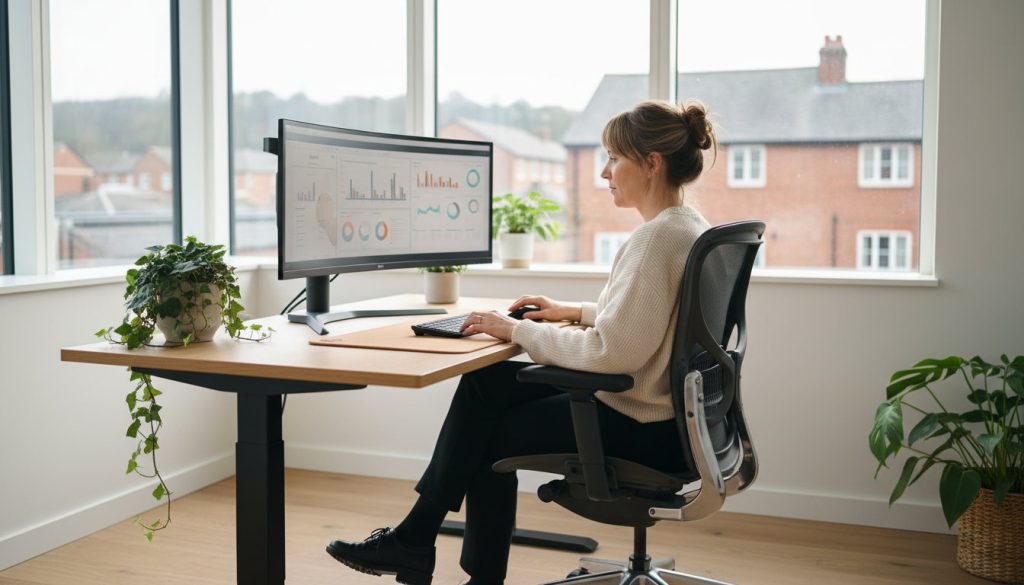
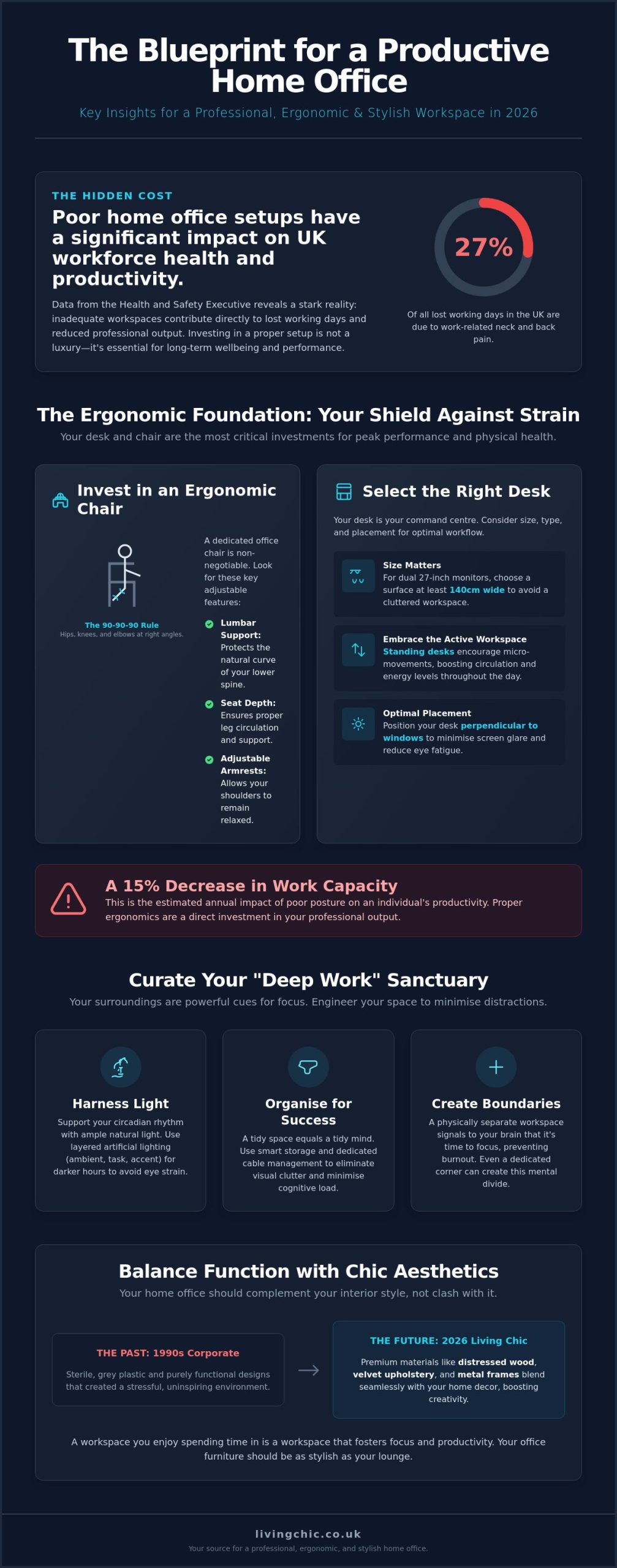
A recent 2024 study by the Health and Safety Executive found that work-related neck and back pain accounts for 27% of all lost working days in the UK. It’s no secret that staring at a screen for eight hours in a cluttered corner or on a dining chair makes it impossible to stay focused. You likely agree that a workspace should be a professional sanctuary, yet it often ends up as a makeshift station that clashes with your favourite home decor and makes it hard to separate your job from your home life.
By refining your home office setup for productivity, you can eliminate physical discomfort and mental distractions while creating a chic environment you’ll actually enjoy spending time in. We’ll show you how to curate a professional, ergonomic, and stylish workspace that enhances your focus and perfectly complements your interior style. This guide previews the essential furniture, clever ways to organise your tech, and design trends for 2026 that will transform your daily routine. Whether you’re furnishing a room or considering a quiet retreat from Simply Log Cabins, we’ve got the expertise to help you build a better work life.
What Defines a Productive Home Office Setup in 2026?
The concept of the professional workspace has undergone a radical transformation. In 2026, a high-performance home office setup for productivity is no longer a luxury or a makeshift arrangement on a kitchen island. It’s a permanent, dedicated zone engineered to minimise cognitive load. Data from 2024 suggested that nearly 44% of the UK workforce operated in a hybrid or remote capacity; by 2026, this has matured into a sophisticated “work-from-anywhere” culture where the home office is the primary engine of professional output. Understanding what a SOHO (small office/home office) is helps us recognise that these spaces must now meet the same ergonomic and technical standards as a corporate headquarters whilst remaining deeply personal.
To better understand this concept, watch this helpful video:
Creating a professional environment is essential for mental boundary setting. Without a clear physical divide, the lines between domestic life and professional responsibilities blur, leading to burnout and reduced efficiency. A well-designed office signals to your brain that it’s time to focus, allowing you to “leave work” at the end of the day simply by closing a door or stepping away from a specific desk. This mental shift is the foundation of long-term remote work success.
The Psychology of the Workspace
Environmental cues are powerful triggers for human behaviour. When you curate a home office setup for productivity, you’re essentially building a “deep work” sanctuary. In a typical UK flat where space is often limited, even a dedicated alcove with the right lighting and acoustics can signal your brain to enter a flow state. For those seeking total separation, the rise of garden offices has been a game-changer. These standalone structures provide a physical commute across the lawn, offering the ultimate boundary between home and work. You can find a range of professional timber buildings at Simply Log Cabins to suit any garden size.
Balancing Function with Living Chic Aesthetics
The sterile, grey plastic of 1990s corporate life has no place in the modern home. Today, we prioritise high-quality pieces that serve a professional purpose whilst looking like premium home decor. Choosing a desk with a distressed wood finish or a velvet-upholstered ergonomic chair allows your workspace to blend with your interior design. At Living Chic, we believe your office furniture should be as stylish as your lounge. High-quality aesthetics don’t just look good; they reduce work-related stress and boost creative output by creating an environment you actually want to spend time in. A Chic Office is a space where form and function coexist seamlessly.
The Ergonomic Foundation: Desks and Chairs for Peak Performance
Your chair is the most critical investment you’ll make for your workspace. Statistics from 2023 suggest that poor posture contributes to a 15% decrease in individual work capacity over a standard year. A high-quality home office setup for productivity starts with physical health. You likely spend upwards of 1,900 hours a year at your desk; your spine requires more support than a standard dining chair can provide. Investing in professional-grade furniture prevents chronic strain and keeps you focused during intense projects.
The “Active Workspace” has become a standard in 2026. Whilst fixed-height desks provide a sturdy, traditional feel, standing desks encourage micro-movements that boost circulation and energy levels. Positioning is equally vital. Place your desk perpendicular to windows to eliminate screen glare whilst allowing natural light to fill the room. This layout supports your circadian rhythm and reduces eye fatigue during long winter afternoons.
Choosing the Right Home Office Desk
Evaluating desk size depends on your hardware and floor space. If you use dual 27-inch monitors, you’ll need a surface at least 140cm wide to maintain an organised environment. Solid wood tops offer a premium, tactile experience and lasting durability. Metal frames provide an industrial edge and superior stability for heavy equipment. You can browse our curated range of Living Chic Office Desks to find a style that fits your aesthetic and functional requirements.
Investing in Your Health with Ergonomic Seating
To maintain focus, follow the 90-90-90 rule for posture. Your feet should be flat on the floor, with your knees and hips at right angles. Your favourite lounge chair is a poor substitute for a dedicated office chair because it lacks structured lumbar support. High-quality seating should include several adjustable features:
- Lumbar Support: Protects the natural curve of your lower spine.
- Seat Depth: Ensures there’s a small gap between the seat edge and the back of your knees.
- Adjustable Armrests: Allows your shoulders to remain relaxed whilst typing.
Materials matter too. Look for breathable mesh or high-performance textiles that allow air to circulate, keeping you cool during the summer. Following established ergonomic guidelines for your home office will help you avoid repetitive strain and fatigue. If you need help choosing the right dimensions for your space, feel free to get in touch with our team for expert advice.
Harnessing Light and Colour to Optimise Cognitive Focus
Your environment dictates your output. A well-designed home office setup for productivity isn’t just about a sturdy desk; it’s about managing your biology. Natural light regulates your circadian rhythm, the internal clock that tells your brain when to be alert or rest. Research suggests that workers in offices with windows receive 173% more white light exposure, leading to better sleep and higher daytime energy. Without proper exposure, you’ll likely hit that dreaded 3 PM energy slump. Integrating a comprehensive guide to home office setup into your planning ensures you account for these biological needs from the start.
Layered lighting is the secret to a professional workspace that works around the clock. You need ambient light for general visibility, task light for specific work, and accent light to create depth. This combination reduces the “cave effect” where a single bright source causes harsh shadows. Biophilic design plays a significant role here too. Adding plants isn’t just a decor trend; a 2014 study by the University of Exeter found that “green” offices boost productivity by 15%. Plants like Snake Plants or Pothos thrive in typical office conditions, helping to purify the air whilst softening the room’s aesthetic.
Layering Light for Eye Comfort
Position your monitor perpendicular to windows. This simple move eliminates screen glare and reduces the risk of tension headaches. For late-night focus sessions, a high-quality desk lamp is essential. It provides directed light that keeps you alert without straining your eyes. You can find a range of stylish task lamps at Living Chic Lighting that blend functionality with modern aesthetics. Good lighting makes a long shift feel shorter and keeps your cognitive focus sharp.
Colour choice is another powerful cognitive tool. Blue hues are scientifically linked to improved focus and logical thought. Green promotes a sense of calm, making it ideal for high-stress roles where composure is key. If your job requires a spark of imagination, yellow accents can stimulate creativity and optimism.
Choosing a Colour Palette for Productivity
Avoid “sterile white” walls. This clinical look often leads to eye strain and mental fatigue because it reflects too much light. Instead, opt for soft greys, sage greens, or warm off-whites. In smaller, darker rooms, mirrors are your best friend. They bounce light into dim corners, making the space feel larger and more inviting. Check out Mirrors: The Ultimate Guide to Styling Your Home for expert light-maximising tips. A well-placed mirror can effectively double the natural light in your home office setup for productivity, creating a vibrant atmosphere that sustains your drive throughout the day.
Organise for Success: Storage and Cable Management
The “Clear Desk, Clear Mind” philosophy isn’t just a design trend; it’s a productivity law. A 2011 study by researchers at the Princeton University Neuroscience Institute found that physical clutter competes for your attention, which significantly drains your mental energy and slows down your processing speed. To build a home office setup for productivity that actually works, you must reclaim your primary work surface. Aim to keep only your active project, a notebook, and your essential tech within your immediate reach. Everything else needs a dedicated home.
Utilising vertical space is the most efficient way to clear the decks without losing access to your tools. Tall bookcases and wall-mounted shelving units allow you to store reference materials and archives upwards rather than outwards. This keeps your floor space open and your room feeling larger. Digital organisation is equally vital; try to digitise your archives using a high-speed scanner to reduce the volume of physical paper you need to store. A clean surface allows your brain to focus entirely on the task at hand rather than the mess surrounding it.
Smart Storage Solutions for Small Spaces
If your office shares space with a bedroom or living area, look for furniture that blends in. You can use a stylish sideboard or a chest of drawers to provide hidden office storage for bulky items like printers and lever-arch files. This Bedroom Furniture Guide offers excellent inspiration for picking multi-functional pieces that maintain a chic aesthetic whilst working hard. Mobile pedestals on castors are another brilliant addition, providing flexible workspace configurations that you can tuck under your desk or move aside when the workday ends.
Cable Management: The Final Polish
Tangled wires are a visual distraction that instantly cheapens a high-quality workspace. Use under-desk cable trays to lift power strips off the floor and away from your feet. Neoprene cable sleeves and adhesive clips help bundle monitor and charger wires into neat, singular lines that follow the legs of your furniture. Cable management is the difference between a DIY setup and a professional suite.
For the cleanest possible look, consider switching to Bluetooth wireless peripherals. Removing the cords for your mouse, keyboard, and headphones creates a minimalist environment that feels calm and controlled. Explore our full range of stylish office furniture to find the perfect storage solutions for your professional space.
If you need help choosing the right storage for your specific floor plan, get in touch with our friendly team for expert advice.
Personalising Your Workspace: The Living Chic Finishing Touches
Personalising your desk shouldn’t lead to a cluttered mind. A successful home office setup for productivity balances character with clarity. Use the “Rule of Three” to keep things chic: select one plant to improve air quality, one piece of art for a creative spark, and one high-quality functional item like a brass desk lamp. This curated approach ensures your space feels like yours without becoming a distraction during deep work sessions.
Maintaining your furniture is essential if you want your setup to last for years. Quality wood and metal finishes require simple but consistent care. Dust your surfaces weekly with a soft microfibre cloth to prevent grit from scratching the finish. For solid timber desks, applying a nourishing wax every six months prevents the wood from drying out under central heating. It’s a small habit that protects your investment and keeps your professional environment looking sharp.
Transitioning from work to rest is the final piece of the productivity puzzle. Data from the Office for National Statistics (ONS) indicates that UK remote workers often struggle to “switch off,” which can lead to burnout. At 5 PM, perform a closing ritual. Clear your keyboard, shut down the screen, and physically walk away from the desk. This mental boundary is crucial for maintaining a healthy work-life balance in a domestic setting.
Defining the Zone in Multi-Functional Rooms
Creating a dedicated workspace in a shared area requires clever visual cues. Use a large area rug to create a visual “island” for your desk and chair. This separates the work zone from the relaxation zone without the need for permanent partitions. For more tips on balancing these areas, read this Living Room Furniture Guide. If space is tight, slim console tables make brilliant desks for hallways or alcoves. They offer a tiny footprint whilst maintaining a high-end aesthetic.
Curating Your Professional Backdrop
Your “Zoom background” is now a key part of your professional identity. Style the shelves behind you with a thoughtful mix of books, framed art, and stylish home accents. Avoid visual noise by grouping items in odd numbers and leaving some “white space” on the shelves. Sensory details matter too. Use reed diffusers with citrus scents to maintain focus, or invest in soft furnishings to create a noise-cancelling zone that dampens echoes during calls. Your home office setup for productivity should be a place where you feel inspired and empowered. Explore the full Living Chic Office Collection to start your transformation today.
Take Control of Your Professional Environment
Building a home office setup for productivity in 2026 demands a shift from temporary fixes to permanent, high-quality solutions. Your workspace needs an ergonomic foundation where adjustable desks and supportive chairs prevent physical strain during long sessions. Research into cognitive focus shows that a well-organised desk and thoughtful colour palettes can significantly boost your daily output. By integrating smart storage with stylish finishing touches, you create a space that feels both professional and uniquely yours.
Our team at Living Chic provides an expertly curated range of stylish yet functional furniture tailored for British homes. We offer competitive UK pricing with the convenience of direct delivery, ensuring your upgrade is as seamless as possible. We’re proud to be part of a specialist family of brands. If your vision extends to the outdoors, you’ll find inspiration at Garden Chic or discover dedicated garden rooms at Simply Log Cabins.
Transform your workspace with the Living Chic Office Collection. You’ve got the ambition; now it’s time to build the environment that helps you reach it. Let’s start designing your future today.
Frequently Asked Questions
How much space do I actually need for a productive home office setup?
You need a minimum of 1.5 square metres for a basic workstation, though 4 to 6 square metres is ideal for a full home office setup for productivity. This footprint accommodates a standard 120cm desk and provides enough clearance for an ergonomic chair to glide freely. Ensure there’s at least 90cm of space behind your desk so you don’t feel cramped or hit walls when standing up.
Are standing desks really better for productivity than traditional desks?
Standing desks can increase focus by 10% to 15% by reducing the physical fatigue associated with sitting for 8 hours a day. Alternating between sitting and standing every 45 minutes keeps your circulation active and prevents the mid-afternoon energy slump. If you prefer a classic aesthetic, a high-quality wooden desk from our indoor furniture range offers a sturdy and reliable surface for deep work.
How can I set up a home office in a bedroom without it feeling like a cubicle?
Use “zoning” techniques like a decorative room divider or a slim console desk to separate your sleep area from your professional space. Choosing furniture with a distressed finish or mirrored glass allows the desk to blend with your bedroom decor rather than looking like clinical office equipment. If space is too tight indoors, moving your workspace to a dedicated garden office from Simply Log Cabins is a brilliant way to keep work and rest entirely separate.
What is the best lighting for a home office to prevent eye strain?
A combination of natural light and layered artificial lighting with a colour temperature between 3,000K and 5,000K is the most effective way to reduce eye strain. Position your desk perpendicular to windows to prevent glare on your monitor. Use an adjustable task lamp to direct light onto your documents; this keeps your workspace bright whilst ensuring the screen remains easy to read. For those with a view of the outdoors, adding stylish accessories from Garden Chic can make your environment feel more inspiring.
How do I choose an ergonomic chair that actually looks stylish?
Look for chairs that feature velvet upholstery or sleek metal accents whilst still providing essential lumbar support and height adjustment. Many modern designs hide the complex ergonomic mechanisms beneath chic fabrics, so you don’t have to settle for industrial plastic mesh. A stylish chair should support the natural S-curve of your spine during a long shift without clashing with your home’s carefully curated interior design.
What are the most essential items for a minimal desk setup?
A minimal home office setup for productivity requires just four essentials: a high-quality desk, a laptop stand, a wireless keyboard, and a mouse. Keeping only these items on your surface can lower visual stress levels by up to 40% compared to a cluttered desk. Add a single personal item, such as a small potted plant or a framed photo, to make the space feel welcoming without distracting you from your tasks.
How can I hide all the messy cables on my home office desk?
Use under-desk cable management trays and weighted cable blocks to keep wires organised and out of sight. You can also use decorative baskets or cable sleeves that match your desk’s colour to blend power strips into the background. For a completely clean look, choose furniture with built-in grommets or “cable tidy” holes that allow you to route wires directly through the desk surface to the power outlet.
Is it worth investing in a dedicated office desk if I use a laptop?
Investing in a dedicated desk is vital because it creates a psychological boundary that helps you “switch on” for work the moment you sit down. Working from a dining table or sofa often leads to poor posture and a 20% decrease in overall efficiency according to recent workplace studies. Even a compact writing desk provides the stability and specific height needed to maintain a professional and focused environment throughout the day.