
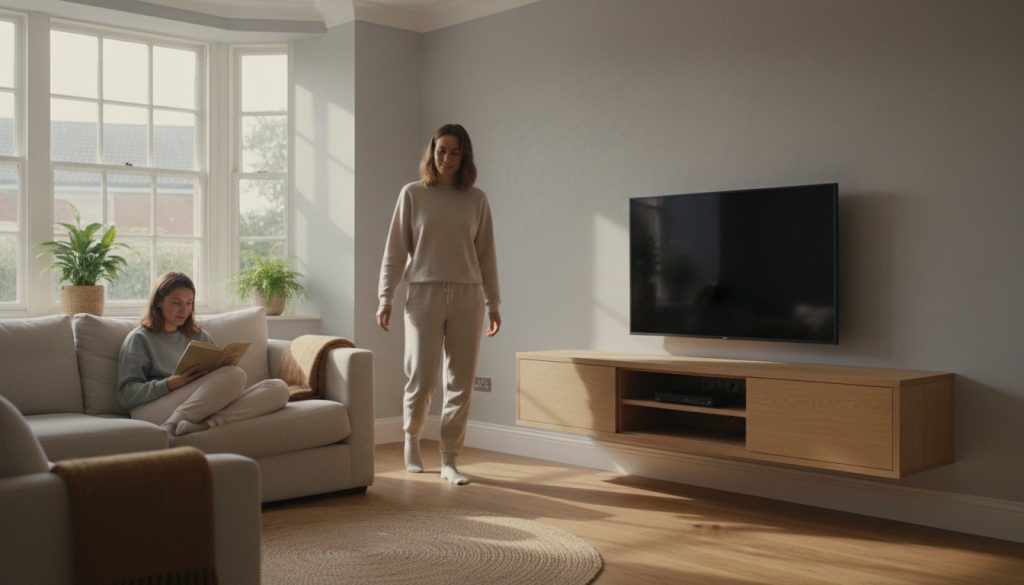
What if your living room could feel twice as large without moving a single wall? In 2024, the average UK new-build lounge measures just 17.1 square metres, making every inch of floor space a precious commodity. You’ve likely felt the frustration of bulky cabinets eating up your walking room and the headache of tangled black cables ruining your aesthetic. It’s a common struggle for anyone trying to balance modern tech with a clean, minimalist home.
At Living Chic, we believe your home should be your sanctuary, not a source of clutter. This guide shares the most inspiring floating tv unit ideas to help you reclaim your space and achieve that Pinterest-worthy finish in 2026. You’ll learn how to choose secure wall-mounts that eliminate the fear of falling units, discover clever ways to hide every single wire, and find styles that complement your existing indoor furniture. We’re diving into the latest trends that blend high-end design with the practical storage solutions your family needs.
Why Floating TV Units are the Ultimate Modern Living Room Essential
A floating TV unit is a wall-mounted console that transforms how we perceive space. Unlike traditional floor-standing cabinets, these units secure directly to the masonry or stud work, leaving the area beneath entirely open. This design shift reflects a move away from the heavy, oversized media furniture common in the early 2000s toward sleeker, more integrated solutions. For homeowners exploring floating tv unit ideas, the primary draw is the “built-in” look that creates a seamless transition between the wall and the furniture. It’s a smart, sophisticated choice for 2026 interiors.
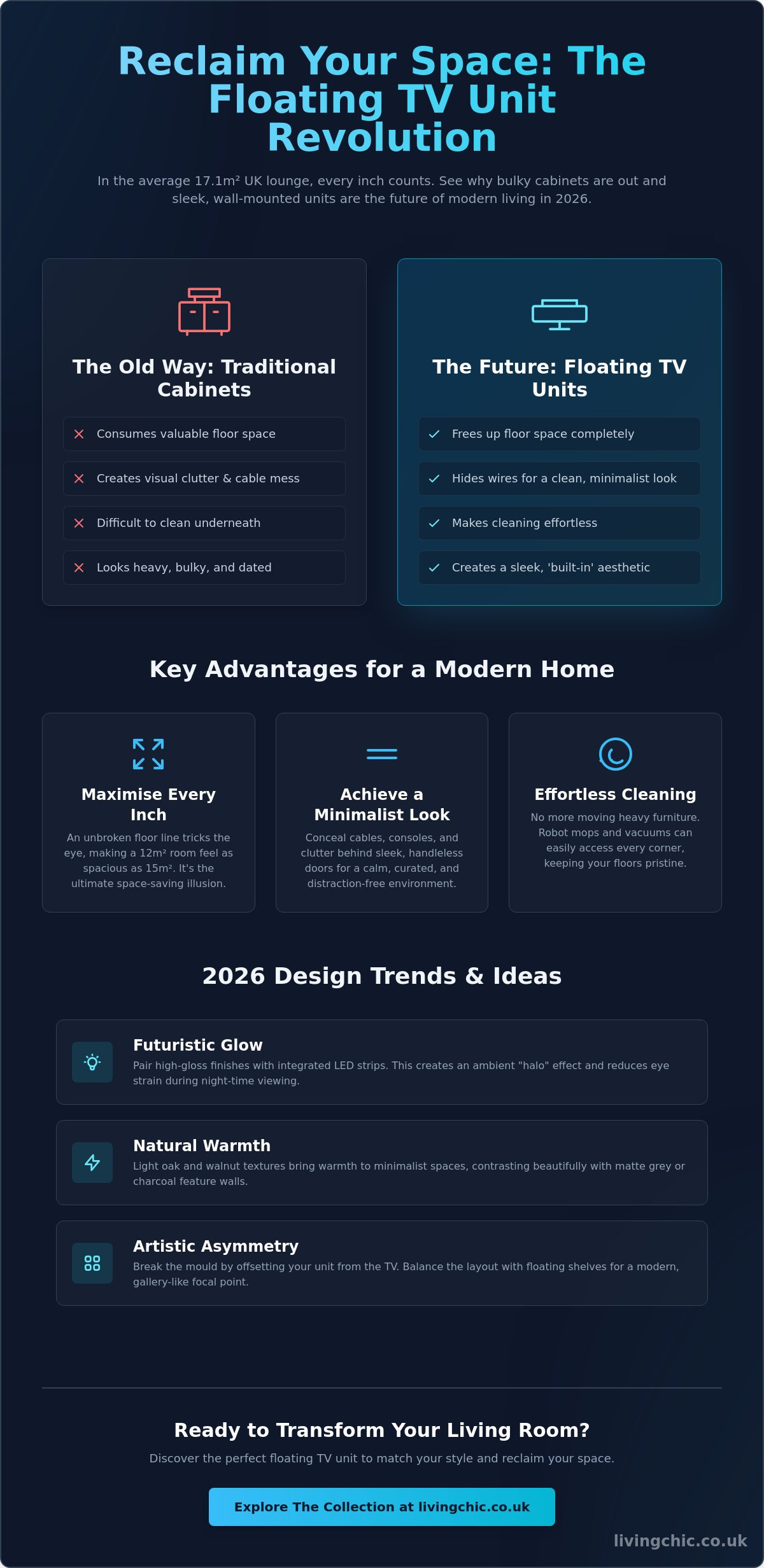
The psychological impact of seeing an unbroken floor line is significant. In compact UK homes, particularly Victorian terraces or modern urban apartments, every square inch of visible floor helps the room feel less cluttered. When the eye can follow the flooring right to the skirting board, the brain registers a larger footprint. Ensuring your screen is safely secured using the VESA Mounting Interface Standard allows the unit to sit at the perfect ergonomic height without needing a bulky base for support. This setup also makes cleaning effortless, as vacuum cleaners and robot mops can reach every corner without obstruction.
To better understand this concept, watch this helpful video:
Maximising Space in Small Apartments
Elevating your media console creates a continuous floor line that tricks the eye into perceiving more depth. This is especially effective when you choose high-gloss finishes. These surfaces reflect natural light from windows, brightening darker corners of the lounge. To enhance this effect, pair your wall-mounted unit with other “leggy” furniture or floating shelves from Living Chic. Using vertical space instead of floor area is a proven strategy for making a 12-square-metre room feel like 15. It’s about efficiency and style combined.
The Minimalist Aesthetic: Less is More
Modern living rooms often suffer from visual noise caused by cables, gaming consoles, and set-top boxes. Floating units serve as a clean focal point by concealing these accessories behind sleek facades. Most contemporary floating tv unit ideas feature handleless doors and push-to-open mechanisms, removing the need for protruding hardware. This creates a streamlined look that directs all attention to the screen or a decorated feature wall. By hiding the tech, you create a calm environment that prioritises style over utility, making your living space feel curated rather than cluttered.
Creative Floating TV Unit Ideas to Elevate Your Decor
Transforming your lounge starts with clever floating tv unit ideas that prioritise floor space and visual flow. Choosing the right material changes the room’s energy instantly. Scandi-style oak offers a timeless, organic feel, while industrial concrete finishes provide a raw, architectural edge. If you want a premium, cinematic atmosphere, go for the “long and low” look. Units exceeding 2 metres in width create a grounded, high-end aesthetic that makes your screen feel like part of a curated gallery.
Asymmetric layouts are gaining traction for 2026. Instead of centering everything, try mounting a sleek cabinet offset from the TV. Complement this with floating shelves on the opposite side to create a modern art vibe. Integrating these units into a feature wall with 3D slat panelling or textured wallpaper adds depth. It hides cables effectively and turns a simple tech setup into a focal point. You can find many stylish furniture collections online to help kickstart your project.
High-Gloss and LED Lighting
Choose white or black high-gloss finishes to build a futuristic, high-tech entertainment zone. Integrated LED strips are essential here. They create an ambient “halo” effect behind the unit, making it appear as if it’s truly hovering. Beyond the style, LED lighting reduces eye strain during evening viewing by providing a soft bias light that balances the screen’s brightness. This setup works perfectly in minimalist homes where clean lines are the priority.
Natural Wood and Scandi Vibes
Light oak and walnut textures bring necessary warmth to minimalist spaces. These natural grains contrast beautifully against matte grey or charcoal walls, preventing the room from feeling cold. For more inspiration on coordinating these pieces, check out this Living Room Furniture: The Ultimate Guide to Styling Your Space. It’s a great resource for broader lounge themes and material pairings.
Floating Units in Garden Rooms and Log Cabins
Many homeowners are now adapting media storage for secondary living spaces. Garden offices and leisure rooms benefit from wall-mounted designs that keep floor areas clear for movement. Technical stability is vital in timber structures. Always secure brackets directly into the main wall studs to support the weight of the unit and the television safely. You can see how these media rooms are becoming a staple in modern designs at Simply Log Cabins. Keeping the unit off the floor in these smaller spaces makes the room feel significantly larger and easier to clean.
Technical Guide: Installation, Weight, and Cable Management
Success with floating tv unit ideas depends on precision and safety. You can’t just pick a spot and start drilling. You need a clear plan for your UK home’s specific wall type to ensure your tech stays secure. Most 2024 and 2025 housing developments use timber frame construction, while older Victorian or Edwardian properties rely on solid masonry. Identifying this early determines which fixings you need to buy.
- Step 1: Identify your wall. Solid brick walls require 10mm masonry bits and expansion plugs. Modern stud walls require a digital stud finder to locate the timber uprights. Fixings into the wood are far more secure than using plasterboard plugs alone.
- Step 2: Find the Golden Height. Avoid neck strain by ensuring the TV sits at eye level. For most UK sofas, the centre of the screen should be 105cm to 110cm from the floor.
- Step 3: Weight Calculation. A 55-inch OLED TV typically weighs 18kg. Your furniture unit might weigh 20kg. Ensure your wall fixings can support a combined load of at least 60kg to account for the weight of consoles and accessories.
- Step 4: Cable Mapping. Mark your drill holes only after you’ve mapped where the power and HDMI cables will run. Check for hidden pipes or electrical wires before you pierce the surface.
The Secret to Perfect Cable Management
A minimalist look fails if wires hang like vines. Use internal cable ports to route leads directly into the unit. Brush plates are excellent for “through-wall” routing, letting you hide HDMI leads behind the plasterboard. Organise your “black box” clutter by placing routers and soundbars on dedicated internal shelves. The one-cable rule states that for a truly high-end finish, only a single discreet power cable should ever be visible.
Safety and Weight Distribution
Safety is the priority when installing stylish furniture from Living Chic. Always mount your TV and the floating unit independently. This prevents the combined weight from putting too much stress on a single set of wall fixings. Use M8 coach bolts for brick and high-performance toggle bolts for hollow walls. If you feel any resistance or the wall feels brittle, stop and call a professional installer. It’s better to pay for an hour of expert labour than to risk a 25kg unit falling. Professional installation costs for this task in the UK typically range between £60 and £150 depending on your location.
Styling Your Unit: Decorating Beyond the Screen
Styling your setup is just as vital as the unit itself. To create a professional look, apply the “Rule of Three” when arranging decor. Group items in odd numbers, such as a tall ceramic vase, a medium-sized candle, and a small decorative bowl. This arrangement creates a visual triangle that feels balanced and intentional. It’s one of the most effective floating tv unit ideas for preventing a surface from looking cluttered or sparse.
A large television can often feel like a “black hole” when it’s turned off, sucking the energy out of a room. You can counter this by adding items with similar visual weight around the screen. Place a stack of horizontal books on one side and a vertical sculpture on the other. This distributes the visual load and ensures the technology doesn’t dominate the entire wall. Seasonal updates keep the space fresh; try swapping heavy metallic accents for light glass vases as the UK moves from winter into spring.
Texture plays a huge role in modern interior design. You should combine the hard, clean lines of your floating console with softer elements. Placing a woven seagrass or wicker basket on the floor beneath the unit fills the empty space while adding organic warmth. This contrast between manufactured materials and natural textures creates a layered, lived-in feel that is both chic and comfortable.
Using Mirrors to Enhance the Floating Effect
Mirrors are a secret weapon for enhancing the “weightless” look of wall-mounted furniture. Placing mirrors adjacent to your unit helps bounce natural light into darker corners of the room. You can use Statement Mirrors to create a sophisticated focal point that draws the eye upward. Mirrored glass furniture or accessories placed nearby can also reflect the floor, which further emphasises the gap beneath your unit and makes the room feel significantly larger.
Greenery and Art Integration
Integrating nature is a top trend for 2026. Use trailing plants like Pothos or Heartleaf Philodendron to soften the sharp, 90-degree edges of a modern unit. These “spiller” plants break up the linear profile and add movement. For a more structured approach, create a gallery wall around the TV. By surrounding the screen with framed art and personal photos, you blend the technology into your home’s personality. Finish the look with a few curated coffee table books and small brass sculptures to give the arrangement a high-end, gallery-inspired finish.
Choosing the Perfect Floating TV Unit from Living Chic
Living Chic provides a versatile range of furniture designed to suit every UK home, from compact city apartments to spacious suburban lounges. Our collection spans from slim 120cm units, ideal for secondary sitting rooms, to 200cm+ statement pieces that command attention in a main living area. We understand that your furniture needs to handle the rigours of a busy household. That’s why our units feature scratch-resistant finishes and high-grade mounting hardware designed for long-term stability and safety.
Success starts with precision. Before you click “add to basket,” measure your wall space and your television’s actual width. A common mistake is choosing a unit that’s too narrow; for a balanced aesthetic, your unit should be at least 20% wider than the screen itself. Check your wall construction too. Solid brick or block walls are ideal, while stud walls may require specific toggle bolts or timber reinforcement to safely support the weight of the unit and your electronics.
Our commitment to value means you get designer looks without the boutique price tag. We back our range with competitive prices and a reliable UK delivery network that ensures your items arrive in pristine condition. It’s part of our promise to help you create a home you love without the stress of high costs or shipping delays.
Matching Your Unit to Your Existing Furniture
Creating a unified room design relies on visual echoes. If your living room features oak accents, choose a unit with similar wood grains to tie the space together. You can also apply these principles to other rooms. When selecting bedroom furniture essentials, look for shared textures or colour palettes to create a “chic” flow throughout your entire property. Don’t be afraid to mix high-gloss finishes with matte metal handles to add depth and character to your decor.
Ready to Transform Your Home?
A floating unit is more than just a shelf; it’s a long-term style investment that clears floor clutter and modernises your environment instantly. By implementing these floating tv unit ideas, you’re choosing a cleaner, more organised way of living. We’ve spent years attending major European trade exhibitions to bring you the latest trends, ensuring our collection remains at the cutting edge of interior design for 2026 and beyond.
Browse our full collection today and join the Living Chic family. If you’re looking to take your entertainment setup into the fresh air, visit our sister site Garden Chic for premium outdoor furniture and leisure products. We’re here to help you transform every corner of your home, both inside and out.
Transform Your Living Space for 2026
Embracing a minimalist aesthetic isn’t just a passing trend; it’s a smart lifestyle choice for 2026. You’ve seen how these sleek fixtures maximise floor space while cleverly hiding unsightly cables. Success lies in the details. Secure installation ensures your expensive tech stays safe, while creative styling turns a simple screen into a stunning architectural focal point. These floating tv unit ideas provide the perfect foundation for a clutter-free, contemporary lounge that feels both airy and sophisticated.
At Living Chic, we draw on over 15 years of industry experience to bring you expertly curated modern designs that suit any UK home. We take pride in offering high-quality customer care before and after your purchase to ensure you’re completely satisfied with your new furniture. Our team sources products that balance premium aesthetics with competitive UK pricing, making high-end interior design accessible for everyone. As part of our specialist family of brands, we can also help you transition your style to the outdoors via Garden Chic for a cohesive look throughout your property.
Shop our stylish collection of Floating TV Units at Living Chic and start your home transformation today. It’s time to build a space that truly reflects your personal style.
Frequently Asked Questions
How high should a floating TV unit be off the floor?
Most interior designers recommend mounting your unit between 20 cm and 30 cm from the floor to maintain a sleek, airy aesthetic. The exact height depends on your seating; your eyes should align with the centre of the screen while you’re sitting down. A 2024 study by ergonomic experts suggests that a viewing angle of 15 degrees or less prevents neck strain. This height allows for easy cleaning and keeps your living area looking spacious.
Can you put a floating TV unit on a plasterboard wall?
You can install a floating TV unit on a plasterboard wall if you use heavy-duty toggle bolts or GripIt fixings. Standard plasterboard can support up to 20kg per fixing point when you install them correctly. It’s safer to locate the wooden studs behind the plasterboard for maximum security. If you’re looking for more floating tv unit ideas, consider a lightweight MDF model to reduce the total load on your internal walls.
How much weight can a floating TV stand typically hold?
A standard floating TV stand typically supports between 30kg and 50kg, provided it’s mounted to a solid brick or stone wall. Weight limits decrease by approximately 40% on hollow stud walls unless you secure the bracket directly into the timber frame. Always check the manufacturer’s specifications before adding heavy consoles or soundbars. Exceeding these limits can lead to wall damage or unit failure over time, so weigh your equipment first.
Do I need a special bracket for a floating TV unit?
Most quality units include a dedicated French cleat or a heavy-duty steel bracket system designed specifically for wall mounting. You don’t usually need to buy a separate bracket unless the original isn’t suitable for your specific wall type. If you’re upgrading an older piece, ensure the new bracket is rated for the unit’s weight. Professional installers often recommend M8 or M10 bolts for masonry installations to ensure a permanent, secure fit.
How do I hide the cables from my floating TV unit?
The best way to hide cables is by using a recessed wall box or routing wires through the wall cavity behind the unit. Many modern floating tv unit ideas incorporate built-in cable management ports and internal channels to keep leads organised. If you can’t go through the wall, use D-line trunking painted the same colour as your wall. This keeps the minimalist look intact while providing easy access to your electronics and power sockets.
Are floating TV units better than traditional TV stands?
Floating units are superior for small rooms because they leave the floor clear, making the space feel 15% larger according to interior design surveys. They offer a contemporary, high-end look that traditional floor-standing units can’t match. However, traditional stands are easier to move if you like rearranging your furniture often. For a permanent, stylish upgrade that adds value to your home, the wall-mounted option is a top choice for 2026.
What size floating TV unit do I need for a 65-inch TV?
You should choose a unit that’s at least 160 cm to 180 cm wide for a 65-inch television. A 65-inch TV is roughly 145 cm wide; having a unit that’s 20 cm wider on each side creates visual balance. This prevents the setup from looking top-heavy or cluttered. Check our range at Living Chic to find the perfect proportions for your large screen displays and media accessories.
Can I install a floating TV unit myself?
You can install a floating unit yourself if you’re confident with a drill and a spirit level. It’s a two-person job because holding a heavy unit while marking drill holes is difficult. You’ll need a stud finder for plasterboard or a masonry bit for brick walls. If the unit weighs over 25kg, hiring a professional handyman might save you time and prevent costly mistakes during the installation process.