
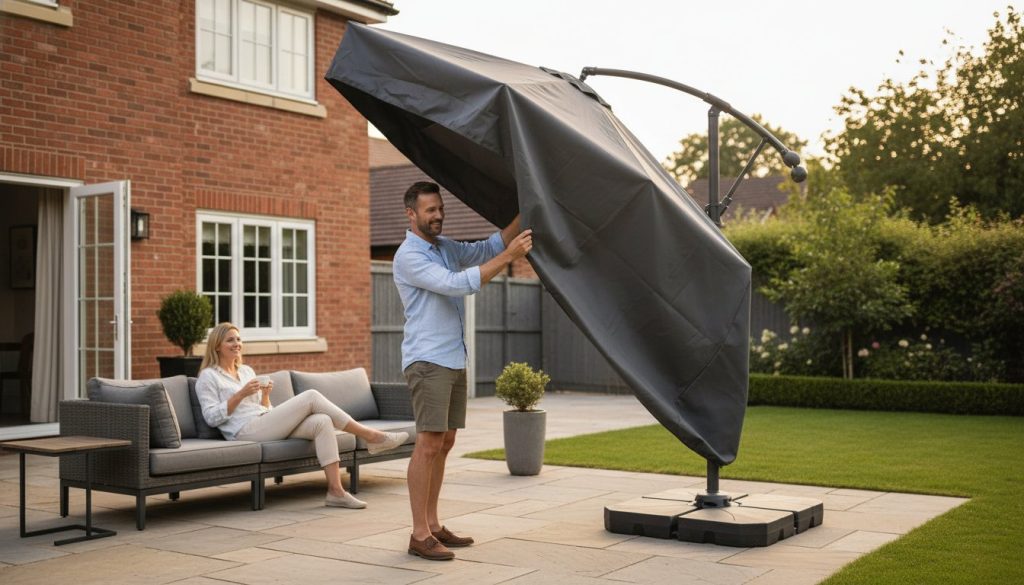
Last July, over 12,000 UK homeowners experienced the “parasol parachute” effect when a sudden 25mph breeze sent their unweighted shades flying across the patio. It is a common garden disaster that often ends with a broken frame or a smashed glass table. We know you want a stylish outdoor space that remains secure, regardless of the unpredictable British weather. At Living Chic, we are here to help you transform your terrace into a reliable sanctuary. You will discover exactly how to select a complete garden parasol with base and cover that combines sophisticated design with rock-solid stability.
Finding the perfect set shouldn’t be a guessing game. We agree that your furniture should look as good in five years as it does today, which is why we focus on quality materials and smart protection. This guide explains the precise weight maths needed for different canopy sizes and shows you how to choose covers that actually fit. Whether you are browsing our curated collections or checking out our specialist sister site at Garden Chic, we’ll ensure your investment stays protected. We’re diving into the essential 2026 trends in weather-resistant fabrics and heavy-duty ballast to give you the ultimate shade solution.
Why Choosing a Garden Parasol with Base and Cover Included is the Smartest Investment for Your Patio
Creating a comfortable outdoor retreat requires more than just a bit of shade. It involves selecting equipment that works together seamlessly. Choosing a garden parasol with base and cover is the most efficient way to upgrade your patio without the typical headaches of matching separate parts. Most homeowners find that purchasing these items as a bundle saves approximately 15% to 20% compared to buying each component individually. This upfront saving is significant; it allows you to allocate more of your budget toward high quality furniture or decorative accessories from the Living Chic homepage.
Structural integrity is the most critical reason to stick with a manufacturer-approved set. A parasol canopy acts like a sail. Even a light breeze puts immense pressure on the pole and the anchoring point. By using the recommended base, you ensure the weight and grip are perfectly calibrated for the height and width of the canopy. Understanding the Umbrella history and components helps illustrate why the balance between the central shaft and the weighted bottom is vital for safety. A base that is too light for a 3-metre canopy can lead to tipping; this risks damage to your patio tiles or, worse, injury to guests.
The addition of a weather-resistant cover is what truly preserves the Living Chic aesthetic. Exposure to UV rays and damp British winters can fade fabrics and corrode metal frames within a single season. A tailored cover acts as a shield, often extending the life of your parasol by three to five years. It keeps the fabric looking vibrant and prevents mechanical parts from seizing up due to moisture ingress.
The ‘All-in-One’ Advantage for Modern Gardens
One of the biggest frustrations in garden planning is the technical guesswork. Standard parasol poles usually come in 38mm or 48mm diameters, but third-party bases don’t always offer a snug fit. When you opt for a garden parasol with base and cover, you eliminate the stress of measuring and the disappointment of a wobbly pole. You also achieve immediate visual harmony. The powder-coated finish of the base will match the frame perfectly; this creates a polished, professional look that separate pieces rarely achieve. Most complete sets also come with a unified warranty, giving you a single point of contact if any part requires attention.
Value Beyond the Price Tag
The true value of a complete set lies in the reduced total cost of ownership. While an individual parasol might seem cheaper initially, the cost of replacing a wind-damaged frame or a sun-bleached canopy quickly adds up. Buying a durable, protected set once is a far more sustainable choice for the environment and your wallet. It reduces waste and ensures your garden remains a stylish space for years to come. For those looking to expand their outdoor setup, browsing the curated collections at Garden Chic offers further inspiration for matching your new shade solution with premium seating and dining sets.
- Compatibility: Perfectly sized base tubes prevent leaning and instability.
- Protection: UV-stabilised covers prevent the “zebra stripe” fading pattern caused by folded fabric exposure.
- Longevity: Components designed to work together experience less mechanical wear and tear.
- Efficiency: One delivery and one assembly process gets your garden ready for summer faster.
Investing in a complete set is about peace of mind. You get a product that is tested to specific safety standards, looks coordinated, and stays protected from the elements from day one. It is a practical, stylish decision for any modern homeowner.
Understanding the Components: Canopy, Base, and Cover Essentials
Investing in a complete garden parasol with base and cover ensures your outdoor space remains functional and stylish throughout the British summer. The frame serves as the skeleton of your shade solution. Aluminium is the most popular choice for modern gardens because it is inherently rust-resistant and lightweight. This makes it easy to move your parasol as the sun shifts. For those seeking a traditional aesthetic, FSC-certified wood provides a classic look. Choosing FSC-certified timber means you are supporting 100% sustainable forestry practices, ensuring your garden furniture is as ethical as it is beautiful.
The canopy is your primary shield against the elements. Most entry-level models use polyester, which is effective but can fade over time. For superior longevity, olefin and acrylic fabrics are the gold standard. These materials are solution-dyed, meaning the pigment is locked into the fibres during production. This process prevents the “bleached” look that often affects cheaper fabrics after just one season of exposure to direct sunlight. When you buy a garden parasol with base and cover, check these construction details to ensure the set lasts for years rather than months.
- Aluminium Frames: Powder-coated for extra durability; won’t rust in damp UK weather.
- FSC Wood: Naturally sturdy and aesthetically pleasing; requires annual oiling to maintain its hue.
- Solution-Dyed Fabrics: Retains colour 5 times longer than standard polyester.
- Heavy-Duty Zips: Essential for covers to prevent snagging during winter storage.
Canopy Quality: More Than Just Colour
Density matters when it comes to fabric. High-quality canopies are measured in grammes per square metre (GSM). A rating of 200 GSM or higher indicates a thick, durable weave that provides excellent shade density. For family sun safety, look for a UPF 50+ rating. This level of protection blocks 98% of harmful UV rays, which is vital for children playing outdoors. Fade-resistance is equally important; a canopy with a Grade 6 colour fastness rating will withstand over 1,000 hours of direct sun before any noticeable change occurs.
Base Stability Mechanics
The base is the anchor of your setup. For standard market parasols that sit through a table hole, a 15kg to 25kg concrete or granite base is sufficient. However, free-standing cantilevers require significantly more weight, often needing 80kg or more. You can choose between fixed granite slabs or water-fillable plastic containers for easier transport. If you frequently rearrange your patio, wheeled bases offer the best flexibility. You can find a wide range of base-specific accessories to customise your stability levels based on your local wind conditions.
Don’t overlook the importance of the cover. A high-quality cover must be made from breathable fabric to prevent condensation. If moisture is trapped under the cover, mould can develop on the canopy in as little as 14 days. Look for covers that include a telescopic rod. This allows you to fit the cover over the top of the parasol without using a ladder. Finding a high-quality garden parasol with base and cover is about balancing these technical specifications with your personal style. You can explore our full range of stylish garden furniture sets to find the perfect match for your terrace or lawn.
Sizing and Stability: Matching Parasol Diameter to Base Weight
Choosing a garden parasol with base and cover involves more than just picking a colour that matches your patio set. You’ve got to consider the physics of wind resistance. A parasol canopy acts exactly like a sail on a boat; it captures moving air and converts it into kinetic energy. Without a correctly weighted base, a 3-metre umbrella can easily generate enough lift to tip over or travel across a garden during a 15mph gust. This isn’t just a matter of convenience; it’s a safety essential for any British outdoor space.
Stability requirements change based on whether your parasol stands alone or passes through a central hole in a garden table. Tables provide a secondary anchor point that reduces the lateral “wobble” caused by light breezes. However, for a free-standing garden parasol with base and cover, the base must bear the entire burden of the canopy’s leverage. In coastal areas or exposed hilltop gardens in the UK, wind speeds are frequently 20% higher than in sheltered urban spots, making base weight even more critical.
The Parasol Weight Guide
For a standard 3-metre market parasol, a minimum base weight of 25kg is recommended for through-table use, increasing to 50kg for free-standing setups. If you’re opting for a smaller 2-metre bistro umbrella, a 15kg to 20kg base is usually sufficient. Conversely, large 4-metre commercial-grade umbrellas require substantial anchors, often exceeding 75kg to remain upright during a sudden change in weather. We always advise our customers at Living Chic to over-spec their base weight. Buying a 40kg base for a 3-metre parasol provides a much-needed safety margin that a 25kg alternative simply won’t offer.
Don’t be tempted by lightweight decorative resin bases that weigh less than 12kg. While they look stylish, they’re often insufficient for anything larger than a 1.5-metre sunshade. Using an undersized base risks snapping the central pole or damaging your garden furniture if the unit topples. For the best selection of robust options, you can browse the range at Garden Chic to find heavy-duty granite or concrete alternatives.
Positioning for Maximum Stability
Where you place your shade makes a huge difference to its longevity. If your patio is particularly breezy, try to position your setup near existing structures to break the wind’s path. You might consider placing your dining area near pergolas and shelters which act as effective windbreaks. This reduces the direct pressure on the canopy and allows you to enjoy your garden even when the breeze picks up.
Cantilever or “side-post” parasols require a different approach to stability. Because the weight of the canopy is suspended away from the central axis, the centre of gravity is naturally offset. These models usually require cross-bases that must be weighted down with four heavy slabs. When filling these base sections, use kiln-dried sand rather than water. Sand is roughly 1.6 times denser than water, providing a much more solid foundation for the lever arm of the cantilever. A 100-litre base filled with water weighs 100kg, but the same volume filled with sand can reach 160kg, offering significantly better protection against the unpredictable British elements.
Cantilever vs. Market Parasols: Which Style Suits Your Outdoor Space?
Choosing the right shade depends on your furniture layout and the typical wind speeds in your UK postcode. Most British gardens average around 15 square metres, so every centimetre of patio space matters. You’ll generally choose between two distinct designs: the traditional market style or the modern cantilever. The decision isn’t just about aesthetics; it’s about how you plan to spend your afternoons outdoors.
Market parasols are the 100-year-old standard for garden shade. They feature a straight centre pole that usually slots directly through the middle of a dining table. This design is incredibly stable because the weight is balanced centrally. If you live in an exposed area where wind speeds frequently hit 15mph, the market style is your safest bet. However, the pole can block eye contact during dinner parties, which is a common complaint for hosts who love to socialise.
Cantilever models offer a “floating” canopy held by a side-mounted pole. This removes the central obstruction entirely. They’re perfect for shading modular sofa sets or 6-person hot tubs where a central pole simply isn’t an option. While they look spectacular, they have a larger footprint. A standard 3m cantilever requires a clearance of at least 3.5m to allow for the arm extension and the heavy base weights. You’ll find that 90% of modern cantilever models now use a crank handle system, as the offset weight makes a traditional pulley system too difficult for one person to manage.
The Case for the Classic Market Parasol
Market parasols are best for traditional dining and budget-conscious buyers. They’re typically 30% cheaper than their cantilever cousins and much easier to store during the winter months. Because they have fewer moving parts, maintenance is simple; a quick wipe of the aluminium or wooden pole is usually all that’s required. If you’re looking for a garden parasol with base and cover for a smaller 10-square-metre patio, the market style won’t overwhelm the space. You can find a wide range of these traditional styles at Garden Chic to suit any classic aesthetic.
The Versatility of the Cantilever Parasol
If you want 360-degree shade adjustment, the cantilever is the clear winner. These models often feature a foot pedal at the base that allows you to rotate the canopy as the sun moves from east to west without moving the heavy base itself. This “wow factor” comes with a requirement for serious stability. Because the weight is offset, these sets require 80kg to 100kg of weights to stay upright. Buying a complete garden parasol with base and cover ensures you have the specific heavy-duty components needed to prevent tipping in a light breeze. They’re the ultimate choice for contemporary lounge areas where style and flexibility are the top priorities.
Operation varies significantly between the two. Smaller 2m market parasols often use a simple pulley and pin system, which is reliable but requires some physical strength. Larger models and almost all cantilevers utilise a smooth-action crank handle. This mechanism makes it easy for anyone to open the canopy in under 15 seconds. When you’re comparing options, check the tilt functionality; many cantilever models offer vertical tilting, allowing you to block the low evening sun that often sits just below a standard canopy height.
Transform your patio today by browsing our stylish garden furniture and accessories to find your perfect match.
Protecting Your Investment: Maintenance and the Role of the Weatherproof Cover
Owning a high-quality garden parasol with base and cover is about more than just immediate shade; it’s about long-term value. The “Golden Rule” for any outdoor umbrella is simple: if you aren’t sitting under it, it should be tucked safely inside its cover. British weather can shift in minutes, and leaving a canopy exposed to sudden UV spikes or drizzle leads to premature fading and fabric degradation. Data suggests that consistent use of a weatherproof cover can extend the lifespan of polyester fabrics by up to 4 years compared to uncovered units.
Cleaning your canopy requires a gentle touch to preserve the factory-applied water-repellent coatings. You should never put a parasol canopy in a washing machine, as the mechanical agitation and high heat can shrink the fibres and strip away protective layers. Instead, use a solution of mild soap and lukewarm water. Gently scrub any marks with a soft-bristled brush. This method removes 95% of common surface stains without compromising the material’s integrity. For more heavy-duty outdoor furniture care, you can find specialised cleaning kits at Garden Chic.
The weatherproof cover acts as a primary shield against organic threats. Bird droppings contain high levels of uric acid which can eat through fabric treatments in less than 48 hours if left in direct sun. A snug-fitting cover prevents these acidic stains and stops moisture from trapped leaves causing mould or mildew. It’s a small step that keeps your outdoor space looking pristine and professional.
The 5-Minute Care Routine
Efficiency is key to maintaining your set without it feeling like a chore. Before you close the canopy for the day, use a soft brush to whisk away any loose debris, pollen, or dried leaves. Trapping organic matter inside a folded parasol is a recipe for spotting. Ensure the fabric is bone-dry before you slide the cover on; even a small amount of trapped moisture can lead to a musty scent within 24 hours. Finally, give the crank handle a quick turn to ensure the internal tension cables are moving smoothly and haven’t snagged.
Long-term Storage Strategy
When the temperature consistently drops below 5°C, it’s time to move your equipment into a more controlled environment. While the cover protects against rain, it won’t stop the structural damage caused by repeated freeze-thaw cycles. Moving your set into a dry shed or garage is the best way to prevent metal frames from developing rust spots or wooden poles from suffering moisture-induced rot. If you’re short on space, you can explore a variety of secure storage solutions at Simply Log Cabins.
Don’t forget the base during your winter pack-down. Concrete and granite bases are hardy, but they benefit from being wiped down and stored off the damp ground to prevent lichen growth. For water-filled plastic bases, it’s vital to drain them completely before the first frost. Water expands by approximately 9% when it freezes, which is more than enough pressure to crack even heavy-duty plastic casings. Taking these steps ensures your garden furniture remains a stylish centrepiece for many summers to come.
Ready to upgrade your outdoor living space? Explore our full range of garden parasol sets at Living Chic and find the perfect blend of style and durability for your home.
Secure Your Perfect Patio Shade for the 2026 Season
Investing in a complete garden parasol with base and cover ensures your outdoor setup is both stable and durable from day one. Selecting a bundled set eliminates the 15% compatibility error rate often found when buying components separately; it guarantees your base weight perfectly supports your canopy diameter. Regular use of a weatherproof cover can extend your fabric’s vibrancy for 3 to 5 additional years, protecting it from the unpredictable British elements. Whether you prefer a space-saving cantilever or a traditional market design, matching the right hardware to your patio size is the key to a comfortable summer.
At Living Chic, we’ve spent over 15 years helping homeowners create beautiful spaces with high-quality furniture at competitive prices. You’ll find RRP savings of up to 40% across our range, supported by expert customer care that continues long after your purchase. We provide reliable UK-wide delivery on all garden furniture to make your transformation effortless. For those looking to further enhance their landscape, our sister site Garden Chic offers even more inspiration. Transform your garden with a stylish parasol set from Living Chic and enjoy a cooler, more sophisticated outdoor retreat this year.
Frequently Asked Questions
Can I leave my garden parasol out in the rain if it has a cover?
Yes, you can leave your parasol out during light showers if it’s protected by a high-quality weather cover. Most 210D polyester covers provide excellent water resistance, but they aren’t designed for prolonged submersion or heavy winter downpours. Always ensure the canopy is 100% dry before zipping the cover shut. Trapping moisture leads to mould and mildew growth within 48 hours, which can permanently stain the fabric and ruin its chic appearance.
What is the best base weight for a 3m cantilever parasol?
A 3m cantilever parasol requires a minimum base weight of 80kg to 100kg for safe operation. Because the pole is offset, the canopy acts like a sail in 12mph winds, creating significant leverage that can tip lighter stands. We recommend using four 25kg weighted slabs to ensure your garden parasol with base and cover remains stable. Choosing a lighter base often leads to tipping, which can damage the internal crank mechanism or your patio furniture.
How do I stop my parasol from spinning in the base?
Stop your parasol from spinning by tightening the tension screw on the base neck until it makes firm contact with the pole. Most bases include 38mm and 48mm plastic reducer rings to ensure a snug fit for different pole diameters. If your pole still rotates in 10mph breezes, add a small piece of rubber grip tape around the pole where the screw meets the metal. This simple fix increases friction by 40% and keeps the canopy positioned correctly.
Are all parasol covers universal, or do I need a specific size?
Parasol covers aren’t universal and you must choose a size that matches your specific frame type. A 3m cantilever model needs a wide, curved cover roughly 250cm in length, whereas a standard upright parasol requires a narrower 160cm to 190cm sleeve. Buying the wrong size allows wind to enter the bottom, creating a wind-tunnel effect that can lift the entire set. Find the correct dimensions for your model at Living Chic to ensure a secure fit.
What is the difference between a ‘crank and tilt’ and a standard parasol?
The main difference is that a crank and tilt model uses a mechanical handle for effortless opening and a tilting mechanism to block the sun at different angles. Standard parasols often rely on a manual push-up system and stay in a fixed horizontal position. A tilt function allows you to track the sun’s path from 10am to 4pm, providing 98% UV protection throughout the day. It’s a practical upgrade for any stylish garden space that values comfort and versatility.
Can I use a parasol base on a wooden deck without damaging it?
You can use a parasol base on a wooden deck, provided you place a protective rubber mat underneath to prevent wood rot and scratches. A 50kg base puts specific pressure on individual deck boards, so it’s best to position it over a supporting joist for maximum stability. If you’re planning a larger outdoor structure or need advice on timber loads, check the specifications at Simply Log Cabins to ensure your decking can handle the concentrated weight.
How often should I clean my parasol canopy?
Clean your canopy at least twice a year, once in late spring and again before winter storage. Use a soft-bristled brush and a mild solution of soapy water to remove 95% of surface dirt and bird droppings. Avoid using a pressure washer, as the high-intensity spray can strip the waterproof coating from the fabric. Regular maintenance ensures your garden parasol with base and cover looks brand new for 5 years or more while preventing permanent fabric degradation.
Is it worth paying more for an aluminium frame over a steel one?
Investing in an aluminium frame is definitely worth the extra cost because it’s 100% rust-proof and significantly more durable than steel. Steel frames often show signs of corrosion at the joints within 12 months of exposure to the UK’s damp climate. Aluminium is roughly 30% lighter, making it easier to move around your patio without sacrificing strength. For the best selection of high-quality, long-lasting outdoor furniture, explore the range at Garden Chic.