
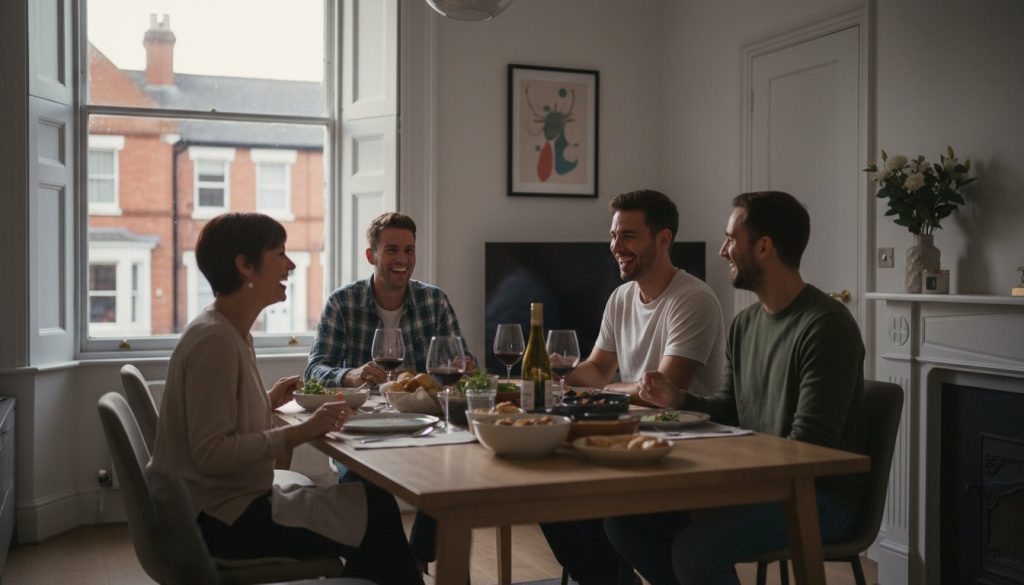
Last Saturday, one of our customers, Sarah, found herself turning away two guests from a planned Sunday roast because her current kitchen setup simply couldn’t seat six people. It’s a common dilemma in UK homes where every square inch of floor space is precious. You likely agree that feeling cramped during daily meals is exhausting; the fear of buying a bulky table that dominates the room often stops you from upgrading your furniture.
At Living Chic, we believe your furniture should adapt to your life, not the other way around. By selecting the right extendable dining table for small space requirements, you can finally enjoy a versatile dining area that looks sleek daily but expands in seconds for guests. We promise to help you find high quality, stylish pieces that match your decor while maximising your square footage. This guide explores the latest design trends and practical mechanisms that ensure your home remains a functional, beautiful sanctuary for both quiet nights in and lively dinner parties.
Why an Extendable Dining Table is the Secret to Small Space Success
Creating a sanctuary in a compact UK home starts with clever furniture choices. With the average new-build house in the United Kingdom measuring approximately 76 square metres, every centimetre of floor space must earn its keep. A cluttered room often leads to a cluttered mind. Choosing an extendable dining table for small space environments provides a psychological reset. It allows your home to remain airy and open during the day while offering the capacity to host friends at a moment’s notice. This flexibility is the cornerstone of modern, stress-free living.
At Living Chic, we define the perfect small-space table by its expansion ratio. It’s not just about being small; it’s about the transformation. A truly effective design might have a closed footprint of just 80cm but extend to 160cm or more. This versatility supports the multi-functional reality of 2025 and 2026 lifestyles. Your table might serve as a focused workstation at 9:00 AM and a social hub by 7:00 PM. We prioritise high-quality materials like solid oak and tempered glass, ensuring that the engineering is as beautiful as the aesthetic.
The ‘Living Chic’ approach merges this clever engineering with a curated style. Whether you are looking for indoor furniture or browsing our sister sites like Garden Chic for outdoor inspiration, the goal remains the same: maximise utility without sacrificing elegance. For those extending their living space into the garden with structures from Simply Log Cabins, a versatile table is often the first piece of furniture chosen to bridge the gap between indoor comfort and outdoor leisure.
The Evolution of Compact Dining
Dining furniture has moved away from the bulky, static heirlooms of the past. Modern design trends for 2026 favour ‘invisible’ extensions where seams are hidden and mechanisms are effortless. We’ve seen a significant shift towards ‘zonal living’ in open-plan UK flats. Instead of dedicated dining rooms, homeowners use sleek tables to define a dining zone that doesn’t overwhelm the kitchen or lounge. Modern manufacturers now utilise common extension mechanisms like butterfly leaves or synchronised slides to make these transitions seamless for the user.
Identifying Your Specific Space Constraints
Extension Mechanisms: Finding the Best Fit for Your Routine
Choosing the right mechanism determines how you’ll use your room every day. An extendable dining table for small space must balance effortless operation with mechanical reliability. The way a table grows affects your floor plan and how many guests you can comfortably seat without blocking walkways.
Butterfly extensions are a favourite for modern homes. The leaf is hidden inside the table frame, folding in half like a book. You simply pull the table ends apart and the leaf rotates into place. It’s a self-storing solution that removes the need to find cupboard space for extra panels.
Drop-leaf and Gateleg tables remain the classic choice for ultra-narrow areas. Some gateleg models measure as little as 20cm wide when fully collapsed, acting as a slim console against a wall. You lift the side panels and swing a supporting leg out to create a dining surface. It’s a practical, traditional approach for studio flats.
Slide-out or ‘Draw’ leaves offer a quick adjustment. These leaves sit directly under the main tabletop. You pull them out from either end, and they often pop up to sit flush with the centre. While simple, these can sometimes limit legroom because the tabletop is effectively double-thick when closed.
The choice between Central and End extensions significantly impacts your comfort. Central extensions split the table in the middle, which usually keeps the legs at the corners, providing maximum legroom. End extensions pull out from the sides. These are easier to operate if the table is pushed against a wall, but guests sitting at the ends might find their knees hitting the table legs.
Butterfly vs. Drop-Leaf: Which is Easier?
Butterfly mechanisms are designed for single-person operation. High-quality glides mean you won’t need to struggle with heavy lifting. Because the leaves are integrated, you don’t have to worry about storing parts elsewhere. Drop-leaf tables offer more flexibility as you can open just one side for a solo meal. However, they require more physical effort to lift and lock the panels. For long-term durability, check that folding joints are made of reinforced steel or solid brass to prevent sagging after years of use.
Modern Innovations in Table Engineering
Modern furniture engineering has introduced synchronised glides. This technology allows you to pull one end of the table while the other end moves automatically, making expansion a five-second task. Safety is another focus for family homes. Many new models include magnetic locks and safety catches to ensure the table doesn’t shift during a meal. When testing a table, the movement should feel smooth and silent. Following small space design principles helps you choose a mechanism that doesn’t clutter your visual field. You can find a wide variety of these clever designs in our stylish dining furniture collection.
Measuring for Success: The Small Space Clearance Guide
Precision is the secret to a functional home. When you’re selecting an extendable dining table for small space, you aren’t just buying a piece of furniture; you’re managing floor traffic. The most critical measurement to remember is the 90cm rule. This 90cm gap between the table edge and the wall allows guests to sit comfortably and provides enough room for someone to walk behind them without a squeeze. If your room is particularly tight, you can reduce this to 70cm, but it will feel snug.
You must plan for two different footprints. First, measure the ‘closed’ state. This is how the table will sit 95% of the time. Ensure it doesn’t obstruct the natural flow of the room or block access to doors. Second, measure the ‘fully extended’ state. Check that it doesn’t hit radiators or sideboards when the leaves are out. Don’t forget to account for chair ‘tuck-in’ depth. A chair usually requires 45cm to 55cm of depth when pushed in, so ensure your table legs are spaced wide enough to accommodate your seating without them sticking out into the walkway.
Step-by-Step Spatial Planning
Don’t rely on guesswork. Grab a roll of masking tape and mark the table’s dimensions directly onto your floor. Mark both the compact and the extended lengths. This physical guide helps you visualise how much floor remains for moving around. Keep an eye on the table height as well. Most standard tables sit at 75cm. Choosing a design with a thinner top or tapered legs creates visual ‘breathing room’, making a small room feel less crowded. If you’re looking to refresh your entire layout, our indoor furniture range offers various slimline styles designed for modern UK homes.
Seating Capacity vs. Comfort
To avoid bumped elbows, follow the 60cm rule. Each diner needs 60cm of width to eat comfortably. If your extended table is 180cm long, it’ll fit three people per side perfectly. If you try to squeeze four, your guests will feel cramped. For those truly tight corners, consider using benches instead of chairs. Benches are brilliant for maximising seating because they can be tucked completely under the table when not in use, opening up the floor space instantly. If your dining area leads out to a terrace, you might find similar space-saving inspiration in the curated collections at Garden Chic, where compact seating is a priority.
Materials and Aesthetics: Choosing a ‘Chic’ and Durable Finish
Selecting the right finish for your extendable dining table for small space requires a balance between visual appeal and everyday resilience. Solid oak remains a gold standard for many UK homeowners because of its natural grain and incredible longevity. It’s a dense material that handles the mechanical stress of extension leaves without warping. If you’re looking for something lighter and more budget-friendly, high-quality timber and veneers from specialists like Greenhill Timbers provide the same aesthetic warmth but are often easier to move, which is a significant advantage in compact apartments where furniture needs to be versatile.
Modern interiors benefit greatly from ceramic and tempered glass surfaces. These materials are particularly effective in smaller rooms because they reflect up to 80% of natural light, preventing the furniture from feeling “heavy” or overbearing. Ceramic is virtually impossible to scratch and can withstand heat from plates directly from the oven. At Living Chic, we’ve spent over 15 years sourcing furniture that meets these high standards. We attend major trade exhibitions across Europe to ensure our collection features the latest durable finishes that don’t compromise on style.
Painted finishes offer a clever way to define a dining zone within an open-plan room. A soft grey or off-white pedestal table can brighten a dark corner, while darker navy finishes create a sophisticated focal point. Our commitment to quality means every piece is selected for its ability to withstand the rigours of daily life, ensuring your investment looks as good in five years as it does today.
The Practicality of Different Surfaces
Daily family use demands surfaces that resist heat and spills. Ceramic tops are non-porous, so red wine or coffee won’t leave permanent marks. For wooden surfaces, a simple damp microfibre cloth is usually enough for maintenance. Avoid harsh chemicals that can strip the protective lacquer. In rooms with limited windows, choosing a high-gloss or glass finish helps bounce light into the corners, making the entire area feel more spacious and airy.
Matching Your Table to Your Interior Style
If you’re looking to extend your style beyond the dining room, our family of brands includes Garden Chic for outdoor entertaining and Simply Log Cabins for extra garden room space. Finding a high-quality extendable dining table for small space is easy when you shop our curated range.
Explore our full collection of stylish extendable dining tables at Living Chic.
Transforming Your Home: Styling and Multi-Functional Layouts
Choosing an extendable dining table for small space is just the first step in creating a versatile home. Success lies in how you integrate it into your daily routine. If you’re tight on room, push your table against a wall to reclaim valuable floor area. This simple move can save up to 25% of your walkable space during the week. When guests arrive, pull it into the centre of the room to create a welcoming focal point. It’s a practical way to manage a compact floor plan without sacrificing the ability to host.
Creative Layouts for Awkward Spaces
Don’t be afraid to think outside the box. Diagonal placement works wonders in narrow rooms. Angling your table at 45 degrees can improve traffic flow by roughly 15% compared to a straight setup. If you’re truly short on space, consider a console-to-dining table. These slim units sit against a hallway wall but expand into full banquet tables when needed. Incorporating large mirrors on adjacent walls is another classic trick. It doubles the perceived depth of your dining zone, making a 10-square-metre room feel twice as large.
Complete Your Look with Living Chic
At Living Chic, we help you curate a home that reflects your unique personality. Whether you prefer industrial oak or sleek glass, your furniture should tell a story. You can explore our full range of dining room furniture to find the perfect match for your style. If you want to take that stylish vibe outside, visit Garden Chic for outdoor dining sets that stand up to the British weather. We’re a family of brands dedicated to quality and value across every corner of your property.
Ready to Maximise Your Home’s Potential?
Choosing the right extendable dining table for small space living changes how you use your home every day. You’ve seen how measuring for a 90cm clearance zone ensures comfortable movement; while selecting the right butterfly or leaf mechanism keeps your daily routine seamless. Don’t settle for cramped quarters when a flexible layout can accommodate both quiet morning coffees and lively weekend dinner parties. Style and functionality really can go hand in hand.
At Living Chic, we’ve spent years attending major trade exhibitions across Europe to find the most stylish, durable designs specifically for UK homes. Our team sources high-quality indoor furniture that delivers significant RRP savings, so you get premium aesthetics without the premium price tag. Every purchase is backed by our dedicated UK customer care team. They’re here to help you with expert advice from selection through to delivery.
It’s time to create a dining area that works as hard as you do. Shop our curated collection of extendable dining tables and discover how effortless small-space hosting can be. We’re excited to help you transform your living space into something truly special.
Frequently Asked Questions
What is the best shape for an extendable dining table in a small room?
Round or oval tables are the best shape for an extendable dining table for small space because their curved edges improve room flow and eliminate sharp corners. A 90cm round table fits into tight corners much better than square alternatives. At Living Chic, we find these shapes allow for flexible seating since you aren’t restricted by fixed corners when adding extra guests.
How much space do I need around a dining table for chairs?
You should aim for a minimum of 90cm of clearance between the table edge and the nearest wall or piece of furniture. This distance provides enough room for guests to pull out chairs and walk behind seated people comfortably. In very tight spots, 60cm is the absolute minimum, but it will feel cramped during dinner parties or family gatherings.
Can one person easily extend a butterfly leaf table?
A single person can easily operate a butterfly leaf table thanks to the integrated hinge mechanism found in modern designs. You simply pull the table ends apart, lift the folded leaf from the central compartment, and flip it open. Most high quality mechanisms feature smooth metal glides that require less than 5kg of pulling force to open.
Are round extendable tables better for small spaces than rectangular ones?
Round extendable dining table for small space options are generally better for compact rooms as they have a smaller visual footprint. However, a rectangular table is more efficient if you need to push one side flush against a wall to save floor space. For a 10 square metre dining area, a round pedestal table often feels less cluttered than a four-legged rectangular one.
Where do you store the extra leaves for an extendable table?
Many stylish designs feature self-storing leaves that tuck away directly under the tabletop when not in use. This is the most practical choice for compact homes where cupboard space is limited. If your table has separate leaves, it’s best to store them flat under a bed or at the back of a wardrobe to prevent the timber from leaning and bowing over time.
How do I care for a wooden extendable dining table to prevent warping?
Keep your wooden table in a room with a consistent humidity level between 40% and 60% to prevent the timber from warping. Avoid placing the furniture directly next to radiators or in the path of air conditioning units. For maintenance, apply a high quality wax every six months to nourish the grain and provide a protective barrier against moisture.
What chairs take up the least space with an extendable table?
Armless chairs or slimline bistro styles take up the least amount of room because they tuck fully under the table. Choosing chairs with a width of 45cm or less ensures you can fit more guests around the table when it’s fully extended. If you’re looking for versatile seating that works indoors or for occasional use with garden furniture, consider lightweight stackable options that you can store away easily.