

There’s nothing worse than a sudden chill cutting a perfect garden evening short. But choosing the right patio heater can feel overwhelming, with endless questions swirling: Is electric cheaper than gas? How much will it really add to my energy bills? And most importantly, is it safe for my family and pets? The technical jargon of BTUs and Watts can leave you feeling confused, worried about making a costly mistake that doesn’t suit your stylish space.
Consider this your complete guide to finding the perfect solution. We’re here to help you transform your outdoor space into a chic, year-round retreat. We’ll break down the real running costs in pounds, compare the key types, and highlight the essential safety features to look for. By the end, you’ll have the clarity and confidence to select a quality, efficient heater that perfectly suits your garden and your budget. Get ready to enjoy those cosy evenings outdoors for longer, without any buyer’s remorse.
Key Takeaways
- Understand the key differences between electric and gas models to find the right balance of power, convenience, and running costs for your garden.
- Evaluate factors like heating area, running costs in pounds (£), and essential safety features to ensure you invest wisely.
- Discover how to match the perfect style of patio heater-from freestanding statement pieces to discreet wall-mounted units-to your outdoor layout.
- Learn simple maintenance and placement tips to maximise your heater’s performance and enjoy cosy evenings for years to come.
Understanding the Main Types of Patio Heaters
Choosing the right patio heater is the first step in transforming your garden into a year-round retreat. The perfect model for you will depend on your space, your budget, and how you plan to use it. The decision primarily comes down to two power sources: electric and gas. Before we explore the details, it’s helpful to understand what is a patio heater at its core: a device that uses either radiant or convection heat to warm an outdoor area. Let’s break down what that means for you.
Electric Patio Heaters (Infrared/Halogen)
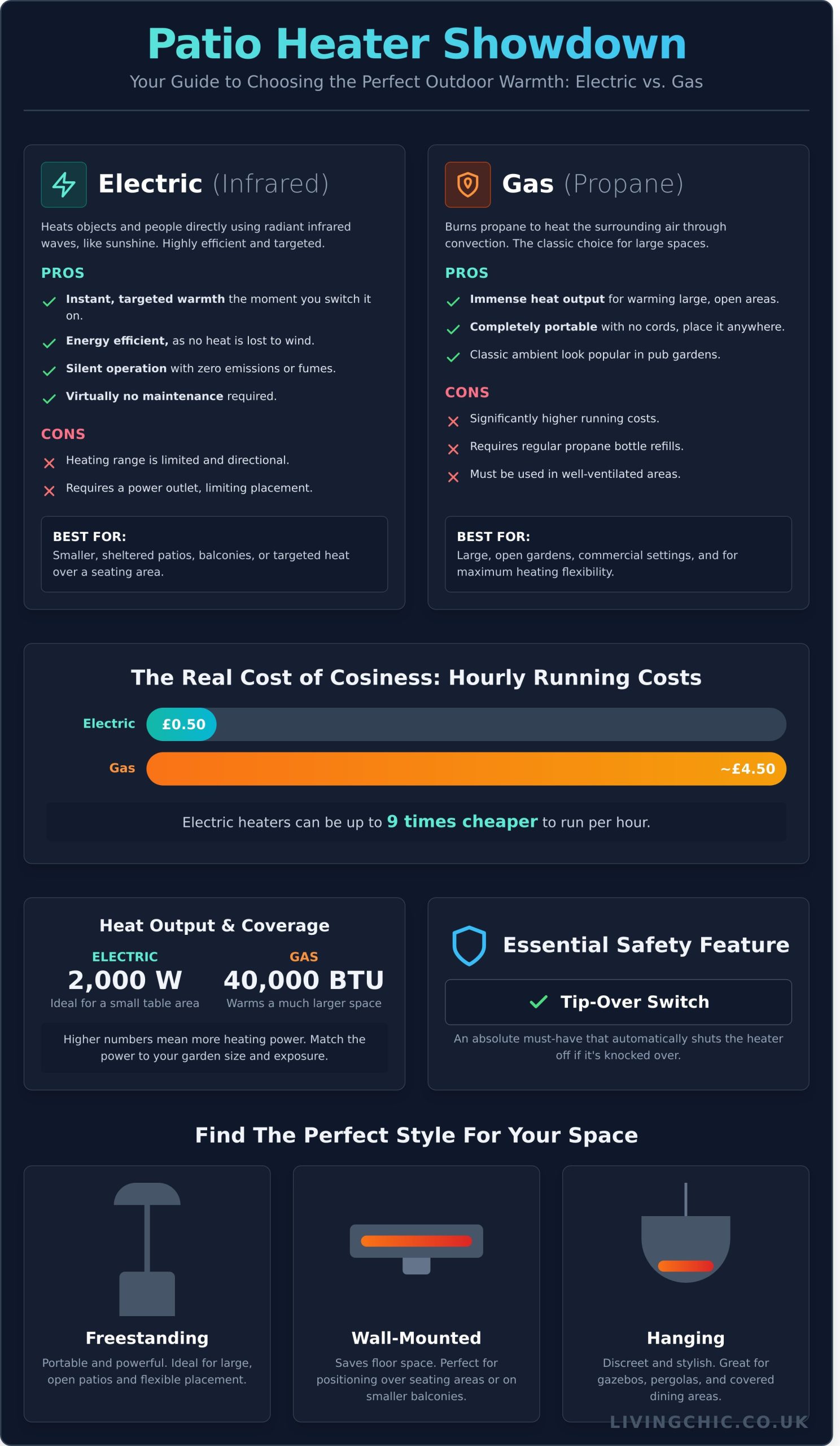
Electric models work by emitting infrared waves, a form of radiant heat. Instead of warming the air, this energy directly heats objects and people in its path, much like the warmth of the sun. This method is incredibly efficient and effective.
- Pros: Instant, targeted warmth. Highly energy-efficient as no heat is lost to the wind. Silent operation, zero emissions, and virtually no maintenance. They are also the safest choice for semi-enclosed spaces like gazebos.
- Cons: The heating range is often limited to the area directly in front of the unit. They require a nearby power outlet, which can restrict placement, and their direct heat can feel less effective on very breezy evenings.
Best for: Smaller, sheltered patios, balconies, or positioning directly over a seating area under a pergola.
Gas Patio Heaters (Propane)
Gas heaters burn propane to create a flame that heats an element, which then radiates warmth and heats the surrounding air through convection. This is the classic “mushroom” style heater you often see in pub gardens and restaurant terraces.
- Pros: Immense heat output capable of warming large, open areas. As they are powered by a self-contained propane bottle, they are completely portable and can be placed anywhere without needing cords.
- Cons: They require regular propane bottle refills, which adds to the running cost. The convection heat can be blown away in strong winds, and they must be used in well-ventilated areas due to emissions.
Best for: Large, open gardens and patios, commercial settings, or anywhere you need powerful, cordless heating flexibility.
Quick Comparison Table: Electric vs. Gas
| Feature | Electric Heater | Gas Heater |
|---|---|---|
| Heat Type | Radiant (Heats objects) | Convection (Heats air) |
| Running Cost | Lower (from ~35p per hour) | Higher (Varies with gas prices) |
| Portability | Limited by cord length | Excellent (No cords) |
| Maintenance | Very Low | Low (Requires gas changes) |
| Best Use Case | Sheltered, smaller spaces | Large, open areas |
Key Factors to Consider Before You Buy
Moving beyond the different types, choosing the right patio heater comes down to your specific needs. Understanding a few key specifications will help you transform your chilly evenings into cosy gatherings. We’ll break down the technical details into practical advice, focusing on power, running costs, and essential safety to ensure you find the perfect match for your garden.
Heat Output & Coverage Area (BTU vs. Watts)
The power of a patio heater determines how much space it can warm. Gas heaters measure this in British Thermal Units (BTUs), while electric models use Watts (W). A higher number means more heat. As a guide, a 2000W (2kW) electric heater is ideal for a small table area, while a 40,000 BTU gas heater can warm a much larger space. Consider how open your garden is-a sheltered patio will retain heat better than an exposed one. For a detailed breakdown of models and their performance, CNET’s guide to the best patio heaters offers excellent expert reviews.
Running Costs: A Realistic Comparison
Understanding the ongoing cost is crucial for making a smart purchase. In the UK, electricity and gas prices vary, but we can make a simple comparison.
- Electric Heaters: Based on an average electricity rate of 25p per kWh, a standard 2kW electric heater will cost approximately 50p per hour to run.
- Gas Heaters: A 9kg propane bottle costs around £45 and will last roughly 9-11 hours in a typical 13kW heater, making the cost around £4.10 – £5.00 per hour.
While gas models offer more power, electric heaters provide a significantly more cost-effective way to stay warm.
Essential Safety Features
Your peace of mind is paramount. Modern heaters are designed with safety at their core, so look for these key features to protect your family and home.
- Tip-Over Switch: An absolute must-have, this feature automatically cuts the power or gas supply if the heater is knocked over.
- Cool-Touch Housing: Reduces the risk of accidental burns, making it a safer choice around children and pets.
- Oxygen Depletion Sensor (ODS): A vital feature for gas models, it shuts the unit off if oxygen levels in the air drop too low.
Always ensure your heater has proper clearance from flammable materials like awnings, fences, and furniture.
Weather Resistance & IP Ratings Explained
Since your heater will live outdoors, it needs to withstand the British weather. This is where the IP (Ingress Protection) rating comes in. This two-digit code tells you how well it’s protected against solids (first digit) and liquids (second digit). For example, a heater with an IPX4 rating is splash-proof and can handle light rain. If your garden is very exposed, look for a higher rating like IP65 for greater protection. To prolong its life and style, we always recommend using a quality protective cover when not in use.
Finding the Right Style for Your Space
A patio heater is more than just a source of warmth; it’s a key piece of your garden’s design. The right style can elevate your outdoor aesthetic, define social zones, and transform your patio into a chic, year-round retreat. Choosing a model that complements your space ensures it’s a stylish accessory, not just a utility. Let’s explore the designs that will integrate seamlessly into your garden layout.
Freestanding & Tower Heaters
The quintessential choice for flexibility and presence. Classic gas ‘mushroom’ heaters are perfect for distributing warmth across larger, open-plan seating areas, becoming a visual anchor for social gatherings. For a more contemporary feel, sleek electric tower heaters offer a minimalist profile that blends beautifully with modern furniture. Both styles are easily repositionable, allowing you to adapt your layout for any occasion.
Wall-Mounted Heaters
Ideal for maximising every square inch of a smaller patio, terrace, or balcony. By mounting the unit on a wall, you reclaim valuable floor space while creating a permanent and discreet heating solution. These are almost exclusively electric and provide targeted, radiant heat. While they often require professional installation, the result is a clean, integrated look that feels like a natural part of your home’s architecture.
Hanging & Parasol Heaters
Create an inviting canopy of warmth directly over your outdoor dining table or lounge set. Hanging heaters are suspended from a pergola or ceiling, providing focused, downward heat that’s perfect for keeping guests comfortable during alfresco dinners. Parasol-specific models clamp cleverly onto the central pole of your garden umbrella, making them a brilliant, space-saving addition. Find the perfect furniture for your cosy evenings.
Tabletop Heaters
For intimate conversations and smaller groups, a tabletop patio heater adds a wonderful focal point. These compact and portable units sit directly on your table, providing gentle warmth and a soft glow that encourages guests to linger longer. Available in both electric and small gas canister models, they are an excellent, stylish way to create a cosy and inviting atmosphere for two to four people. If you’re looking to further elevate your garden entertaining, pairing your heater with a gas, wood-fired, or multi-fuel pizza oven is a fantastic way to create the ultimate outdoor dining experience. And if you really want to make your garden the heart of summer gatherings, our ultimate BBQ guide to choosing and mastering your grill will help you complete the perfect outdoor entertaining setup.
Installation, Maintenance, and Getting the Most From Your Heater
You’ve chosen the perfect patio heater to transform your garden into a year-round retreat. Now, let’s ensure you enjoy it safely and for years to come. Following these simple tips for setup, care, and placement will help you get the most value and warmth from your stylish new addition.
Setup & Installation Tips
A correct setup is the first step to safe and efficient operation. Always consult your product manual first, but here are some key points for each type:
- Gas Heaters: When connecting a propane bottle, ensure the valve is off. Hand-tighten the regulator, then use a wrench for a final quarter-turn. To check for leaks, apply a solution of soapy water to the connection – if bubbles form when you turn the gas on, there’s a leak. Tighten and re-test.
- Electric Heaters: Always plug your heater into an outdoor socket that is weatherproof and RCD-protected for safety. Avoid using indoor extension cords, as they are not designed for outdoor conditions.
- Wall-Mounted Heaters: For any model that requires fixing to a wall or structure, we strongly recommend professional installation. A qualified electrician will ensure it is securely mounted and safely wired into your home’s electrical system.
Simple Maintenance for Longevity
A little care goes a long way in keeping your patio heater performing at its best and looking chic. Make these checks part of your routine:
- Regular Cleaning: Wipe down the heater’s surfaces with a soft, damp cloth to prevent dirt and dust buildup, especially on the reflector and emitter guards.
- Seasonal Checks: Before the first use of the season, inspect gas hoses for any signs of cracking or brittleness. For electric models, check the power cord for any damage.
- Protect from the Elements: A quality, weatherproof cover is your heater’s best friend. Use it whenever the heater is not in use to protect it from rain, frost, and sun damage, significantly extending its lifespan.
Strategic Placement for Maximum Efficiency
Where you place your heater can make a huge difference to its effectiveness. To create the perfect warm and inviting zone, consider the following:
- Beat the Breeze: Position your heater in a sheltered spot, using walls, fences, or parasols to block the prevailing wind. This prevents the heat from being carried away.
- Line of Sight: Infrared heaters warm objects and people directly. For the best effect, ensure there is a clear, unobstructed line of sight between the heater and your seating area.
- Central Heat Source: Freestanding gas heaters work well when placed centrally within a group, allowing heat to radiate outwards. Always ensure there is plenty of ventilation and clearance from flammable materials.
With a little care, your heater will provide countless evenings of warmth and comfort. It’s the final touch in creating an inviting outdoor space you can enjoy whatever the weather. Explore our full range of stylish garden accessories at livingchic.co.uk to complete your perfect patio setup.
Transform Your Garden into a Year-Round Haven
Choosing the right patio heater is the key to unlocking your garden’s full potential, no matter the season. By focusing on the best fuel type for your needs and matching the heat output to your space, you can create a warm and inviting atmosphere. Remember, the right style can elevate your heater from a simple utility to a chic focal point of your outdoor decor.
Ready to bring warmth and style to your outdoor gatherings? At Living Chic, we pride ourselves on offering a wide range of stylish options to suit every garden aesthetic, backed by high-quality customer care and competitive prices on all our garden essentials. We make it simple to find a model that perfectly suits your taste and budget. Explore our stylish collection of patio heaters and discover the perfect, quality addition to your home.
Extend your evenings, entertain with confidence, and make more memories outdoors. Your perfect outdoor ambiance awaits.
Frequently Asked Questions
Are patio heaters expensive to run in the UK?
Running costs vary depending on the type of patio heater you choose. Electric models are generally more affordable per hour. For instance, a 2kW electric heater costs around 55-60p per hour based on current energy prices. A gas heater, while more powerful, can cost between £2.50 and £3.50 per hour to run on bottled propane. Consider how often you’ll use it to find the most cost-effective and stylish solution for your garden gatherings.
Can you use a patio heater under a covered area or gazebo?
Yes, but with extreme caution and only certain types. Electric infrared heaters are the best choice for covered or semi-enclosed spaces as they don’t produce fumes. Always ensure there is adequate ventilation and follow the manufacturer’s guidelines for clearance, typically at least 1 metre from the ceiling and walls. Gas heaters must never be used in enclosed spaces due to the risk of carbon monoxide build-up, making them suitable only for open-air patios.
How much space does an average patio heater warm up?
The heating area depends on the heater’s power, measured in kilowatts (kW). A typical 2kW wall-mounted or freestanding electric heater can comfortably warm an area of around 9 square metres, perfect for a small seating arrangement. A larger, more powerful 13kW gas ‘mushroom’ heater can warm a much wider space, often up to 20-25 square metres, making it ideal for bigger patios and larger social events. Always check the product specifications for precise details.
Are infrared electric heaters better than traditional gas heaters?
One isn’t strictly better; they simply suit different needs. Infrared electric heaters are highly efficient as they heat objects and people directly, not the air, making them great for breezy conditions and cheaper to run. Traditional gas heaters provide powerful, ambient heat over a larger area and offer portability without needing a plug socket. Your choice depends on your space, budget, and how you plan to enjoy your stylish outdoor area.
What is the safest type of patio heater for a family garden?
For gardens with children and pets, electric patio heaters are generally the safest option. They don’t have a naked flame, eliminating a significant fire risk. Many high-quality models also come with built-in safety features like weighted bases, protective grilles, and automatic tip-over switches that cut the power if they are knocked. This provides excellent peace of mind, allowing your family to enjoy a cosy garden atmosphere safely and comfortably.
Do patio heaters work in the wind?
Their effectiveness in wind varies by type. Infrared electric heaters perform exceptionally well in breezy conditions. This is because they use infrared waves to heat solid objects (like you and your furniture) directly, so the warmth isn’t simply blown away. Gas heaters, which work by heating the surrounding air, are less effective in the wind as the warm air they produce can be quickly dispersed, reducing their heating impact significantly.