
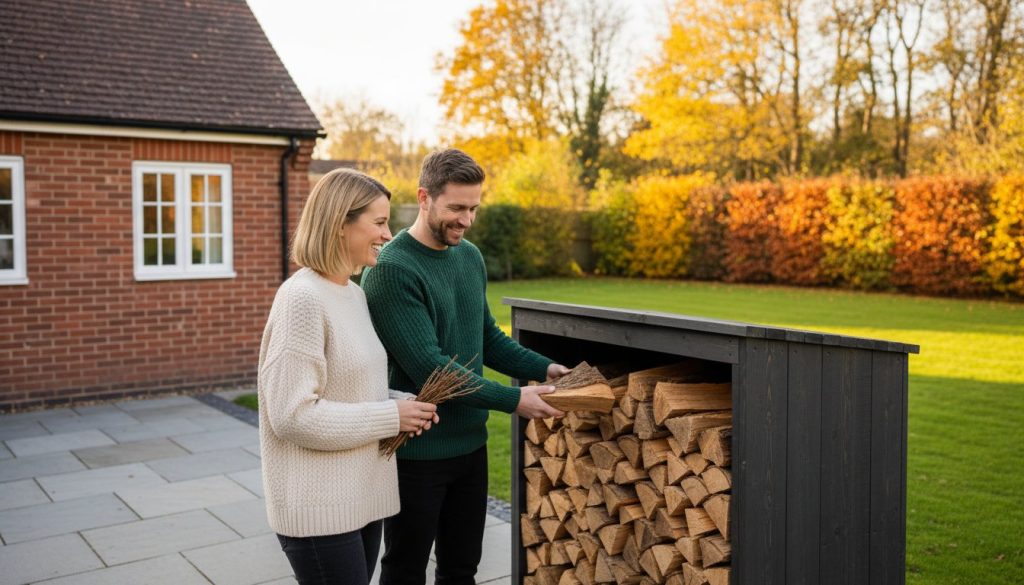
What if the secret to a roaring fire isn’t the stove itself, but how you treat your fuel before it even reaches the hearth? Many homeowners find themselves frustrated by logs that hiss and smoke rather than burn. This often leads to wasted money on unseasoned wood and a garden cluttered with unsightly plastic tarpaulins. Finding the right log store for firewood uk is about more than just tidying up; it’s a vital part of the seasoning process that ensures your fuel meets the legal ‘Ready to Burn’ standard of 20% moisture or less.
We know you want a garden that looks as good as your home feels. It’s a common frustration to have a high-quality stove but struggle with poor heat output due to damp logs. This guide will show you how to select and position the perfect log store to ensure seasoned, bone-dry firewood all year round whilst enhancing your outdoor aesthetic. You’ll learn about the importance of engineered airflow, the latest UK regulations for 2026, and how to turn a functional necessity into a stylish garden feature that provides maximum heat for your living space.
Why Every UK Wood Burner Needs a Dedicated Log Store
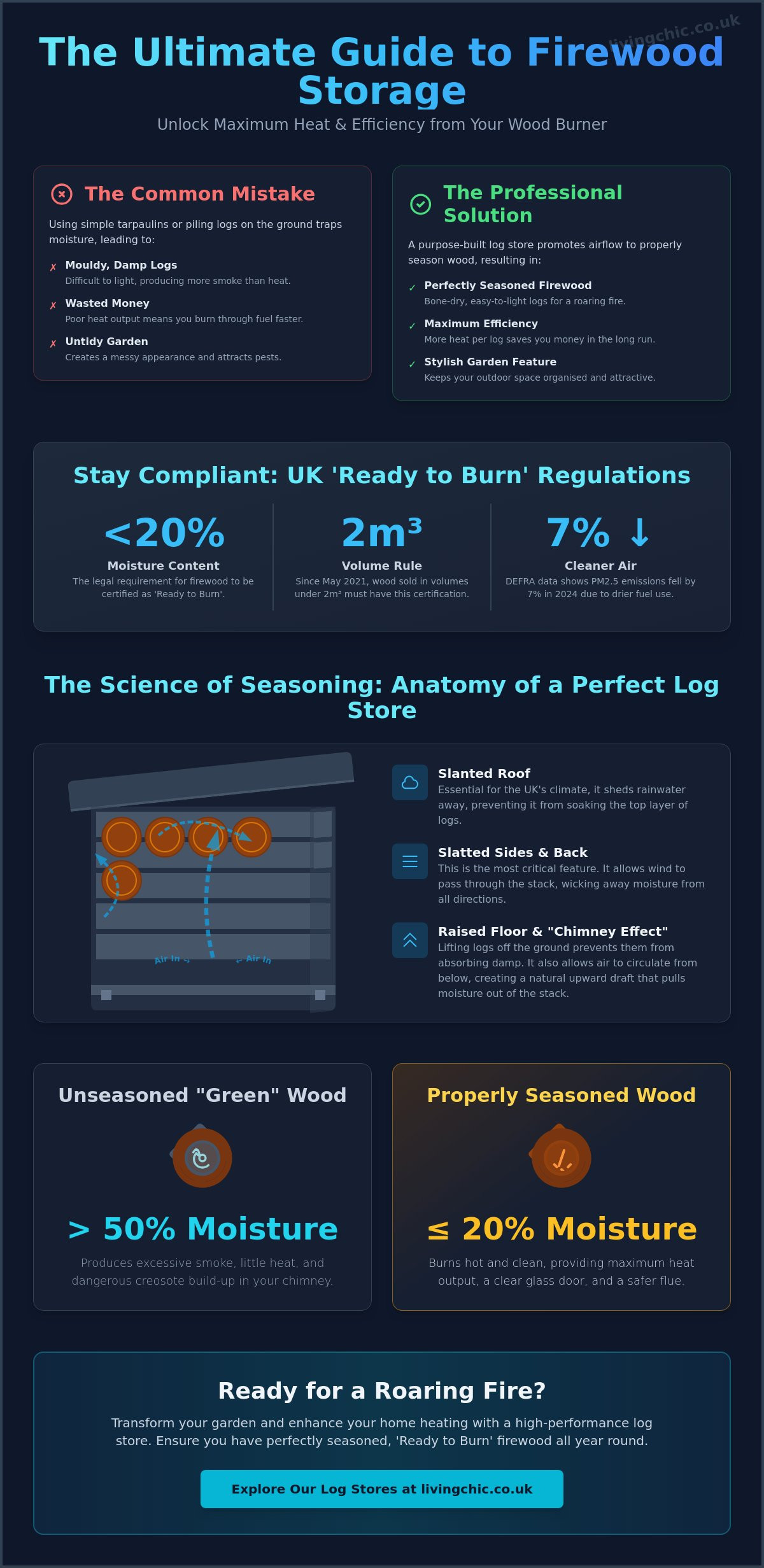
Owning a wood-burning stove is a fantastic way to bring warmth and a sense of comfort to your home. However, the efficiency of your appliance depends entirely on the quality of your fuel. In our damp British climate, a simple tarpaulin thrown over a pile of wood is rarely enough. Plastic sheets often trap ground moisture and prevent evaporation, leading to mouldy, damp logs that are difficult to light. Investing in a purpose-built log store for firewood uk ensures your timber stays dry whilst allowing essential airflow to do its job.
Dry wood is a smart financial investment. When you burn seasoned timber, you get significantly more heat per pound spent because the fire isn’t wasting energy evaporating water. Understanding the properties of Wood fuel is essential for anyone using BBQs and heating appliances. Beyond the cost savings, using dry wood is better for your home and the environment. It reduces the build-up of soot and creosote in your chimney, which lowers the risk of chimney fires and keeps your glass door clear.
To better understand how a proper structure works, watch this helpful video:
A dedicated store also provides immense organisational value. Instead of a messy, sprawling pile of wood that attracts pests, a stylish wooden structure creates a tidy garden feature. It transforms a functional necessity into an attractive part of your outdoor space, fitting perfectly alongside other garden products. Keeping your logs off the ground and neatly stacked makes it much easier to manage your inventory for the winter months ahead.
The Difference Between Storing and Seasoning
Storing wood is about keeping ready-to-use logs dry, but seasoning is the process of drying out “green” or freshly cut timber. This process can take anywhere from 6 to 24 months depending on the wood type. A dedicated store facilitates this by providing a raised floor and slatted sides for maximum ventilation. You should avoid keeping unseasoned logs in an enclosed shed; without constant airflow, the moisture has nowhere to go, and the wood will eventually rot rather than dry.
UK Regulations and Clean Air Acts
Modern regulations make proper storage more important than ever. Since May 2021, it has been a legal requirement in England for wood sold in volumes under 2m³ to be “Ready to Burn” certified, ensuring a moisture content of 20% or less. Using a quality log store for firewood uk helps you maintain this standard at home. This is vital for owners of modern Ecodesign stoves, which have been mandatory for new sales since January 2022. According to DEFRA data from February 2026, PM2.5 emissions from domestic combustion fell by 7% in 2024, showing the positive impact of burning cleaner, drier fuel.
The Science of Seasoning: How Airflow Prevents Damp Firewood
Seasoning isn’t just a fancy word for waiting; it’s a deliberate engineering process. It involves reducing the moisture within timber through consistent evaporation and air circulation. While many people assume a roof is the most important feature of a log store for firewood uk, it’s actually the sides and floor that do the heavy lifting. Slatted sides allow wind to pass through the stack, whisking away moisture as it escapes the wood grain. Without this side-to-side circulation, wood becomes a breeding ground for fungi rather than a source of fuel.
A well-built store utilises what experts call the “Chimney Effect.” As the sun warms the outer layers of the wood, air naturally rises through the stack. A raised floor is critical for this to work. It protects your logs from ground moisture whilst promoting vertical air movement from the bottom up. This constant cycle of fresh, moving air prevents the stagnant, humid conditions that lead to rot. If you’re unsure which design will work best for your garden layout, you can contact our knowledgeable team for advice on our range of garden structures.
Anatomy of a High-Performance Log Store
The UK’s weather is famously unpredictable, making structural design vital. A high-performance store must feature a slanted roof to shed rainwater away from the fuel. Pressure-treated timber is the gold standard for these structures because it resists decay even during the wettest British winters. Because wet timber is incredibly heavy, heavy-duty framing is essential to support the weight and prevent the structure from bowing over time.
Moisture Content Explained
Efficiency starts at 20%. This is the “magic number” for efficient combustion, providing the best heat output with the lowest emissions. Green wood is freshly felled timber that typically contains over 50% moisture content. Trying to burn this is effectively trying to set fire to water, which results in more smoke than heat. To ensure your fuel is compliant with the Ready to Burn scheme, we recommend using a moisture meter. Simply split a log and press the pins into the centre; if it reads above 20%, it needs more time in your log store for firewood uk before it’s ready for the hearth.
Choosing Your Ideal Log Store: Materials, Sizes, and Styles
Selecting the right log store for firewood uk requires a balance between your heating needs and your garden’s layout. It isn’t just about finding a corner for a pile of wood; it’s about matching the structure to your lifestyle. Before you buy, consider your annual consumption. A casual weekend burner might only need a single cubic metre of storage, whereas someone using a stove as their primary heat source will require significantly more space to allow for a rotation of seasoning timber.
Design plays a huge role in how the store functions within your space. Pent roofs are ideal for placing against a house wall or fence, as they slope forward to direct water away from the building. Freestanding apex roofs offer a more traditional look and work well as a focal point amongst other garden structures. For those with limited space, slimline stores are perfect for narrow side passages, ensuring even urban dwellers can keep their fuel in top condition.
Timber vs Metal Log Stores
Timber is the most popular material for a reason. It offers a natural, breathable environment that complements a chic garden decor theme perfectly. Whilst wood requires occasional treatment to stay in peak condition, its organic look is hard to beat. Metal stores provide a sleek, contemporary alternative that requires zero maintenance. However, you must ensure metal designs have adequate ventilation gaps. Without them, metal can suffer from internal condensation, which is why Woodsure’s guide to storing firewood emphasises the need for constant air movement regardless of the material you choose.
Size Guide for UK Homeowners
Matching the size of your store to your burning habits prevents you from running out of dry fuel mid-winter. Use these general guidelines to help your decision:
- Small (Under 1m wide): Best for those who only light their stove occasionally or use a fire pit during summer evenings.
- Medium (1.2m – 1.8m): The standard choice for most UK homes with a single stove used regularly throughout the colder months.
- Large or Double: Essential if you rely on wood for primary heating. These allow you to store one side for current use whilst the other side seasons for next year.
Adding integrated tool storage or a dedicated kindling shelf can further organise your setup. Keeping your axes, firelighters, and small sticks in one place makes the daily task of lighting your fire much more efficient and enjoyable.
Strategic Placement: Where to Position Your Store in a UK Garden
Finding the perfect spot for your log store for firewood uk is about more than just finding an empty corner. In the UK, our weather is dominated by prevailing south-westerly winds. To keep your timber dry, the golden rule is to face the open side of your store away from these winds. If you get this wrong, driving rain will soak the front of your logs, undoing months of seasoning effort and leaving you with fuel that’s difficult to light.
Many homeowners prioritises sunlight, but wind is actually your best friend when it comes to drying wood. A breezy spot that stays relatively dry is far superior to a sunny corner where the air is stagnant. You also need to consider winter practicality. While you might want the store tucked away at the bottom of the garden, you’ll likely regret that decision on a freezing January night. Position your store close enough to the house for easy access, ensuring the path is well-lit and stable underfoot.
Ground preparation is essential for the longevity of your structure. A large store filled with timber can weigh hundreds of kilograms. If placed on soft soil, it will sink over time, leading to a lopsided roof and potential structural damage. A solid foundation of paving slabs or a compacted gravel bed is necessary. This prevents rising damp from reaching the bottom layer of logs and ensures the unit remains level and safe for years to come.
Avoid Common Positioning Mistakes
You should never push a log store flush against a garden wall. This traps moisture and prevents the ventilation required for effective seasoning. Instead, follow the “two-inch” rule. Leave a small gap between the back of the store and any fences or walls to allow air to circulate freely. Be wary of placing your logs under overhanging trees or dripping gutters. Constant moisture from above will penetrate the wood grain and encourage the growth of fungi and rot.
Integrating Storage into Your Garden Design
Your storage doesn’t have to be hidden out of sight. You can use larger stores as natural zoning barriers to create private areas or define different sections of your outdoor space. To create a cohesive look, you can colour-match your timber finish with your garden furniture. This turns a functional necessity into a stylish garden feature. You can even soften the structure by planting hardy, shade-loving plants like ferns or hostas in the “dead space” around the base. If you need help choosing a model that fits your specific garden dimensions, contact our expert team for personalised advice.
Elevate Your Outdoor Space with Living Chic Log Storage
Creating a beautiful garden is about balancing utility with aesthetic appeal. A high-quality log store for firewood uk shouldn’t just be a place to dump timber; it should be a curated addition to your home that reflects your style. We believe that functional items can be aspirational. By choosing a design that complements your existing architecture, you turn a storage necessity into a sophisticated feature that invites warmth and comfort into your outdoor living space.
Our Newark-based expertise allows us to understand the unique challenges of the British climate. We’ve spent years identifying the best materials and designs to ensure your fuel stays bone-dry, regardless of how much rain falls. This local knowledge ensures that every product we offer is built to last, providing a reliable source for creating a better living environment. When you shop with us, you’re accessing a wealth of experience dedicated to improving your home and garden.
A well-organised garden functions as a year-round extension of your home. You can easily pair your new storage solution with our high-performance BBQs and heating range to create a complete outdoor sanctuary. Whether you’re hosting a summer gathering or enjoying a crisp autumn evening, having dry wood close at hand makes all the difference. We also provide access to professional-grade garden structures that help define your space and add long-term value to your property.
Quality You Can Trust
We pride ourselves on a curated selection of pressure-treated, sustainably sourced timber stores. Our focus is on providing exceptional quality without compromising on material thickness or durability. We maintain competitive pricing to ensure that high-end garden organisation remains accessible to every homeowner. All our garden buildings come with robust guarantees for peace of mind, ensuring your investment is protected for years to come.
Complete Your Outdoor Sanctuary
Once you’ve organised your outdoor fuel, don’t forget the interior of your home. You can find a wide variety of fireside accessories and decor within our House & Home section to complete the look. If your requirements extend to larger timber storage projects or more substantial garden buildings, our sister site Simply Log Cabins offers an extensive range of premium options. Taking a holistic approach to your property ensures every zone is tidy, stylish, and ready for relaxation. Browse our full range of garden storage today to find the perfect match for your home.
Ready for a Warmer, More Stylish Winter?
Investing in a high-quality log store for firewood uk is the most effective way to ensure your stove performs at its peak. By prioritising slatted ventilation and strategic placement away from prevailing winds, you’ll benefit from more heat and significantly fewer emissions. You don’t have to choose between functionality and beauty; the right storage solution enhances your garden aesthetic whilst keeping your fuel in perfect condition for the hearth.
As part of a specialist ecosystem including Garden Chic and Simply Log Cabins, we provide Newark-based expertise and free delivery options on many garden structures. Our team is dedicated to helping you create a comfortable, organised, and aspirational living environment. If you’re ready to transform your wood storage into a stylish garden feature, we’re here to help you find the perfect match for your home.
Discover our range of stylish and durable log stores at Living Chic and start enjoying the benefits of bone-dry firewood today. We look forward to helping you elevate your outdoor sanctuary.
Common Questions About Firewood Storage
Do I need to cover the front of my log store in winter?
Generally, you don’t need to cover the front of your store. Constant airflow is essential for the seasoning process, and covering the front can trap moisture and lead to mould. If you’re worried about driving rain, ensure your store has a sufficient roof overhang. Only use a breathable cover during the most extreme winter storms, but remove it as soon as the weather clears to let the wood breathe.
How long does it take for logs to dry in a wooden log store?
Drying times vary depending on the wood species and initial moisture content. Softwoods like pine typically take 6 to 12 months to season, whereas dense hardwoods such as oak or beech often require 18 to 24 months. Using a quality log store for firewood uk facilitates this process by providing the necessary ventilation to reach the legal ‘Ready to Burn’ standard of 20% moisture or less.
Can I keep a log store inside my house or garage?
You should avoid keeping a log store for seasoning inside your house or garage. Freshly cut wood contains a high volume of water that evaporates into the air. In an enclosed space, this moisture can cause damp issues, peeling wallpaper, or mould growth on walls. Only bring small amounts of fully seasoned, ready-to-burn wood indoors for immediate use by your hearth.
What is the best wood to store for a UK wood burner?
Hardwoods like Ash, Oak, and Beech are widely considered the best for UK wood burners due to their high density and slow burn rate. Ash is particularly favoured because it has a naturally lower moisture content even when green. Regardless of the species, always ensure your wood is seasoned until it reaches a moisture level below 20% to maximise heat output and minimise smoke.
Should a log store be placed on grass or a hard surface?
A log store should always be placed on a solid, level surface like paving slabs, concrete, or compacted gravel. Placing it directly on grass allows moisture to rise into the bottom logs and causes the structure to sink over time. A hard base ensures stability and provides the necessary clearance for air to circulate under the floor, keeping your entire stack dry.
Is it better to have a metal or a wooden log store for firewood?
Both materials have distinct benefits depending on your priorities. A wooden log store for firewood uk is naturally breathable and fits seamlessly into traditional garden designs. Metal stores offer a sleek, modern aesthetic and require zero maintenance, though they can be prone to internal condensation if not properly ventilated. Most UK homeowners prefer timber for its superior airflow properties and organic look.
How do I stop spiders and pests from living in my log store?
Spiders and insects are a natural part of storing organic material outdoors. To minimise pests, keep your logs off the ground and ensure the store is well-ventilated. Rotate your stock regularly so older logs don’t sit at the back for years. Avoid using chemical pesticides on wood you intend to burn, as these can release toxic fumes when the logs are placed in your stove.
Do I need planning permission for a large log store in the UK?
Most log stores fall under ‘permitted development’ and don’t require planning permission. However, restrictions may apply if the structure is over 2.5 metres tall and placed within 2 metres of a boundary. If you live in a conservation area or a listed building, it’s always best to check with your local council before installing a very large or permanent timber structure.