
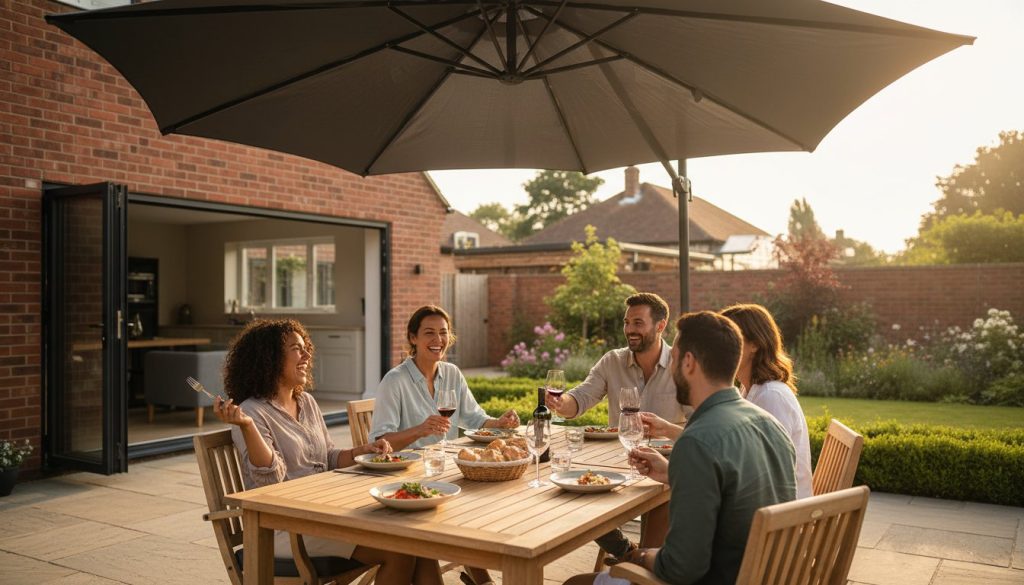
That stylish 2.7m umbrella you’ve spotted might look great, but if it doesn’t follow the 30cm overhang rule, your guests will still be squinting into the sun by dessert. We all want that perfect alfresco dining setup, yet finding a large parasol for patio table use that doesn’t buckle in a British breeze or leave half the family in the heat is often a challenge. You deserve a durable product that lasts multiple seasons without getting lost in confusing technical terms like denier or UPF fabric ratings.
Discover how to select the perfect oversized parasol to shade your dining area whilst enhancing your garden’s style and safety. At Living Chic, we’re committed to helping you improve your living environment with practical, high-quality solutions. Working alongside our specialist sister site Garden Chic, we’ve curated the essential 2026 advice on everything from the latest UK safety regulations to canopy colour trends. We’ll preview the best sustainable materials and explain how to match canopy shapes to your furniture, ensuring your garden remains a comfortable, stylish centrepiece for years to come.
Why a Large Parasol is Essential for Your British Garden
A large parasol is more than just a garden accessory; it’s a structural necessity for any host. Within the industry, we define a large parasol as any canopy exceeding 2.5 metres in diameter. This specific size is crucial because it ensures full coverage for 6-seater or 8-seater dining sets, preventing that awkward situation where half your guests are left in the glare. When you invest in a large parasol for patio table use, you’re not just buying shade; you’re creating a temperate microclimate. On a peak July day, the temperature beneath a high-density canopy can be significantly lower than in direct sunlight, allowing for long, comfortable lunches without the midday heat becoming overbearing.
To better understand the scale and impact of these garden additions, watch this helpful video showing a large-scale setup in action:
Beyond cooling, these structures are the primary tool for defining the “outdoor room” concept. By providing a physical ceiling, a large parasol frames your dining area, making it feel intimate and purposeful amongst the wider landscape. It’s about safety, too. High-quality canopies offer UPF 50+ protection, which is vital for family health and protecting sensitive skin. Understanding the history and types of parasols shows how these tools have evolved from simple hand-held shades to the sophisticated UV-blockers we use today to enhance our gardens.
The Aesthetic Impact on Patio Styling
A large canopy acts as a striking visual focal point amongst your garden furniture. It draws the eye and anchors the space, giving your patio a professional, curated feel. When selecting a shade, consider colours that complement your existing garden decor. While neutral tones remain timeless, the 2026 trend is moving towards forest greens and navy blues to create a bold, sculptural look. You must balance the scale of the parasol with your house and garden size; a 4m canopy might overwhelm a small terrace but looks magnificent on a sprawling lawn. You can find a variety of styles to suit any architecture at our sister site, Garden Chic.
UV Protection and Fabric Density
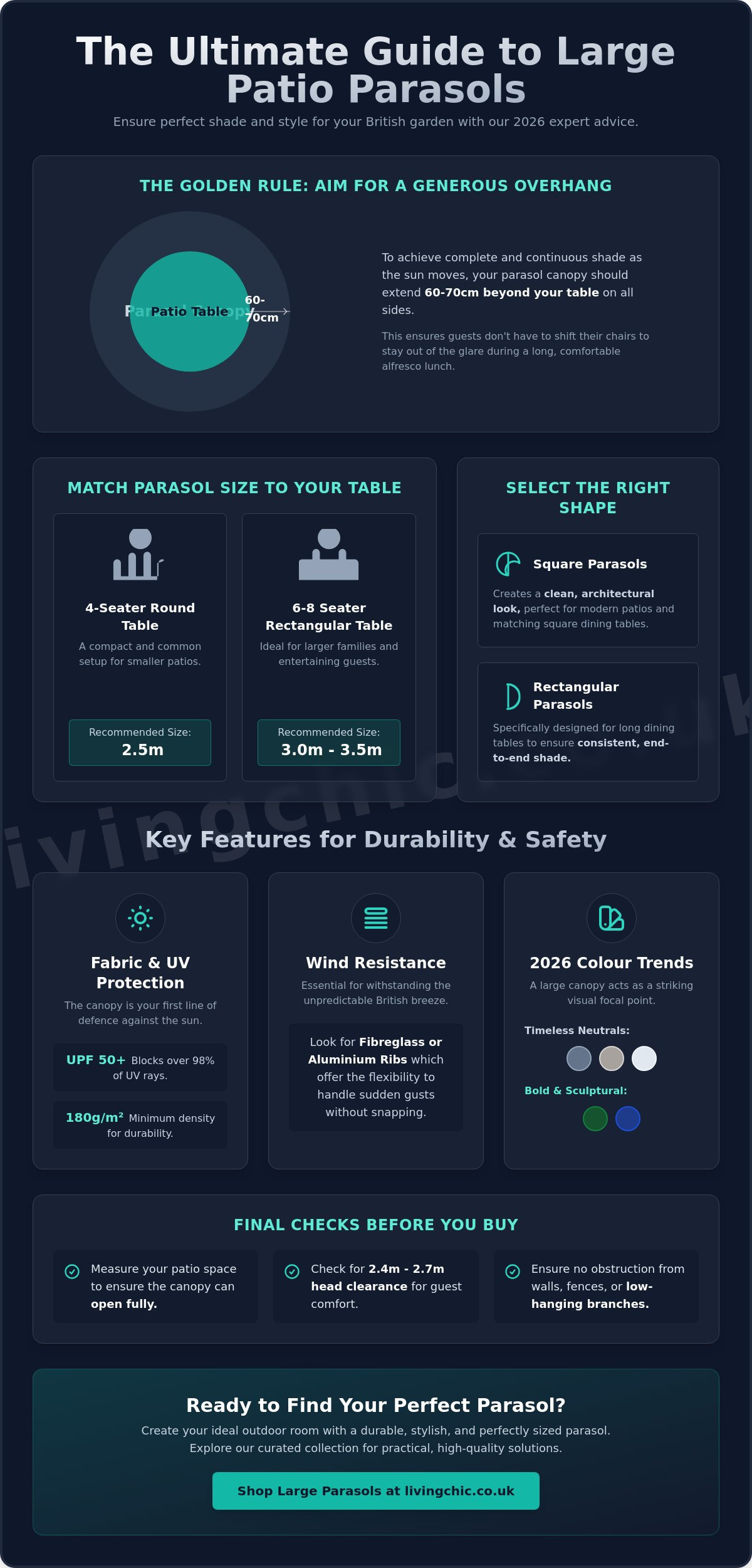
UPF ratings indicate how much UV radiation a fabric allows to reach your skin. A UPF 50+ rating means only 1/50th of the sun’s rays pass through the material. To achieve this level of protection, look for a fabric density of 180g/m² or higher. This weight of polyester provides the necessary durability to withstand the British elements whilst maintaining its shape. For the best longevity, choose solution-dyed fabrics. Unlike piece-dyed materials where the colour is only on the surface, solution-dyed fibres are saturated with pigment before they are spun, which significantly prevents colour fade over multiple seasons.
Matching Parasol Size and Shape to Your Patio Table
Selecting the right large parasol for patio table use requires more than just picking a favourite colour. To achieve complete shade, we recommend following a generous version of the overhang rule. Ideally, your parasol canopy should be 60-70cm wider than the table on all sides. This ensures that as the sun moves throughout the afternoon, your guests don’t have to constantly shift their chairs to stay out of the glare. When selecting a model, look for wind-resistant patio umbrellas that feature fibreglass or aluminium ribs, as these materials offer the flexibility needed to handle sudden gusts without snapping.
Before you commit to a specific model, it’s vital to measure your available patio space. A large canopy needs room to breathe. You must ensure there’s enough clearance for the canopy to open fully without hitting walls, fences, or low-hanging tree branches. Don’t forget to consider head clearance as well. Most high-quality parasols stand around 2.4 to 2.7 metres tall, providing ample space for even your tallest guests to move comfortably around the dining area. If you’re unsure which dimensions will work best with your existing garden furniture, we’re here to help.
The Size Guide: From 4-Seaters to 8-Seaters
For a standard 4-seater round table, a parasol with a 2.5m span is usually sufficient to keep everyone covered. However, if you’re shading a large rectangular 6-8 seater set, you’ll need to move up to a 3m or 3.5m parasol to ensure the diners at the ends aren’t left in the sun. For truly oversized dining sets or modular lounge furniture, you might consider using multiple smaller parasols or a large cantilever option from Garden Chic to provide flexible, targeted shade across the entire zone.
Selecting the Right Shape for Your Space
- Square parasols: These are perfect for modern, symmetrical patios and square dining tables, creating a clean and architectural look.
- Rectangular canopies: Specifically designed for long dining tables, these ensure consistent end-to-end shade for every guest.
- Classic round parasols: The traditional choice for social, circular dining environments where a soft, curved aesthetic is preferred.
Finding the right balance between scale and style makes your outdoor space feel professionally designed. If you need assistance choosing the correct base weight for these larger sizes, you can always get in touch with our team for expert advice.
Frame Materials: Hardwood vs. Aluminium Stability
Selecting the frame for your large parasol for patio table is a balance between timeless aesthetics and modern engineering. Traditional hardwood frames, often crafted from teak or eucalyptus, offer a classic, natural look that pairs beautifully with wooden furniture. However, wood requires annual oiling to prevent cracking and silvering in the British rain. In contrast, powder-coated aluminium has become the 2026 industry standard for its rust-free properties and lightweight strength. It’s particularly effective for larger structures where you need the frame to be sturdy enough to resist wind but light enough to move when needed.
Stability also depends on the central pole diameter. Most standard patio tables feature a 40mm or 50mm hole. A 38mm pole is common for mid-sized shades, whilst a 48mm pole is reserved for heavy-duty, oversized models. Always check your table’s dimensions before purchasing to ensure a snug fit. If you’re looking for a complete set that matches perfectly, explore our range of garden furniture at Living Chic.
Ease of Use: Crank Handles and Tilting
For a canopy exceeding 3 metres, a traditional pulley system can be physically demanding. This is why we recommend a crank-and-tilt mechanism. A crank handle uses internal gearing to open the heavy fabric with minimal effort, making it accessible for everyone. Adding a tilting function allows you to pivot the canopy as the sun dips lower in the evening, maintaining your shade without moving the entire base. To keep these moving parts smooth in the damp UK climate, a quick spray of silicone lubricant once a season is all the maintenance required.
The Importance of a Heavyweight Base
A large parasol acts like a sail in the wind. You shouldn’t ever use one without a secured, weighted stand. A general rule of thumb is to calculate 10kg of weight per 0.5m of canopy, but for absolute safety, follow verified standards. For a 3m to 3.5m centre-pole model, a 40kg base is the minimum requirement. If you’ve opted for a large cantilever model from Garden Chic, you’ll need a much heavier base, typically between 90kg and 150kg, to offset the side-hanging weight. In-table bases provide extra stability by using the table frame as a secondary anchor, whereas freestanding bases must rely entirely on their own mass.
Protecting Your Investment: Wind Resistance and Maintenance
A large parasol for patio table use represents a significant addition to your garden, but its impressive surface area makes it vulnerable to the unpredictable British weather. The most critical feature for longevity is the wind vent. This integrated gap at the peak of the canopy allows air to circulate and escape, effectively preventing the “parachute effect” that can lift a parasol out of its base. Even with a high-quality vent, you should always close your parasol whenever it’s not in use. Sudden gusts can occur without warning; a closed and strapped canopy is far less likely to sustain frame damage or tip over during a storm.
Keeping the fabric clean is equally important for maintaining that aspirational, fresh-from-the-showroom look. We recommend using a soft brush and mild soapy water to remove bird droppings or tree sap as soon as they appear. Avoid using harsh chemical cleaners or high-pressure washers. These can strip away the essential UV-protective coatings and water-repellent finishes we discussed earlier. Once you’ve finished cleaning, always leave the canopy fully open to air-dry in the sun before retracting it for the evening.
Wind Safety and Stability Features
The material used for the canopy ribs determines how well your shade survives a breezy afternoon. Fibreglass ribs are highly sought after because they possess a natural “give,” allowing them to bend under pressure and snap back into shape without breaking. Steel ribs are sturdy but can permanently deform if pushed too far by a heavy gust. As a practical rule, we suggest following the Beaufort Scale; once winds reach Force 4 (13-18 mph), it’s time to fold the canopy for safety. If your patio is particularly exposed, consider positioning your dining set near a garden structure like a pergola or trellis to provide a natural windbreak.
Seasonal Care and Longevity
Mould is the primary enemy of garden fabrics in the UK. Never store your parasol whilst it’s damp; even a small amount of trapped moisture can lead to black spotting that is nearly impossible to remove. For those with hardwood frames, applying a fresh coat of teak oil at the start of spring will preserve the rich colour and prevent the wood from becoming brittle. If you don’t have space in one of the timber sheds from Simply Log Cabins for indoor winter storage, a high-quality weather cover is essential. These covers, which you can find at Garden Chic, are a fraction of the cost of a replacement canopy and will keep your investment looking new for many seasons. If you’re unsure which maintenance products are right for your specific model, please get in touch with our team for tailored advice.
Styling Your Outdoor Space with Living Chic
At Living Chic, we believe a garden is a holistic ecosystem rather than a collection of separate items. Your large parasol for patio table dining serves as the crown of your outdoor lounge, so it’s vital to coordinate its style with your garden furniture sets. Whether you’ve chosen a contemporary aluminium dining group or a classic rattan sofa, the parasol should echo those materials and textures. By selecting a shade that harmonises with your surrounding decor, you create a seamless transition between your home’s interior and the natural beauty of your lawn.
The utility of your parasol doesn’t end when the sun sets. You can easily transform your dining area into an atmospheric evening retreat by attaching clip-on LED lights to the frame ribs. Pairing this soft illumination with the warmth from our range of BBQs and patio heaters ensures your garden remains the heart of your home long after dark. It’s about creating a space where comfort meets function, allowing you to host memorable gatherings throughout the summer of 2026. We provide everything you need to build this environment, from the central shade to the final decorative flourish.
Integrating with Larger Garden Buildings
Strategic placement is key when you have larger structures on your property. Positioning parasols near log cabins or garden offices creates an extended living space, offering a shaded “porch” area for breaks or outdoor working. While a permanent pergola provides fixed protection, a large parasol for patio table use offers the flexibility to provide shade exactly where it’s needed as your garden’s use changes throughout the day. When it comes to colour coordination, try matching the canopy with your home’s exterior window frames or garden gate. This creates a cohesive, professional look across the entire plot that feels intentional and curated.
The Living Chic Advantage
We’re more than just a retailer; we’re part of a wider expert ecosystem. By shopping with us, you gain access to a curated selection of outdoor essentials from our sister site Garden Chic, ensuring you have everything required to build your dream garden. Our commitment to high-quality materials and competitive UK delivery means you can shop with confidence. Our team offers collaborative support to help you find the perfect match for your patio, ensuring every component of your outdoor room works in harmony. Browse our current collection today and prepare your home for a stylish, comfortable summer in 2026.
Elevate Your Garden Living for 2026
Selecting a large parasol for patio table dining is a decision that transforms your garden from a simple outdoor space into a functional room. By following the 30cm overhang rule and prioritising high-density, UPF 50+ fabrics, you ensure your family remains protected and comfortable throughout the peak summer months. Whether you opt for the classic warmth of hardwood or the modern, rust-free resilience of powder-coated aluminium, your choice should reflect a commitment to both style and seasonal longevity.
As part of a specialist expert ecosystem, we’ve carefully built a curated selection for the 2026 season that meets the latest UK safety standards. We offer competitive UK-wide delivery on all our garden essentials, making it easier than ever to upgrade your alfresco experience. This comprehensive approach ensures you receive a product that is as durable as it is beautiful.
If you’re ready to make a change, find your perfect large parasol for summer 2026 at Living Chic. We’re here to help you create a comfortable, shaded sanctuary that your family will enjoy for years to come.
Frequently Asked Questions
What size parasol do I need for a 6-seater rectangular table?
You should choose a 3m x 2m rectangular canopy or a 3.5m round model for a standard 6-seater table. This ensures the diners at each end receive full shade without having to lean into the centre. Matching the rectangular shape of the canopy to your table layout provides the most consistent coverage and prevents sun gaps during long afternoon lunches.
Can I leave my large parasol outside during a British winter?
You shouldn’t leave your parasol exposed to the elements during the winter months. To prevent frame corrosion and fabric mould, store the unit in a dry, ventilated space such as a timber building from Simply Log Cabins. If indoor storage isn’t an option, you must use a high-quality, breathable weather cover from Garden Chic to protect the investment.
Is a cantilever parasol better than a traditional centre-pole parasol?
Cantilever models offer more flexibility because the offset pole doesn’t obstruct your view or seating plan. They’re perfect for lounge sets or hot tubs where a central hole isn’t available. However, a traditional centre-pole large parasol for patio table setup is often more stable in the wind, as the table itself acts as a secondary anchor for the frame.
How do I stop my patio parasol from spinning in the wind?
Tighten the tension screw or locking nut on your parasol base to secure the pole firmly in place. If your base tube is significantly wider than the pole, use a plastic spacer or reducer ring to ensure a snug fit. This prevents the friction-based spinning that can lead to fabric wear or the canopy unexpectedly pivoting away from your dining area.
What is the best material for a parasol pole: wood or aluminium?
Aluminium is the superior choice for maintenance-free longevity because it’s lightweight, rust-proof, and incredibly strong. It’s the standard for modern garden furniture due to its durability in the damp UK climate. Hardwood poles offer a beautiful, traditional aesthetic that complements timber decking, but they require annual oiling to prevent the wood from silvering or cracking over time.
Do all parasols fit into standard garden table holes?
Most large parasol for patio table models use either a 38mm or 48mm pole, whilst standard table holes are usually 40mm or 50mm wide. You must check both measurements before purchasing to ensure compatibility. If the pole is too thin, it will wobble; if it’s too thick, it won’t pass through the table’s central ring, potentially requiring a freestanding cantilever instead.
What weight base do I need for a 3-metre parasol?
A 3-metre centre-pole parasol requires a minimum base weight of 40kg for safe operation in standard conditions. If your garden is particularly exposed or prone to sudden gusts, we recommend upgrading to a 50kg or 60kg base for added peace of mind. For large cantilever models of the same size, the requirement increases significantly to between 90kg and 150kg to offset the weight.
How do I clean bird droppings or green algae off my parasol canopy?
Use a soft-bristled brush and a solution of mild soapy water to gently scrub the affected areas. Avoid using bleach or high-pressure washers, as these can damage the UV-protective coating on the polyester fabric. Once cleaned, rinse with fresh water and leave the canopy fully open to air-dry in the sun, ensuring it’s completely dry before you retract it for storage.