
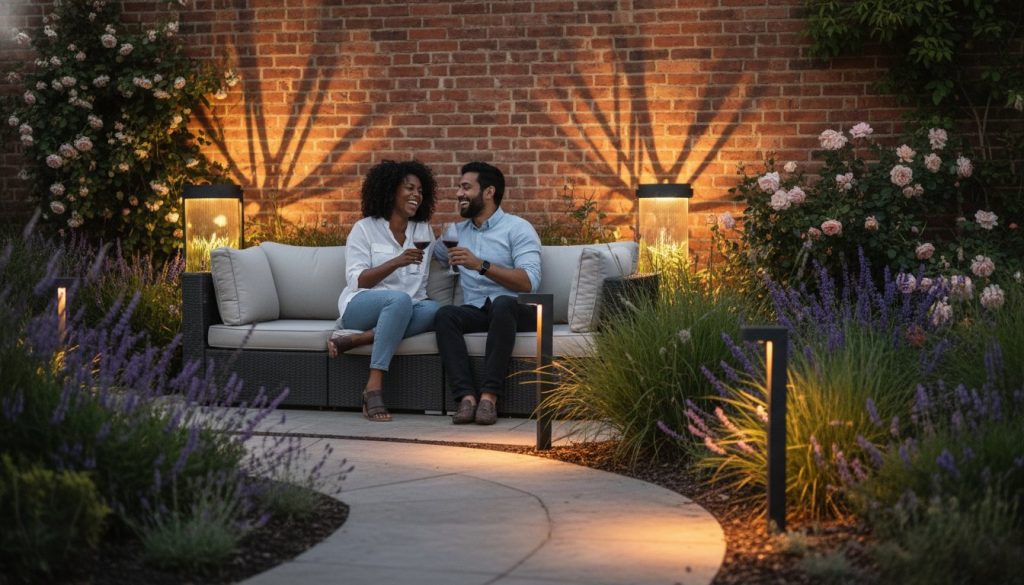
What if your outdoor space could look like a professionally curated retreat without a single wire or a penny added to your electricity bill? Most of us have experienced the frustration of solar lights that fail after one season or provide a weak, blueish glow during a British winter. You deserve a garden that feels like a stylish extension of your home, and with the latest solar garden lights ideas 2026, achieving that “sculptural atmosphere” is easier than ever. Modern technology has moved beyond simple markers. We now see high-efficiency panels with 30% conversion rates and durable designs that genuinely withstand the UK climate.
Whether you’re looking for a 10-pack of Solar Fluted Marker Lights for £21.99 or sophisticated “invisible” fixtures, we’ll help you navigate the transition from functional lighting to artistic design. You’ll discover how to create a sustainable sanctuary using warm 2700K to 3000K tones, which are now the gold standard for inviting, Dark Sky compliant spaces. From AI-integrated motion sensors to the “Dopamine Decor” trend, this guide covers the practical styling tips you need to transform your garden lighting into a chic, year-round masterpiece.
The Evolution of Solar Garden Lighting in 2026
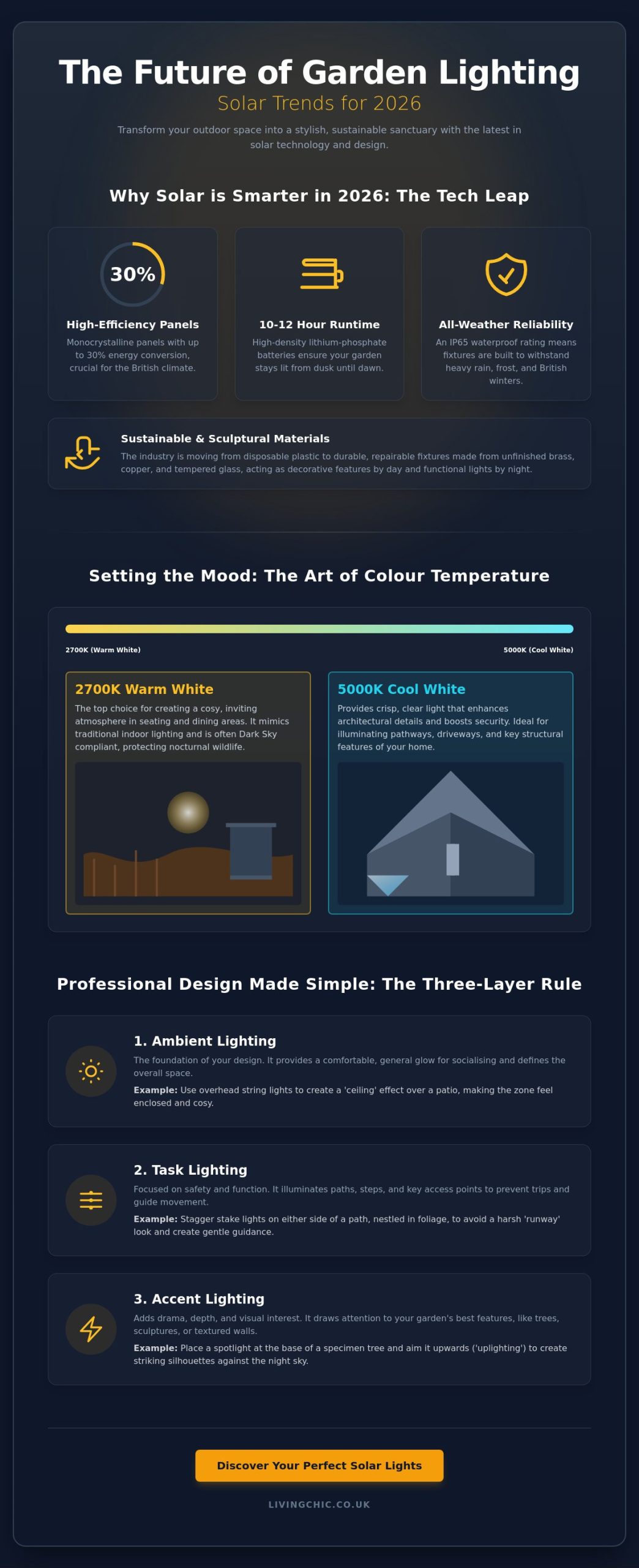
Solar garden lighting has undergone a radical transformation. It is no longer just a standalone stake pushed into a flowerbed; it’s a self-sustaining ecosystem of high-output LEDs and sophisticated energy collectors. By May 2026, the industry has pivoted toward monocrystalline silicon panels. These panels offer conversion efficiencies of up to 30%, which is vital for the British climate where cloud cover is common. This technical leap makes solar garden lights ideas 2026 a practical reality even in the depths of a UK winter, ensuring your outdoor space remains a chic sanctuary year-round.
Eco-conscious British homeowners are moving away from disposable plastic fixtures. We’ve seen a significant surge in demand for high-quality materials like unfinished brass, copper, and tempered glass. These materials don’t just look better; they last for years. High-end fixtures in 2026 are designed for longevity and repairability, allowing you to replace internal LED modules without discarding the entire unit. This shift from “utilitarian” to “sculptural” means your lighting acts as a decorative feature during the day and a functional guide at night. You can find a curated range of these durable options within our garden decor collection.
Why Solar is Smarter in 2026
Modern fixtures now utilise high-density lithium-phosphate batteries. These provide consistent power for 10 to 12 hours, ensuring your garden paths stay lit until dawn even after a cloudy day. For those particularly dark weeks in the UK, many premium models from Garden Chic now feature USB-C hybrid charging ports as a reliable backup. In 2026, Lumen output is defined as the total quantity of visible light emitted by a solar fixture, with modern high-efficiency LEDs now delivering significantly brighter results from smaller energy reserves. Most quality units now carry an IP65 waterproof rating, meaning they’re built to survive heavy rain and frost without flickering.
Choosing the Right Colour Temperature
The aesthetic shift this year favours ambiance over pure utility. Warm white (2700K) is the top choice for creating a cosy, relaxed feel in seating areas, effectively mimicking the glow of a traditional indoor lamp. For security or highlighting architectural features, cool white (5000K) provides the necessary crispness and clarity. A major trend for summer 2026 involves “smart” bulbs that shift temperature automatically, moving from a cool security light to a warm evening glow as you step onto the patio. Understanding the fundamentals of Solar lamp technology helps in selecting the right fixture for every corner of your garden, ensuring your lighting is both beautiful and functional.
Layering Light: Creative Ideas for Every Garden Zone
Professional outdoor design relies on more than just a single light source. To create a space that feels both functional and high-end, you should apply the Three-Layer Rule. This framework consists of Task, Ambient, and Accent lighting. Task lighting ensures safety on paths; Ambient lighting provides a general glow for socialising; and Accent lighting draws attention to your favourite features. By incorporating these solar garden lights ideas 2026, you can transform a flat lawn into a multi-dimensional retreat. Remember that shadows are your friend. They provide the contrast necessary for a sophisticated, chic look, preventing the garden from looking washed out or flat.
Illuminating Pathways and Borders
Safety is the priority for any walkway. Clearly mark steps and uneven ground to prevent trips after dark. Avoid the common mistake of placing lights in a straight, symmetrical line, which can look like an airport runway. Instead, stagger your stake lights amongst the foliage on either side of the path to create a sense of movement. For your flower beds, use low-level “wash” lighting. This technique highlights the intricate textures of your plants whilst keeping the fixture itself discreet. As noted by the U.S. Department of Energy on solar lighting, placing panels where they receive maximum sunlight is essential for maintaining this brightness throughout the night.
Dining and Entertaining Zones
Your patio should function as an outdoor living room. Use solar lanterns as table centrepieces to create an intimate, candle-lit atmosphere for evening meals. To define the area, hang overhead string lights between posts or trees. These create a “ceiling” effect, making the zone feel enclosed and cosy. If you are planning a full patio refresh, our garden furniture guide provides excellent tips on choosing pieces that complement your new lighting scheme. A well-lit dining area encourages guests to stay outdoors long after the sun has set.
Vertical Interest and Tree Lighting
Don’t neglect the vertical planes of your garden. Trees and fences offer brilliant opportunities for drama. Wrap solar fairy lights around the trunks of larger trees for a magical, year-round glow. To create striking silhouettes, place spotlights at the base of specimen plants and aim them upwards. You can also achieve a “moonlighting” effect by fixing lights high up in branches, casting dappled shadows on the ground below. This mimics the soft, natural light of a full moon. If you need help selecting the best fixtures for your specific layout, get in touch with our team for personalised advice.
Top Aesthetic Trends: From Sculptural Lanterns to Dopamine Decor
2026 is the year that garden lighting evolves into a form of sculptural art. We are seeing a move away from hidden fixtures toward bold, statement pieces that look just as beautiful during the day as they do at night. A primary driver of this shift is the “Dopamine Decor” movement. This trend focuses on using bright, joyful colours to create a playful and mood-boosting atmosphere in your outdoor space. By incorporating these solar garden lights ideas 2026, you can move beyond simple illumination and start treating your garden like a gallery. These pieces are designed to be seen, acting as the finishing touch to a well-considered landscape.
Smart technology has also reached the aesthetic sector. Many of the latest systems are app-controlled, allowing you to cycle through millions of colours or sync your lights to music. This level of customisation ensures your garden always matches the occasion, whether it’s a quiet evening for two or a vibrant summer party. For those who prefer a timeless look, “Vintage Industrial” styles have been reimagined. You can now find solar-powered Edison bulbs with the same warm, amber glow as their mains-powered predecessors, but with the zero-cost benefits of modern solar energy. These bulbs provide a nostalgic feel whilst maintaining the high efficiency expected of 2026 technology.
The Sculptural Lantern Revival
Oversized lanterns are making a significant comeback this summer. Designers are mixing traditional materials like teak and hand-woven rattan with modern, powder-coated aluminium to create durable yet stylish floor lighting. Geometric shapes and Moroccan-inspired patterns are particularly popular; they cast intricate shadows across your garden furniture and decking. These pieces act as anchors for your design, providing a focal point even when the sun is high. You can explore a wide variety of these styles at Garden Chic, where the latest lantern designs focus on combining high-end aesthetics with the latest solar cell integration.
Integrating Vibrant Hues
Using coloured light requires a thoughtful approach to avoid a cluttered look. A successful strategy is to match your light colours to your seasonal blooms. For example, use soft pink or purple LEDs to highlight lavender or cherry blossoms in spring. This creates a harmonious, “layered” effect that feels professionally designed. Beyond the visual appeal, there are clear psychological benefits to a “joyful” colour palette. Warm oranges and yellows can make a space feel more inviting, whilst cool blues and greens promote relaxation. Our garden decor collection offers various ways to pair these lighting trends with your existing outdoor accessories for a cohesive and stylish result.
Integrating Solar Lights with Your Garden Furniture and Structures
Successful garden design in 2026 treats the outdoor space as a direct extension of the home. To achieve this, your lighting must work in harmony with your outdoor furniture and larger installations. Instead of treating lights as an afterthought, think of them as the “connective tissue” that turns a collection of items into a cohesive outdoor room. When you pair high-quality illumination with permanent garden structures, you create a seamless transition that encourages you to step outside regardless of the time of day. These solar garden lights ideas 2026 focus on making your timber and metal features feel like lived-in, comfortable spaces rather than just static objects in a yard.
Illuminating Pergolas and Gazebos
Pergolas provide the perfect framework for layered lighting. For a classic “bistro” look that never goes out of style, drape heavy-duty festoon lights along the main beams. If you want a softer, more ethereal atmosphere, consider solar curtains hung between the posts to create a shimmering privacy screen. To ensure the best performance, secure the external solar panel to the highest point of the pergola roof using a mounting bracket fixed at a 45-degree angle toward the south for maximum sunlight exposure. This technical placement ensures your “outdoor ceiling” remains bright throughout the evening social hours.
Lighting for Garden Buildings and Sheds
Garden buildings require a dual approach to lighting: utility and ambiance. For tool sheds and workshops, high-lumen solar security lights with motion sensors are essential for practical night-time access. However, if you have a garden room used as a home office or gym, decorative lighting is what makes it feel inviting. Solar-powered wall lanterns fixed to the exterior of log cabins provide a warm welcome whilst highlighting the natural grain of the wood. This approach makes the building a focal point of the landscape rather than a dark silhouette at the end of the garden.
Furniture-Integrated Lighting
The latest furniture trends for 2026 include pieces with lighting built directly into the design. Solar-powered parasols now feature discreet LED ribs that provide a soft glow over your dining table without the need for bulky lamps. To recreate a “living room” feel on your patio, position tall solar floor lamps next to your rattan sofa sets. These provide the height and scale usually found indoors, breaking the flat horizon of the garden. For a final professional touch, use small solar “dots” or recessed puck lights to highlight the edges of your decking, ensuring your social zones are clearly defined and safe to navigate. If you need help choosing the right combination for your layout, speak to our expert team for tailored recommendations.
Maximising Performance: Positioning, Maintenance, and Wildlife Care
Investing in the latest solar garden lights ideas 2026 is only the first step. To ensure your outdoor space remains brilliantly lit, you must consider the physics of energy collection. Most high-efficiency monocrystalline panels require between six and eight hours of direct sunlight to reach a full charge. Even with the 30% efficiency rates common in 2026 technology, placing a panel in a permanent shadow will lead to disappointing results. Position your collectors away from overhanging eaves or dense evergreen foliage to maximise their exposure. If your garden is North-facing, look for models with detachable solar panels that can be mounted in a sunnier spot whilst the light fixture remains in the shade.
Seasonal changes in the UK demand a proactive approach. During the shorter days of winter, energy absorption is naturally lower. To help your lights perform, keep the panel surfaces free from debris. A build-up of dust, bird droppings, or salt spray can significantly reduce the amount of light reaching the cells. Whilst many 2026 models are designed to be weather-resistant, storing decorative or delicate lights indoors during extreme frost can extend the lifespan of the internal components. You can find a wide range of durable, year-round options in our garden decor collection.
The 2026 Guide to Solar Maintenance
- Cleaning: Use a soft, damp cloth with plain water. Avoid abrasive chemicals or scouring pads, as these can scratch the glass and permanently lower efficiency.
- Battery Refresh: Lithium-phosphate batteries typically last for 1,000 to 1,500 charge cycles. If your light stays on for less than four hours, it’s likely time to refresh the cells.
- Troubleshooting: If a light flickers, check the sensor for obstructions. Often, a nearby streetlamp or a bright window can “trick” the light into thinking it’s still daytime.
Wildlife-Friendly Lighting Practices
Creating a beautiful garden shouldn’t come at the expense of local biodiversity. Nocturnal visitors like bats and moths rely on “dark sky” zones to navigate and feed. In 2026, there is a growing emphasis on using directional lighting that points downwards, preventing light trespass into the atmosphere. This follows recent regulatory trends, such as the Maine LD 1934 law taking effect in September 2026, which caps colour temperatures at 3000K to protect the environment. Use motion sensors for security lighting to ensure the garden remains dark when you aren’t using it. For areas near ponds or nesting boxes, choose lower lumen counts to avoid disrupting the natural behaviour of your garden’s residents. Explore the latest eco-conscious designs at Garden Chic to find fixtures that balance human enjoyment with wildlife care.
Step into a Brighter, More Sustainable Garden Future
Embracing the latest solar garden lights ideas 2026 means your outdoor space no longer has to go dark when the sun sets. By moving away from flat, single-source lighting and adopting a layered approach, you create a sophisticated atmosphere that’s both functional and stylish. We’ve explored how 30% panel efficiency and smart colour-shifting technology can bring an indoor living room feel to your patio whilst protecting local biodiversity through dark-sky practices. It’s about combining aesthetics with performance to build a retreat that lasts for years.
At Living Chic, we draw on over 10 years of experience in identifying the best home and garden trends to help you make the right choice. Our commitment to competitive prices on premium outdoor furniture and lighting ensures you get high quality without the luxury price tag. With expert customer care available both before and after your purchase, we’re here to support your home transformation every step of the way. Shop our stylish Garden & Outdoor collection to transform your space today and enjoy the beauty of a perfectly lit garden all year round.
Frequently Asked Questions
How long do solar garden lights typically last in the UK climate?
Quality solar fixtures typically last between two and five years depending on their material construction. While the LED bulbs can function for over 100,000 hours, the rechargeable batteries usually require a refresh every 18 to 24 months to maintain peak performance. Choosing metal or tempered glass housings over cheaper plastic alternatives will significantly extend the lifespan of your investment against the British rain and frost.
Do solar lights work in the shade or on cloudy days?
Yes, solar lights still charge on cloudy days, though they do so at a reduced rate. Modern 2026 panels are designed to capture a broader spectrum of light, meaning they can still generate power through overcast skies. You might find that a full day of heavy cloud results in four hours of evening illumination instead of the usual ten hours achieved during a clear summer day.
Can I leave my solar garden lights out all winter?
Most IP65-rated solar lights are designed for year-round outdoor use, but some benefit from winter storage. Extreme temperatures below minus five degrees can put stress on lithium batteries and cause cheaper plastic casings to become brittle. For the best longevity, bring decorative or delicate items into a shed or garage during January and February when sunlight levels are at their lowest in the UK.
What is the difference between lumens and watts in solar lighting?
Lumens measure the total amount of visible light emitted, whilst watts measure the amount of energy consumed. In the context of solar garden lights ideas 2026, you should focus entirely on lumens to determine brightness. A path light typically offers 50 lumens for gentle guidance, whereas a solar security floodlight might produce 500 lumens or more to ensure your property remains safe and visible.
How do I clean solar panels to keep them working efficiently?
Clean your solar panels every three months using a soft microfibre cloth and plain water. Avoid using harsh detergents or abrasive sponges as these can create microscopic scratches that diffuse sunlight and lower the panel’s efficiency. Keeping the surface clear of bird droppings and dust ensures that the high-efficiency cells can continue to convert energy at the 30% rate expected from modern 2026 technology.
Are solar lights safe to use around pets and children?
Solar lights are exceptionally safe for families because they operate on a low-voltage DC system. There are no mains-powered cables to bury or trip over, which eliminates the risk of electric shock for curious pets or toddlers. Since these units don’t require professional installation or external wiring, they’re the ideal choice for busy households looking to improve their garden decor without safety concerns.
Why have my solar lights stopped working after only a few months?
Failure is usually caused by dirty panels, poor positioning, or a battery that has been allowed to discharge completely. Approximately 85% of performance issues are resolved by simply cleaning the panel surface and ensuring the unit receives at least six hours of direct sunlight. If the light still fails to trigger, check the internal “on” switch and ensure no nearby streetlights are hitting the sensor and tricking it into “daylight” mode.
Can I change the batteries in my solar garden lights?
Most high-quality solar fixtures feature replaceable batteries, which is a cornerstone of sustainable solar garden lights ideas 2026. Instead of discarding the entire unit, you can simply swap out the old NiMH or Lithium-phosphate cells for new ones of the same capacity. This simple maintenance task is a cost-effective way to refresh your lighting system and keep your garden glowing beautifully for many more seasons to come.