
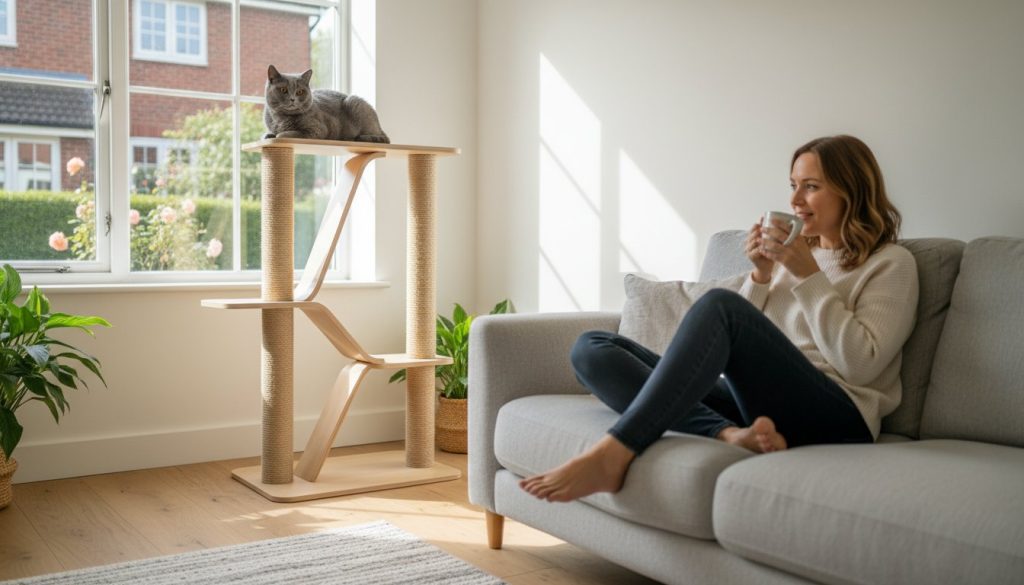
Your cat’s favourite piece of furniture shouldn’t be the one item you want to hide when guests arrive. Many owners settle for wobbly cat tree designs that act as carpet-covered eyesores and magnets for dander. It’s frustrating when a purchase intended for your pet’s well-being ends up clashing with your decor or scaring your cat because it lacks stability. You deserve a home that feels curated, and your pet deserves a space that feels secure.
At Living Chic, we believe your home should be a sanctuary for every family member. This guide will help you discover how to select a structure that satisfies your feline’s natural instincts whilst perfectly complementing your home’s interior style. Whether you are looking for budget-friendly options under £50 or luxury designer models exceeding £300, you can find a solution that balances feline biology with beautiful design.
We’ll explore the latest 2026 trends in sustainable materials like bamboo and sisal, explain how to choose a stable base that won’t wobble, and show you how to better organise your pet accessories. You’ll learn everything needed to secure a stylish piece of furniture that promotes healthy scratching habits and keeps your cat active for years to come.
Why Every British Home Needs a Quality Cat Tree
Cats are hardwired to seek height. In the wild, being up high provides a tactical advantage for spotting prey and avoiding predators. Within a modern British home, this instinct remains just as strong. A quality cat tree serves as more than a plaything; it’s a vital piece of vertical territory that satisfies these deep-seated biological needs. When you provide a dedicated space for climbing, you’re not just buying a pet accessory, you’re investing in your cat’s mental health and long-term well-being.
For many owners, the initial question is: What is a Cat Tree? Essentially, it’s a multi-functional structure designed to provide the “high ground” cats crave. By offering various levels, these towers allow cats to survey their kingdom from a safe distance. This is particularly important in multi-cat households. Vertical space acts as a social safety valve, reducing stress and anxiety by allowing cats to coexist without competing for limited floor space. Every tree should feature three core components: sturdy scratching posts, comfortable perches, and enclosed hideaways for secure napping.
Integrating these structures into your home also serves a practical purpose for your interior. Without a designated spot to climb, your feline friend will likely choose your shelving or wardrobes instead. By placing a tree strategically, you can protect your stylish living room furniture from accidental damage and unwanted fur. It’s about creating a harmonious environment where your pet’s instincts and your design choices live side by side.
The Health Benefits of Vertical Space
Physical activity is essential for indoor cats. Climbing and jumping between platforms encourages a range of movement that helps prevent feline obesity, a condition affecting approximately 40% of UK cats according to recent veterinary data. A tall tree offers a safe retreat from the hustle and bustle of a busy household, providing a quiet spot for a nap away from children or other pets. Catification is the art of making a home cat-friendly whilst maintaining style, ensuring your pet’s needs are met without compromising your aesthetic.
Protecting Your Home Accessories
Scratching is a non-negotiable feline behaviour used for claw maintenance and scent marking. A well-designed tree redirects these natural instincts away from your expensive curtains and carpets. The quality of the materials matters. Premium sisal rope is essential because it provides the resistance cats need to shed their outer claw sheaths effectively. When you choose high-quality pet supplies, you’re providing a durable deterrent that keeps your sofa intact for years to come. It’s a simple way to organise your home whilst keeping your cat’s claws healthy and sharp.
How to Choose a Cat Tree Based on Your Feline’s Personality
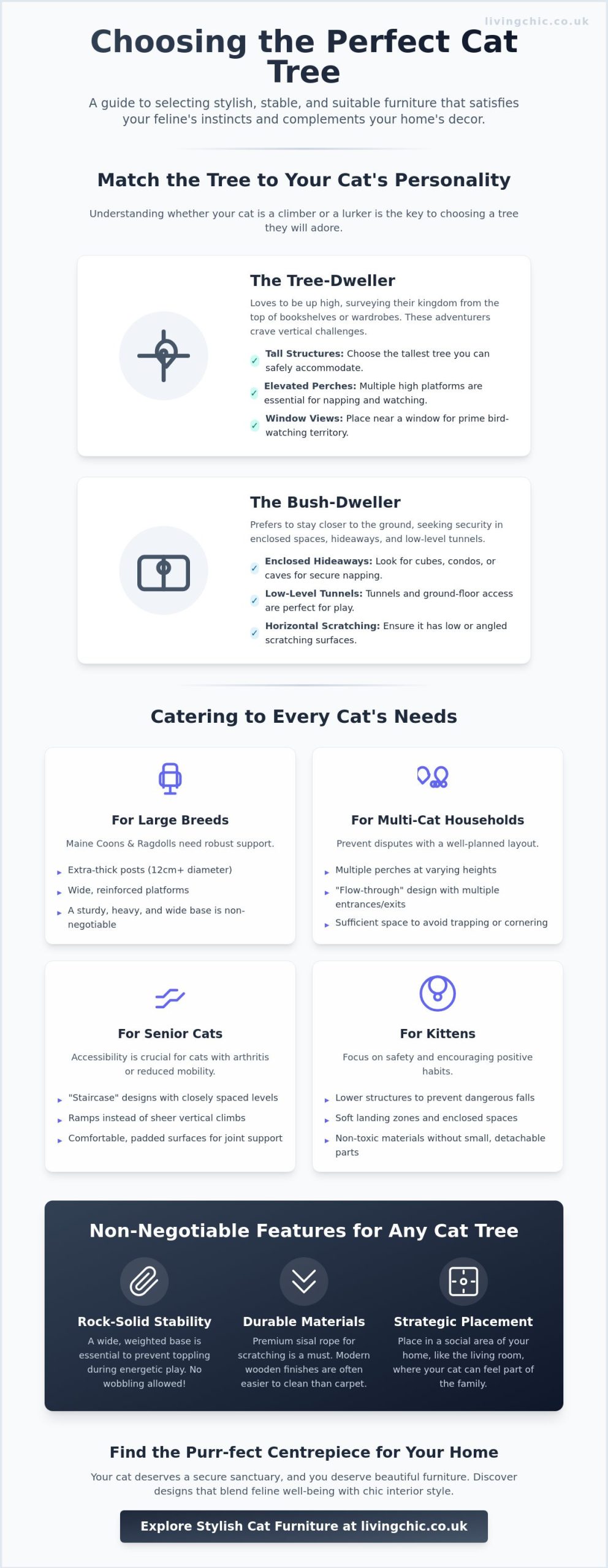
Every cat possesses a unique climbing profile that dictates how they interact with their environment. Identifying whether your pet is a “tree-dweller” or a “bush-dweller” is the first step in making a successful purchase. Tree-dwellers are the adventurers who find comfort at the highest point in the room, such as the top of a bookshelf or fridge. For these cats, a tall cat tree with elevated perches is essential. Conversely, bush-dwellers prefer to stay closer to the ground, seeking out enclosed spaces and low-level tunnels where they feel protected but still part of the action.
Safety remains the most critical factor regardless of your cat’s energy levels. A sturdy, weighted base is non-negotiable to prevent the structure from toppling during a high-speed “zoomie” session. When browsing our range of pet supplies, look for models that prioritise stability through wide foundations or floor-to-ceiling tension poles. Material choice also impacts durability; whilst plush fabrics offer immediate comfort, wooden finishes provide a sleek, modern aesthetic that is significantly easier to wipe clean of fur and dander.
Solutions for Large Breeds and Multi-Cat Homes
Standard furniture often fails to accommodate larger breeds like Maine Coons, Ragdolls, or heavy-set British Shorthairs. These cats require specialised structures with extra-thick scratching pillars, ideally 12cm or more in diameter, to support their weight without swaying. In multi-cat environments, the layout of the tree is just as important as its size. Ensure the design features multiple exit points and “flow-through” platforms. This prevents a dominant cat from “trapping” another on a higher level, which is a common cause of household friction and redirected aggression.
Options for Senior Cats and Kittens
Age plays a massive role in how a cat navigates vertical space. Senior cats often struggle with arthritis or reduced vision, making traditional tall towers difficult to use. Look for “staircase” designs where platforms are spaced closely together, allowing for easy stepping rather than athletic jumping. For kittens, the focus shifts to security and safety. Soft landing zones and lower hideaways provide a sense of comfort as they find their feet. Always ensure the materials are non-toxic and free from small, detachable parts that could pose a choking hazard. If you’re unsure which model suits your home’s layout, you can always contact our helpful team for personalised advice.
Incorporating Cat Furniture into Your Interior Design
Gone are the days when pet accessories had to be hidden away in a spare room. Today, a cat tree is viewed as a stylish extension of your home’s furniture, designed to blend with sophisticated interiors rather than clash with them. By choosing textures and colours that mirror your existing bedroom furniture, you create a cohesive environment where every piece feels intentional. Modern designs have moved far beyond the traditional carpet-covered look, embracing minimalist silhouettes that wouldn’t look out of place in a boutique hotel.
Neutral tones are your best friend when integrating pet furniture. Shades of charcoal, light grey, and warm beige are popular for a reason; they disappear into contemporary colour palettes, allowing the focus to remain on your room’s overall design. In open-plan living areas, a tall, sculptural tree can even serve a dual purpose. It acts as a natural divider, subtly separating your relaxation zone from a dining area or home office whilst providing your cat with the vertical territory they instinctively crave. It’s a practical way to define spaces without blocking natural light or cluttering your floor plan.
Matching Materials with Your Decor
To achieve a truly chic look, consider the wood finishes and hardware already present in your room. Pairing wooden cat trees with your stylish coffee tables or sideboards creates a polished, curated feel. If your home leans towards a bohemian or coastal aesthetic, wicker or seagrass baskets offer a natural texture that feels light and airy. For those seeking a touch of luxury, look for models with faux-fur accents or velvet-lined hideaways. These materials add a layer of comfort for your pet whilst introducing a soft, tactile element to your decor that feels premium rather than purely functional.
Small Space Solutions: The “Floor-to-Ceiling” Advantage
Living in a compact apartment or townhouse shouldn’t mean sacrificing your pet’s happiness. Floor-to-ceiling tension-pole designs are a game-changer for smaller footprints. These units use a spring-loaded system to secure between the floor and ceiling, providing maximum climbing height whilst taking up less floor space than a standard armchair. Corner units are another efficient choice, utilising often-wasted areas to provide a multi-level playground. By thinking vertically, you can provide ample enrichment without cluttering your walking paths or making the room feel cramped. It’s about being clever with your square footage to ensure everyone stays happy.
Strategic Placement and Long-term Maintenance
Finding the right spot for your cat tree is the difference between a well-loved piece of furniture and an expensive dust-gatherer. Cats are social creatures who want to be part of the family action without being underfoot. The “sweet spot” is almost always near a window. This provides “Cat TV”, allowing your pet to observe birds and passers-by, which significantly increases the time they spend using the structure. It transforms a simple perch into a front-row seat for daily entertainment.
Avoid placing the unit in “collision zones” like narrow hallways or directly behind doors where you might accidentally bump into it. Instead, look for corners in the lounge or study. These are “scent-soaking” areas where the family gathers most frequently. Cats feel most secure when their territory overlaps with yours. Placing a tree in a “socially cold” area, such as an isolated spare room or a draughty hallway, often leads to the cat ignoring the investment entirely.
The “Golden Rules” of Placement
Follow these simple rules to ensure your cat loves their new perch. First, prioritise views. A window view provides mental stimulation that prevents boredom-related behaviours. Second, proximity matters. If you spend the majority of your evening in the lounge, the tree belongs there too. Finally, avoid high-traffic doorways. A cat won’t feel safe napping if they’re constantly interrupted by swinging doors or heavy foot traffic. A corner placement usually offers the best balance of visibility and security.
Keeping it Chic: Cleaning and Care
Maintaining your pet supplies ensures they remain a stylish part of your home for years. Weekly fur removal is essential; use a lint roller or a dedicated vacuum attachment to prevent dander build-up. For fabric platforms, spot-clean immediately using pet-safe, enzyme-based cleaners to neutralise odours and remove stains. This keeps the material looking fresh and prevents the “pet smell” that can sometimes permeate plush fabrics.
Safety checks should be performed every three months. Check the stability and tighten any bolts that may have loosened during vigorous play or climbing sessions. Inspect the sisal rope for thinning or loose strands that could become a tripping hazard. You’ll know it’s time to replace a worn-out scratching pillar when the rope has frayed down to the inner cardboard or wood core, as it no longer provides the necessary resistance for effective claw maintenance. If you need help choosing a durable model that stands the test of time, contact our expert team for personalised advice.
Discover Stylish Cat Furniture at Living Chic
At Living Chic, we don’t believe you should ever have to choose between your pet’s happiness and your home’s aesthetic. Our curated range of pet and animal supplies is selected with a dual purpose in mind: satisfying feline instincts whilst complementing your interior decor. We draw on our many years of experience in the furniture industry to ensure every cat tree we sell is as sturdy as it is stylish. By searching for the latest global trends, we bring you pieces that feel like high-quality furniture rather than temporary accessories.
Our collaborative approach to customer care means we’re with you at every step of your purchase. Whether you’re looking for advice on weight-bearing structures for a Maine Coon or need help choosing a neutral charcoal finish to match your lounge, our knowledgeable team provides approachable expertise. We combine this high standard of care with competitive pricing and reliable UK delivery, giving you total peace of mind as you upgrade your living space. We’re here to help you make the best choice for your family and your four-legged friends.
A One-Stop Shop for Your Home and Garden
We’re proud to be part of a specialist family of brands. For those looking to extend their pet’s territory outdoors, our sister site Garden Chic offers a fantastic range of outdoor pet needs. Our deep roots in indoor furniture and garden structures make us a unique choice for pet owners who value quality. By joining our newsletter, you become part of the family and gain access to exclusive style tips and offers that help you transform your entire property, from the lounge to the garden.
Ready to Transform Your Space?
Creating a harmonious home shouldn’t be a struggle. Our latest collection of cat trees and scratching posts offers the perfect balance of “chic” value and durable construction. We focus on providing premium materials at fair prices, ensuring your investment lasts for years. It’s time to replace those carpet-covered eyesores with something truly beautiful. Browse our full Pet & Animal range today and discover how easy it is to keep your cat active and your home looking its best.
Elevate Your Home and Your Cat’s Happiness Today
Choosing the right cat tree transforms your living space into a shared sanctuary where style and function coexist. By assessing your pet’s unique climbing profile and selecting modern, neutral finishes, you ensure their natural instincts are met without compromising your interior aesthetic. Prioritising strategic window placement and regular maintenance will keep the structure safe and engaging for your feline friend for years to come.
At Living Chic, we combine years of industry experience with a passion for quality homeware. Our expert-curated designs offer the perfect blend of stability and chic aesthetics, all supported by competitive UK pricing. We pride ourselves on providing high-quality customer care before and after your purchase to help you find the ideal piece for your home.
Explore our range of stylish and sturdy Cat Trees and discover how simple it is to upgrade your pet’s lifestyle whilst maintaining a beautiful home environment. We look forward to helping you create the perfect space for your family.
Frequently Asked Questions
Where is the best place to put a cat tree in my house?
The ideal location is near a window or in a room where the family spends the most time. Cats are social creatures who enjoy watching birds and passers-by, so a window view provides essential mental stimulation. Avoid placing the structure in isolated areas like a garage or a quiet hallway, as your pet will likely ignore it in favour of being closer to you.
How do I get my cat to use their new tree instead of the sofa?
Redirect your cat’s scratching behaviour by placing the new tree directly next to the sofa they currently use. You can encourage them by rubbing catnip on the sisal pillars or using a feather toy to lead them onto the perches. Always offer immediate praise or a treat when they use the tree to build a positive association with the new furniture.
What height should a cat tree be for an adult cat?
An adult cat usually requires a tree between 120cm and 180cm tall to satisfy their natural climbing instincts. This height provides enough vertical space for a full body stretch and several levels for jumping exercise. Taller structures are particularly beneficial for active breeds that find security in having a high vantage point to survey their surroundings.
How long do cat trees usually last before needing replacement?
A well-made cat tree typically lasts between 3 and 5 years depending on the number of cats in your home. While budget models with cardboard cores might show signs of wear within 12 months, solid wood designs offer much better longevity. You should consider a replacement when the sisal rope has frayed significantly or the structure begins to wobble.
Are floor-to-ceiling cat trees safe for heavy cats?
Floor-to-ceiling designs are very safe for heavy breeds like Ragdolls or Maine Coons if they include a sturdy tension pole. These units use the ceiling for extra leverage, which prevents the swaying often seen in standalone towers. Ensure the model you choose has pillars at least 12cm thick to support the additional weight during high-speed climbing.
Can I use a cat tree outdoors if it is made of wood?
Standard wooden cat trees are designed for indoor use and will rot quickly if exposed to moisture and rain. If you want to provide vertical territory in your garden, you should visit our sister site Garden Chic for weather-resistant pet structures. Outdoor furniture requires specific pressure-treated timber and waterproof finishes to withstand the British climate safely.
How do I clean a cat tree properly without damaging the material?
Vacuum the platforms weekly to remove fur and dander, then spot-clean any stains with a pet-safe, enzyme-based cleaner. Avoid soaking the sisal rope or the wooden components, as excessive water can weaken the adhesive and cause the materials to warp. For a deeper clean, use a steam cleaner on fabric areas to kill bacteria without using harsh chemicals.
Is it worth buying a luxury cat tree over a budget one?
Luxury cat trees offer significantly better value over time because they use premium materials like solid wood and high-grade sisal. Budget options often rely on thin carpet and cardboard tubes which degrade rapidly under daily use. Investing in a higher-quality model ensures a more stable environment for your pet whilst providing a stylish piece of furniture that lasts for years.