
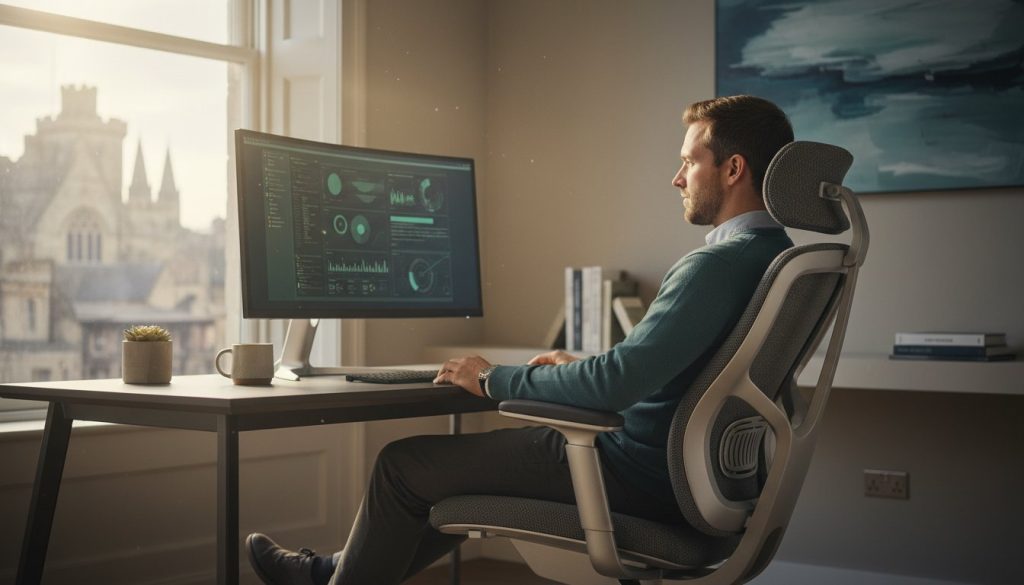
With 76% of employees now prepared to quit if their flexible working options are removed, the home office has officially become a permanent sanctuary. You probably know the feeling of finishing an 8-hour shift only to be met with nagging neck tension or the heat build-up that comes from poor-quality materials. It’s difficult to stay productive when you haven’t found a comfortable office chair for long hours that actually supports your posture, especially since remote workers are reported to be up to 40% more productive than their on-site counterparts.
At Living Chic, we’ve analysed the latest 2026 design trends and BIFMA G1-2024 safety standards to help you find a seat that offers professional-grade support without looking like a corporate relic. Discover the science of dynamic movement and the rise of “resimercial” aesthetics. We’ll show you how to choose a chair that keeps you cool whilst ensuring you remain pain-free until the working day is done.
The Anatomy of Comfort: Why Your Chair Choice Matters for Long Hours
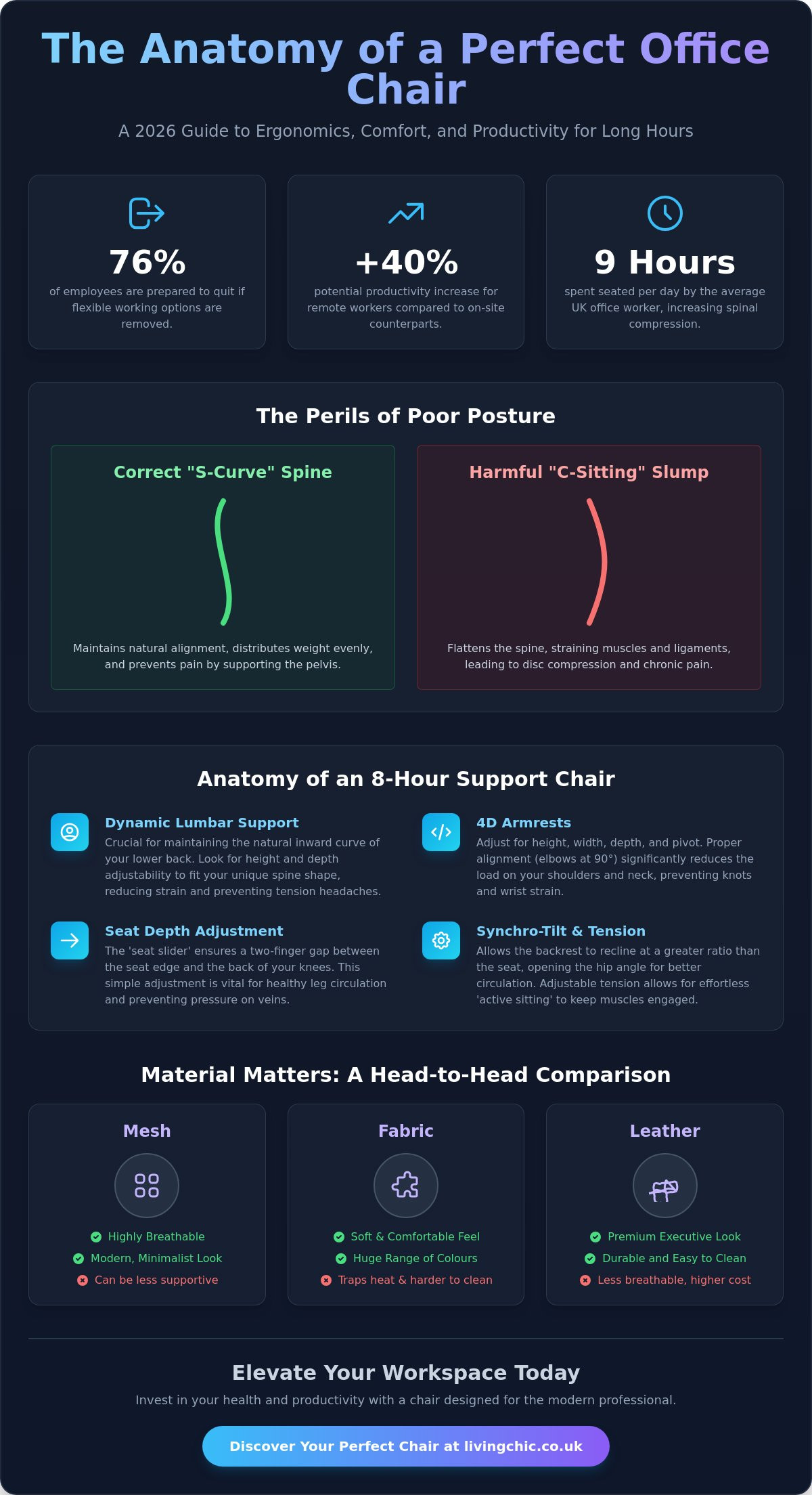
Recent health data from 2026 suggests that the average UK office worker spends up to nine hours a day seated. This sedentary behaviour places immense pressure on the intervertebral discs. Selecting a comfortable office chair for long hours isn’t just about luxury; it’s about mitigating spinal compression. When you sit, your body weight concentrates on the base of your spine, which can lead to sciatica or chronic lower back pain. Proper weight redistribution is essential to prevent these issues from becoming permanent.
Effective weight redistribution is the hallmark of quality office furniture. A well-designed chair uses contoured surfaces to spread your weight across the thighs and buttocks rather than just the tailbone. Since the History of the Office Chair began with simple wooden stools, the science has evolved to include dynamic tension systems that react to your every micro-movement. Poor posture doesn’t just hurt your back; it causes cognitive fatigue. When your body is stressed by physical discomfort, your brain diverts energy to manage pain, reducing your focus and overall productivity.
To better understand this concept, watch this helpful video:
The Impact of Prolonged Sitting on Spinal Health
Your spine naturally forms an “S-curve” that acts as a shock absorber. Slumping or “C-sitting” flattens this curve, straining muscles and ligaments. A proper chair supports the pelvis, tilting it slightly forward to maintain that natural arch and prevent the discs from pinching. Active sitting is a method of using small, frequent shifts in position to engage core muscles and prevent muscle atrophy whilst working.
Comfort vs. Support: A Crucial Distinction
Many people mistake initial softness for long-term comfort. A plush, overstuffed seat often lacks the structural integrity to prevent “bottoming out,” where the foam compresses completely and your sit-bones hit the hard frame. High-density, cold-cured foam provides the firm resistance needed to keep your spine aligned throughout a full shift. Investing in a comfortable office chair for long hours can significantly reduce the need for frequent osteopath visits, as it prevents the chronic misalignment that causes shoulder and neck tension.
Essential Ergonomic Features for 8-Hour Support
In 2026, the “Gold Standard” for a comfortable office chair for long hours has shifted from static support to total adjustability. It’s no longer enough for a chair to just move up and down; a high-performance seat must accommodate the unique proportions of your body to prevent fatigue. Seat depth adjustment, or the “seat slider”, is a vital component of this. It allows you to move the seat pan forward or backward, ensuring there is a small gap (roughly two fingers wide) between the edge of the seat and the back of your knees. This simple adjustment prevents pressure on the popliteal veins, maintaining healthy leg circulation during long periods of focus.
4D armrests have also become a baseline requirement for professional setups at Living Chic. These allow you to adjust height, width, depth, and pivot angle. By positioning the armrests so your elbows are at a 90-degree angle and your wrists remain neutral, you significantly reduce the load on your trapezius muscles. This prevents the “hunched” posture that leads to chronic shoulder knots and wrist strain.
Lumbar Support: The Backbone of Productivity
The lumbar support should sit snugly in the small of your back, reinforcing the natural inward curve of the lower spine. Modern chairs in 2026 favour height-adjustable and depth-adjustable systems over fixed cushions. This is because every person’s “S-curve” is slightly different. Following medical guidelines for proper office ergonomics ensures your chair maintains this alignment. When the lower back is properly braced, it reduces the compensatory tension in the neck that often triggers afternoon tension headaches.
Dynamic Recline and Tilt Tension
Staying in one fixed position, even a “perfect” one, is detrimental to blood flow. The best office chairs now feature synchro-tilt mechanisms. This technology allows the backrest to recline at a higher ratio than the seat, opening up the hip angle whilst keeping your feet flat on the floor. You should always adjust the tilt tension based on your body weight. If the chair is too stiff, you’ll fight to lean back; if it’s too loose, you’ll feel unsupported. A balanced tension allows for effortless movement, keeping your muscles engaged and your blood circulating.
If you’re unsure which mechanism suits your working style, our experts are happy to provide a tailored recommendation based on your needs.
Mesh vs. Fabric vs. Leather: Choosing Your Ideal Material
The material covering your seat is just as vital as the mechanisms beneath it when searching for a comfortable office chair for long hours. Whilst ergonomic adjustments provide the necessary skeletal support, the upholstery dictates your daily tactile experience and thermoregulation. In 2026, the “resimercial” design trend has seen a shift towards softer textures and warmer tones that help office furniture blend into the home. However, your choice should primarily be driven by how your body reacts to heat and pressure throughout an 8-hour shift.
Durability is another factor that separates professional-grade chairs from budget alternatives. Industry experts use the Martindale rub test to determine how well a fabric resists wear. For a chair used daily, you should look for a rating of at least 50,000 rubs. This ensures the material won’t pill, thin, or lose its aesthetic appeal after a few months of heavy use. High-quality materials also tend to feature low-VOC components, which is a key focus of the updated ANSI/BIFMA e3-2024 sustainability standards.
Breathable Mesh: The Modern Standard
Mesh has become the favourite for users who “run hot” or work in environments without air conditioning. The open weave allows for constant airflow, preventing the uncomfortable heat build-up often associated with traditional padding. Beyond temperature control, mesh provides unique suspension properties. It contours to your body shape to reduce pressure points across your back and thighs. It is also remarkably easy to clean, as it doesn’t trap dust or pet hair. Some users find the firm, taut nature of mesh less “cosy” than foam, so it’s a choice between crisp support and plush softness.
Upholstered Fabric: Style and Softness
If you prioritise a “chic” and professional look that matches your existing decor, upholstered performance fabrics are an excellent choice. These modern textiles are engineered to be stain-resistant and highly breathable, offering a softer feel than mesh without the heat retention of older fabrics. You can view our range of home office furniture to explore various colour palettes, from muted greys to bold jewel tones. Fabric chairs often feel more substantial and “homely,” making them a popular pick for multi-purpose rooms.
Leather and Faux-Leather: Aesthetic Prestige
Leather remains the gold standard for executive prestige. It’s durable, develops a beautiful patina over time, and is incredibly easy to wipe clean. Faux-leather alternatives in 2026 have improved significantly, offering a similar look with a focus on sustainable, recycled materials. The main drawback for long-term sitting is breathability. Leather can feel sticky in summer and cold in winter. If you opt for this material, look for perforated panels or top-grain leathers that allow for better moisture wicking and air circulation.
How to Set Up Your Office Chair for Maximum Comfort
Owning a comfortable office chair for long hours is only half the battle; the other half is the precise calibration of your workspace. To achieve the 90-90-90 ergonomic standard, your ankles, knees, and hips should all be bent at right angles. This alignment minimises muscular strain and ensures your weight is distributed through the chair’s structural supports rather than your joints. If your desk isn’t height-adjustable, you might find your feet dangling when the chair is set to the correct arm height. In these cases, a footrest is essential to prevent pressure on the underside of your thighs, which can lead to numbness or “pins and needles” during a long shift.
Aligning your chair with your desk height is the most effective way to prevent “shoulder shrugging”. If your seat is too low, you’ll naturally lift your shoulders to reach the keyboard, leading to chronic tension in the trapezius muscles. Your forearms should be parallel to the floor, resting lightly on the armrests or the desk surface. Additionally, if your chair includes a headrest, it should be adjusted to cradle the natural curve of your neck. A headrest that’s too far forward will push your chin towards your chest, whilst one that’s too low will offer no support to the cervical spine, increasing the risk of neck strain.
The Perfect Height and Angle
To find your ideal seat height, stand in front of the chair and adjust the gas lift until the highest point of the seat is just below your kneecap. Once seated, your feet must be flat on the floor. Check your seat depth using the “three-finger rule”: there should be a gap approximately three fingers wide between the front edge of the seat and the back of your knees. This prevents the seat pan from cutting off circulation whilst ensuring your back remains firmly against the lumbar support. Finally, set your armrests so your elbows rest at a neutral 90-degree angle, allowing your wrists to hover comfortably over your keyboard without bending upwards or downwards.
Integrating the Chair into Your Workflow
Your chair must work in harmony with your monitor and peripherals to be truly effective. The top third of your screen should be at eye level. This prevents you from tilting your head down, a movement that adds up to 27kg of pressure to your cervical spine. Don’t be afraid to adjust your tilt tension throughout the day; reclining slightly during video calls can relieve pressure on your lower back and re-engage different muscle groups. We recommend setting a timer for a quick “micro-break” every 60 minutes to stretch and reset your posture, as even the best setup requires movement to maintain healthy circulation. If you need help choosing a model with these specific adjustments for your home office, you can speak to our specialist team for expert guidance.
Elevating Your Workspace with Living Chic
Finding a comfortable office chair for long hours often involves a compromise between medical-grade support and your home’s aesthetic. We believe your workspace should be an extension of your personal style rather than a corporate intrusion. At Living Chic, we curate furniture that meets the rigorous ANSI/BIFMA e3-2024 sustainability and performance standards whilst maintaining a sophisticated “resimercial” feel. This approach ensures your home office remains a place of inspiration. Transitioning from a clinical corporate look to a chic environment is proven to reduce stress and improve mental well-being during those long 8-hour shifts.
If your professional sanctuary is located away from the main house, perhaps in a garden building, you should browse our log cabins for the ultimate quiet retreat. Combining a high-performance ergonomic seat with a dedicated outdoor structure creates a clear boundary between your professional and personal life. As a UK-based retailer, we pride ourselves on delivering reliable customer care and expert advice to help you navigate these choices. We understand that a home office isn’t just a desk and a chair; it’s a vital part of your lifestyle.
A Curation of Style and Quality
Our collection is built on the foundation of quality and value. Our team regularly attends major trade exhibitions across Europe to identify the latest trends in textures and finishes before they hit the mainstream UK market. This proactive approach allows us to offer competitive prices on items that look and feel premium. You can Explore our house and home collection to find complementary decor that ties your workspace into the rest of your living environment. We focus on materials that are both durable and beautiful, ensuring your investment lasts for years to come.
Complete Your Home Office Transformation
A great chair is the centrepiece, but a total transformation requires a cohesive setup. Consider pairing your seating with the best home office desk to ensure your monitor and peripherals are at the correct ergonomic height. In smaller rooms, adding stylish mirrors can reflect natural light and create a sense of openness. Our goal is to help you build a workspace that is as professional as it is personal. Shop the Living Chic Office Collection today to find your perfect balance of comfort and style.
Ready to Transform Your Working Day?
Your choice of a comfortable office chair for long hours is one of the most significant investments you’ll make for your long-term spinal health. By applying the 90-90-90 rule and selecting materials that support your personal thermoregulation, you can eliminate the neck tension and back pain that often plague 8-hour shifts. We’ve seen how the right setup improves focus and keeps you productive until the evening.
At Living Chic, we simplify this process by offering an expertly curated range sourced from major European trade exhibitions. You’ll find stylish homeware that meets the latest BIFMA safety standards at competitive prices. Our UK-based customer care team is always on hand to help you find the perfect fit for your home or garden office. Transform your workspace with a comfortable office chair from Living Chic today and enjoy a professional environment that truly reflects your style. Your back will thank you for the upgrade.
Frequently Asked Questions
Is a gaming chair or an office chair better for long hours?
Ergonomic office chairs are generally superior for 8-hour workdays because they prioritise spinal alignment over aesthetic flair. Gaming chairs often feature “bucket seats” inspired by racing cars, which can actually restrict your movement and cause heat build-up. A professional office chair allows for the “active sitting” required to keep your muscles engaged and your blood circulating during a long shift.
How much should I realistically spend on a comfortable office chair?
A realistic budget for a comfortable office chair for long hours in 2026 ranges from £400 for high-performance entry models to over £1,100 for premium, industry-leading brands. While the average budget for a full ergonomic setup per employee is now between $1,500 and $3,000, investing in a BIFMA-certified chair ensures your furniture won’t need replacing for a decade or more.
Can a good office chair really fix my existing back pain?
A high-quality chair can alleviate the symptoms of back pain by correcting the poor posture that causes it, though it isn’t a substitute for medical advice. By reinforcing the natural S-curve of your spine and reducing disc compression, a proper seat prevents the daily strain that leads to sciatica. Many users report a significant reduction in neck and shoulder tension after switching to a chair with 4D armrests.
What is the most breathable material for a desk chair?
Mesh is the most breathable material available, making it the top choice for users who “run hot”. Its open-weave design allows for maximum thermoregulation, preventing the perspiration and discomfort associated with leather or thick foam. In 2026, many home office setups favour mesh for its ability to provide firm, suspended support without trapping body heat.
How often should I replace my office chair?
You should realistically replace your office chair every 7 to 10 years depending on the quality of the components. Premium manufacturers often provide 12-year warranties, which is a strong indicator of expected longevity. It’s time for a new chair if the seat foam has “bottomed out,” the gas lift is slipping, or the material no longer passes a basic visual durability check.
Do I need a headrest for my office chair to be comfortable?
Headrests are an optional feature that depends entirely on your working style and height. If you spend a large portion of your day in a reclined position for video calls or reading, a headrest is vital for supporting the cervical spine. However, if you primarily sit upright whilst typing, a headrest may not be necessary as long as your monitor is positioned at the correct eye level.
What is the best office chair for a small home office space?
The best choice for a compact workspace is a “resimercial” chair with a smaller wheelbase and a low-profile backrest. These designs provide full ergonomic support without dominating the room visually or physically. Models with flip-up armrests are particularly useful for small offices, as they allow the chair to be tucked completely under the desk when your working day is finished.