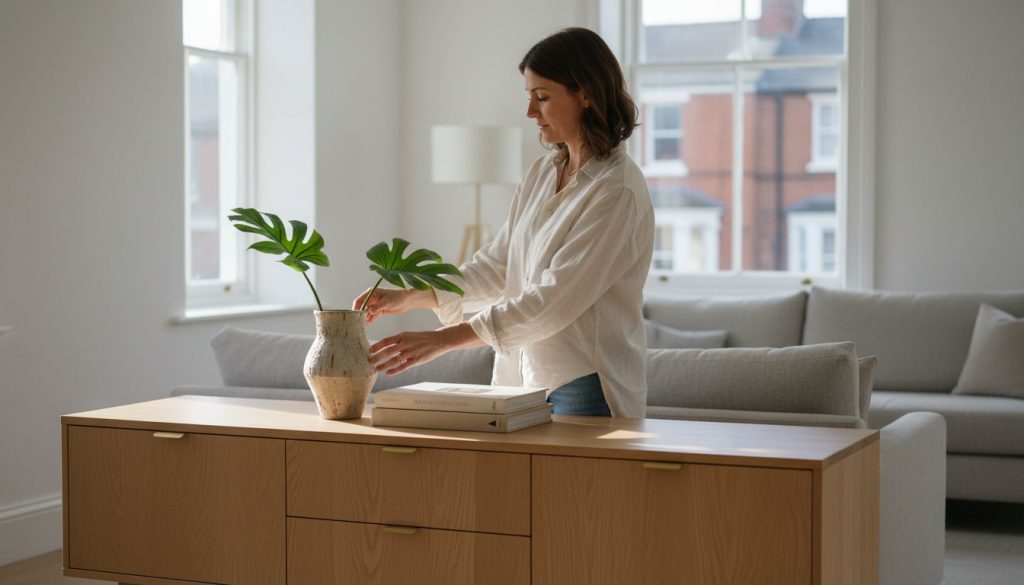
The modern sideboard for living room has undergone a dramatic transformation. Originally found strictly in dining rooms for storing fine china, it’s now the centrepiece of the British lounge. By 2026, the trend of Architectural Anchoring has seen these units used to dictate the flow of open-plan living spaces rather than just sitting against a wall. These pieces act as a visual weight that defines where the relaxation zone ends and the dining or kitchen area begins. To understand how these pieces shifted from utility to high-fashion, The Evolution of the Modern Sideboard shows their journey from 18th-century serving tables to today’s sleek, multi-functional hubs.
See how these designs translate into real-world interiors in this short showcase:
VIDEO
In the UK, furniture terminology often overlaps, but distinctions remain important for your layout. A buffet is typically taller and designed for serving food, while a credenza is often slimmer with sliding doors, frequently used in office settings. The modern sideboard for living room remains the most popular choice because it offers the perfect balance of depth and height for lounge storage. For households with heavy storage needs, a sideboard beats a standard TV unit every time. Most TV stands offer minimal shelf space; however, a sideboard provides deep cupboards that hide everything from board games to bulky blankets, keeping your home clutter-free.
Why Storage Doesn’t Have to Be Boring
Contemporary aesthetics prioritise quiet luxury. We see this through hidden handles and push-to-open mechanisms that create a seamless, sleek facade. This minimalist approach serves a purpose beyond looks; closed storage is proven to reduce visual noise, which helps lower stress levels in the home. A floating sideboard is the ultimate space-saver for small UK flats because it keeps the floor clear and creates an illusion of more room.
Sideboards as the New Media Centre
Designers are now optimising units specifically for modern tech. Modern sideboards feature cable management ports and ventilated compartments for gaming consoles and soundbars. Moving your screen to a waist-high sideboard often provides a more ergonomic viewing angle than low-profile units, especially in larger rooms. For more advice on arranging your space, check out our Living Room Furniture guide .
British interior design is shifting toward organic textures and sustainable sourcing. Mango wood has seen a 25% increase in demand over the last 18 months because of its unique grain patterns and eco-friendly credentials. Sustainably sourced Oak remains a staple in UK homes, offering a timeless foundation for any modern sideboard for living room . These woods provide a natural warmth that synthetic materials often lack, making them ideal for creating a cosy atmosphere.
The “Tactile Trend” is defining the 2026 aesthetic. Homeowners are moving away from flat, sterile surfaces in favour of ribbed wood panels and fluted glass. These textures catch the light and add depth to a room. Combining these with stone tops, such as marble or ceramic, creates a grounded, high-end feel. While solid wood is often seen as the gold standard, high-quality MDF with real wood veneers offers excellent durability. It resists warping in centrally heated homes better than some solid timbers, providing a stable and cost-effective alternative for busy households.
Metal accents provide the final contemporary touch. Matte black metal offers a grounded, industrial-inspired look that hides fingerprints well. In contrast, warm brass brings a sense of luxury and 1920s glamour to a contemporary space. These finishes are frequently used for slim legs or minimalist handles to elevate the overall design.
Natural Wood vs. High-Gloss Finishes
Choosing between a natural grain and a high-gloss finish depends on your room’s light levels. A high-gloss white sideboard works perfectly to brighten a dark hallway or a north-facing lounge by reflecting available light. For those seeking a sophisticated, “vintage-modern” vibe, mid-century walnut remains the top choice. It pairs beautifully with neutral palettes and adds instant character to any space. Maintenance is simple; use a soft, damp cloth for gloss surfaces and specific wood oils for natural finishes every six months to ensure longevity.
Mixed Media: Glass, Metal, and Stone
Fluted glass doors are a standout feature for 2026. They allow for “semi-transparent” display, letting you showcase the silhouettes of your favourite ceramics without revealing every bit of clutter. For a premium feel, marble or ceramic tops are ideal because they resist scratches and heat better than standard wood. Living Chic curates materials that offer “designer looks at competitive prices”, ensuring high-end style remains accessible. When planning your layout, The Practical Selection Guide provides excellent insights into how these heavy materials impact the visual weight and traffic flow of your home.
Ready to transform your home? You can browse our latest range of modern sideboard for living room designs to find a piece that fits your style and budget.
Choosing the right modern sideboard for living room layouts requires more than just an eye for aesthetics; it’s about mastering the geometry of your space. Before you browse the Living Chic collection, grab a metal tape measure. You need to ensure a minimum of 60cm “walk-around” space between the sideboard and other furniture. This clearance allows doors and drawers to open fully without obstructing traffic flow or hitting your coffee table. If you’re tight on space, consider a unit with sliding doors to eliminate the swing radius entirely.
When you’re placing a unit against a long, expansive wall, apply the “Rule of Three.” Your sideboard should ideally occupy roughly one-third of the wall’s total length. This creates a balanced visual anchor rather than letting the furniture look like a lonely island. If the wall is 4.5 metres long, a 150cm unit provides the perfect architectural weight. For historical context on how these proportions have shifted over centuries, the Victoria and Albert Museum’s furniture collection offers incredible insight into the evolution of storage design and scale.
Utility often dictates form. A “Highboard” is typically taller and narrower, making it excellent for alcoves where floor space is at a premium. In contrast, a “Lowboard” is long and short, designed to sit beneath wall-mounted televisions or large mirrors. Don’t make the common mistake of buying a unit that’s too shallow. While a 30cm depth looks sleek, it won’t fit a standard 31cm dinner plate or modern electronics. Aim for a depth of 40cm to 45cm to ensure your tech cables and serving platters fit comfortably behind closed doors.
Sizing for Small vs. Large Living Rooms
In compact UK homes, every centimetre counts. Small room strategies focus on 2-door compact sideboards that use vertical height to provide storage without eating up the floor. For larger, open-plan spaces, 4-door “extra long” units are essential to fill a feature wall effectively. Standard UK sideboard widths generally fall into three categories:
120cm: Ideal for small flats or narrow hallways.150cm: The “Goldilocks” size that fits most semi-detached living rooms.180cm+: Statement pieces for large detached homes or dedicated dining zones.
Placement and Zoning in Open-Plan Homes
Your modern sideboard for living room use can act as a clever architectural tool. Position a unit as a “sofa back” to create a clear divide between the lounging area and the dining zone. This “zoning” technique makes large rooms feel more intimate and organized. If you’re working from home, a sideboard can serve as a “hidden desk” hack. Store your laptop and files inside, using the top surface as a standing desk or a place for your monitor during the day.
Be mindful of garden-facing rooms with large bifold doors. Direct UV exposure can bleach natural wood finishes or yellow certain lacquers over time. Position your unit away from direct sunlight or use UV-filtering window films to protect your investment. This is particularly vital for oak or walnut veneers which are more sensitive to light-induced colour shifts.
Styling a modern sideboard for living room spaces requires a careful blend of visual weight and personal touches. The Anchor and Layer method is the industry standard for 2026. You start with a primary focal point, typically a large mirror or piece of abstract art, positioned roughly 15cm to 20cm above the surface. From there, you layer smaller items like ceramic vases or stacks of coffee table books to create a staggered, professional look. This approach ensures the unit feels like a curated part of the room rather than just a storage box.
The Mirror and Sideboard Connection
A statement mirror is the perfect partner for your furniture. It reflects light across the room and adds depth to smaller lounges. If your unit has sharp, geometric lines, choose a large circular mirror to provide a soft contrast. For a more cohesive look, match the frame material to the sideboard’s legs or handles. You can find specific advice on finding the perfect hanging height in our Guide to Styling Mirrors .
Lighting Your Sideboard
Lighting transforms a functional piece into a design feature. Many homeowners now install LED strip lights underneath the unit to create a floating effect. This works exceptionally well in modern, minimalist lounges. A stylish table lamp provides essential task lighting and adds height to one end of the unit. If you’re hosting, clear the clutter to create a bar nook. Arrange a high-quality tray with glassware and a few premium bottles to set an inviting tone for the evening. This simple shift moves the furniture from a daytime storage solution to an evening entertainment hub.
Managing the Tech Mess
Modern living often involves chargers and cables. To keep your surfaces clean, choose units with built-in cable ports. Use discreet wireless charging pads for phones and smartwatches to eliminate tangled wires. This keeps your modern sideboard for living room looking sharp and uncluttered. If your unit doesn’t have internal management, use decorative boxes to hide remote controls and charging hubs.
Seasonal Styling
Refresh your look twice a year to keep the room feeling current. During winter, use heavy textures, scented candles, and dark ceramics to create a cosy atmosphere. When summer arrives, swap these for clear glass vases, fresh greenery, and lighter linens. Changing just three items on the surface can completely alter the mood of the room without requiring a full redecoration.
At Living Chic, we present a collection of great quality home and garden accessories at very competitive prices. Our team has many years of experience in the furniture industry. We regularly attend major trade exhibitions across Europe to curate a selection that reflects the latest global trends. Finding the right modern sideboard for living room shouldn’t be a compromise between style and budget. Our goal is to provide you with pieces that feel both premium and practical. We support every purchase with a high level of customer care before and after your furniture arrives. With our reliable UK-wide delivery, your home transformation is only a few clicks away.
From Indoor Chic to Garden Elegance
Our design philosophy doesn’t stop at your back door. We are part of a specialist family of brands designed to help you create a cohesive aesthetic throughout your entire property. You’ll find that many of our indoor furniture styles mirror the high-quality textures and materials found at Garden Chic. This allows you to create a seamless transition between your lounge and your outdoor seating area. If you’re looking to extend your living space into the garden, consider matching your modern sideboard for living room with the interior of a summerhouse or log cabin from Simply Log Cabins. A 2023 report from Post Office Money indicated that high-quality garden rooms and professional landscaping can add up to 20% to a UK home’s market value; maintaining a consistent design language makes that investment even more effective.
Final Checklist Before You Buy
Before you commit to your new piece of furniture, run through these essential checks. It’s the best way to ensure a perfect fit for your 2026 home layout:
Exact Dimensions: Measure your wall space and leave at least 10cm of breathing room on either side to avoid a cramped appearance.Internal Storage: Confirm if the internal shelves are adjustable. This is vital if you plan to store tall vases, heavy media equipment, or large dinner sets.Material Durability: Choose solid wood finishes for high-traffic family rooms or opt for mirrored glass to add a sophisticated, light-reflecting touch in smaller spaces.Delivery Access: Ensure the delivery path is clear and your doorways are wide enough for the unit dimensions provided on our product pages.
You can browse our full range of modern sideboards to find the piece that completes your room. We invite you to join our newsletter and become part of the family for exclusive access to upcoming trends and seasonal savings. Once you’ve found the style that speaks to you, click “Add to Basket” with total confidence.
Choosing the right modern sideboard for living room layouts requires a careful balance of aesthetic flair and practical scale. The 2026 design landscape focuses on sustainable materials and bold, textured finishes that our buyers have carefully sourced from major European trade shows. You’ll find that getting the proportions right makes all the difference in a room’s flow and functionality. Our team at Living Chic focuses on bringing these high-end trends to your doorstep while maintaining significant RRP savings on every unit in our range. We provide expert UK customer support to help you navigate your purchase with total confidence. It’s time to move beyond basic storage and embrace furniture that serves as a genuine focal point. Whether you prefer minimalist oak or striking industrial metal accents, the right piece defines your interior style for years to come. You can trust our curated selection to provide both durability and that sought-after “Living Chic” aesthetic.
Shop our full collection of Modern Sideboards at Living Chic
Start your home transformation today and enjoy a space that reflects your unique personality.
What is the standard height of a modern sideboard for a living room?
The standard height for these units typically ranges between 75cm and 90cm. This height aligns with most dining tables and provides a comfortable surface for displaying decor or serving food. A modern sideboard for living room often sits at a mid-point of 80cm to ensure it doesn’t dominate the wall space while still offering significant internal storage capacity.
Can I put a TV on a sideboard instead of a TV stand?
You can definitely use a sideboard as a TV stand as long as the height provides a comfortable viewing angle from your sofa. Ensure the furniture is at least 15cm wider than the TV screen to maintain a balanced look and prevent the setup from feeling top-heavy. Many homeowners prefer this option because sideboards offer more depth and hidden storage for media players than slimline TV units.
How do I style a sideboard without it looking cluttered?
Styling success relies on the “rule of three” where you group items in odd numbers of varying heights. Try placing a tall table lamp on one end, a medium-sized vase in the centre, and a small stack of books on the other. It’s vital to keep at least 40% of the surface area completely clear. This negative space allows the eye to rest and highlights the quality of your furniture.
What is the best material for a durable living room sideboard?
Solid hardwoods like oak, walnut, or mango wood are the best materials for durability and can easily last over 20 years. If you prefer a contemporary aesthetic, high-density MDF finished with a 2mm thick lacquer or a real wood veneer offers excellent scratch resistance. These materials provide the “chic” look Living Chic is known for while standing up to the demands of a busy UK household.
Should a sideboard be wider than the mirror or artwork above it?
A sideboard should always be wider than the artwork or mirror hanging above it to create a proper visual anchor. Ideally, the furniture should extend 15cm to 30cm beyond the edges of the wall decor on both sides. If the mirror is wider than the sideboard, it creates a top-heavy effect that makes the room feel unbalanced and the furniture appear too small for the space.
Are high-gloss sideboards still in style for 2026?
High-gloss finishes remain a popular choice for 2026, particularly in “quiet luxury” interiors that value light and reflection. The trend has moved toward soft neutrals like cashmere, dove grey, and stone rather than the stark whites of previous years. These surfaces are excellent for smaller UK living rooms because they bounce light around the space, making the area feel larger and more open.
How much weight can a typical modern sideboard hold?
A standard floor-standing modern sideboard for living room can typically support between 40kg and 75kg on its top surface. Internal shelves are usually designed to hold about 10kg to 15kg each, which is plenty for heavy glassware or dinner sets. You’ll find a variety of sturdy, high-quality options at Living Chic that are built to handle these weight requirements with ease.
How do I hide cables if my sideboard is used for electronics?
You can hide cables by using a 50mm hole saw attachment to create neat entry points in the back panel of the unit. Use adhesive cable clips to route wires down the back of the furniture legs so they stay out of sight. This keeps the sleek lines of your sideboard clean and ensures your living room remains a tidy, relaxing environment without a mess of tangled power leads.