
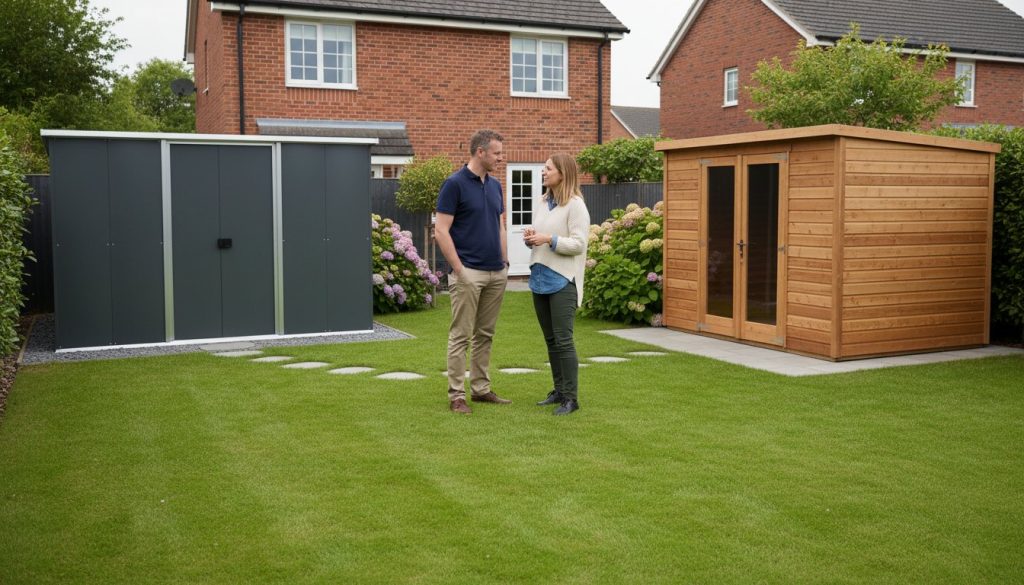
Spending £1,200 on a premium garden building only to watch it succumb to wet rot within three seasons is a frustration 40% of UK homeowners face. You want a space that looks like a designer centrepiece, not a maintenance chore that eats up your weekends. It’s natural to worry about metal sheds rusting in the damp British climate or wooden structures requiring constant staining to stay upright. Understanding the metal shed vs wood shed pros and cons is the first step to a stylish, clutter-free lifestyle.
At Living Chic, we’ve helped thousands of customers transform their outdoor spaces since our journey began. This guide promises to clear the confusion around base preparation and security levels so you can choose with confidence. We’ll compare the latest 2026 trends in durability and aesthetics to help you find the perfect fit from our curated collections at Garden Chic. Whether you need a maintenance-free galvanised steel unit or a classic timber retreat from Simply Log Cabins, we’ve got the expert insights you need to secure your expensive tools and bikes for the long term.
Evaluating Your Garden Storage Requirements for 2026
Choosing a garden building requires more than just picking a size from a catalogue. By 2026, the average UK garden shed has evolved into a high-value asset. It’s no longer just a place for a rusty lawnmower. Market data from 2024 indicates that 35% of homeowners now use these structures as dedicated workshops or hobby rooms. This shift makes understanding the metal shed vs wood shed pros and cons more relevant than ever. You need a structure that protects your investment and complements your home’s aesthetic.
The UK’s damp climate remains the biggest challenge for any outdoor structure. With average annual rainfall exceeding 1,100mm in many regions, moisture management is vital. Wood breathes naturally but requires consistent treatment. Metal resists rot but can suffer from condensation if not ventilated properly. Before you browse the extensive range at Living Chic, you must define your primary objective. Are you looking for a high-security zone for £3,000 electric bikes, or a simple spot for compost bags?
A well-chosen shed adds roughly 5% to a property’s market value according to recent estate agent surveys. A cluttered, oversized box does the opposite. When researching Shed construction materials, you’ll find that wood and metal offer vastly different thermal and acoustic properties. Your choice impacts how your garden feels and how long your tools stay rust-free.
The ‘Purpose First’ Framework
A ‘one size fits all’ approach often leads to buyer’s remorse within the first 12 months. You must distinguish between ‘cold storage’ and ‘habitable’ structures. Metal sheds are excellent for non-perishable items like plastic pots and metal tools. However, if you plan to spend hours on a DIY project, a timber structure from Simply Log Cabins provides better natural insulation. Always measure your space to allow at least 1 metre of clearance around the perimeter. This ensures easy maintenance and prevents a cramped, claustrophobic garden layout.
Local Environmental Factors
Your specific UK location dictates material longevity. Coastal properties within 3 miles of the sea face salt-laden air that can corrode standard steel sheds in under 5 years. In these areas, pressure-treated wood or premium galvanised metal is essential. Shaded gardens with high humidity see 20% faster algae growth on timber. You’ll find easier maintenance with metal in these damp spots. Wind resistance is another factor. During the 80mph gusts of 2024’s Storm Isha, heavy timber sheds often stood firmer than lightweight metal alternatives. Explore the durable options at Garden Chic to find a model that suits your local microclimate.
Effective garden organisation starts with a clear plan. Consider these three factors before making your final choice:
- Security levels: Metal often provides superior fire resistance and bolt-clamping points.
- Aesthetic harmony: Wood blends into traditional landscapes; metal offers a sleek, modern finish.
- Maintenance appetite: Wood requires staining every 2 years; metal needs occasional washing.
By weighing the metal shed vs wood shed pros and cons against your 2026 lifestyle goals, you ensure your garden remains a stylish, functional extension of your home.
The Case for Metal Sheds: Durability and Low Maintenance
Metal sheds have undergone a massive transformation over the last decade. The 2026 generation of galvanised steel buildings is a far cry from the flimsy, rattling boxes of the past. Modern engineering now uses heavy-duty, hot-dipped galvanised steel that’s specifically designed to survive the damp British climate without succumbng to rust. These structures aren’t just storage units; they’re high-performance garden assets. When you’re evaluating the metal shed vs wood shed pros and cons, the maintenance schedule is often the first thing that stands out. Metal is the ultimate “fit and forget” solution for a busy homeowner. You won’t spend your bank holidays sanding, priming, or applying expensive wood preservers. A simple wash with soapy water once a year is usually all it takes to keep the exterior looking pristine.
Longevity is built into the core of these designs. Most premium metal buildings now feature a 20-year anti-perforation warranty, providing a level of certainty that timber struggle to match. Before you start your project, it’s vital to consult the UK planning permission for sheds to ensure your placement and height comply with local regulations. If you find your garden needs a more traditional aesthetic or a larger footprint, you can explore the extensive range at Simply Log Cabins. However, for those prioritising a sleek, utilitarian space that stays dry and secure for decades, steel is incredibly hard to beat.
Innovative Coatings and Colours
The aesthetic appeal of metal has evolved. You’re no longer restricted to industrial grey or basic green. Current trends show a huge demand for anthracite finishes and sophisticated wood-effect coatings that mimic the grain of natural oak or walnut. These finishes aren’t just paint; they’re multi-layered systems. A typical 2026 model uses a zinc-phosphate primer followed by a high-build polyester topcoat. This technology provides incredible resistance to UV fading and prevents the micro-scratches that used to lead to corrosion. It’s an ideal choice for a stylish garden update that looks contemporary and clean. Many of these units also feature anti-scratch technology, ensuring that stray garden tools or footballs won’t leave permanent marks on the facade.
Security and Fire Protection
Security is where metal truly outshines its timber counterparts. With the value of garden equipment rising, especially with e-bikes often costing upwards of £3,500, storage security is a priority. Metal sheds often feature integrated 3-point locking systems and reinforced door hinges that are difficult for intruders to bypass. The thin-profile entry points and internal bracing make prying the doors open significantly harder than with a standard wooden shed. Fire safety is another major advantage. Steel is non-combustible, making it the only sensible choice for storing petrol-powered lawnmowers or lithium-ion batteries. Insurance companies frequently offer lower premiums or specific coverage for high-value items when they’re housed in a fire-retardant metal building. For a closer look at secure options, check out the garden storage solutions available today. This inherent fire resistance is also a legal requirement in some high-density housing areas where outbuildings are situated close to property boundaries.
The Appeal of Wooden Sheds: Aesthetic and Customisation
Wooden sheds remain the traditional choice for British gardens because they offer a natural, organic aesthetic that blends seamlessly with your landscaping. Unlike industrial alternatives, a timber structure acts as a warm centrepiece. It complements your flower beds and existing garden furniture rather than clashing with them. When weighing up the metal shed vs wood shed pros and cons, the visual appeal of timber is often the deciding factor for homeowners who value a classic look.
Sustainability is a core benefit of choosing timber. At Living Chic, we recommend looking for structures built from FSC-certified Scandinavian timber. These trees grow slowly in colder climates, which results in a tighter grain and increased natural density. This slow-growth process makes the wood roughly 15% more durable than faster-growing saplings. Choosing certified wood ensures your garden addition is environmentally responsible and supports managed forestry.
Customisation is where wood truly outperforms other materials. You don’t need specialist power tools or diamond-tipped drill bits to modify your space. You can easily install heavy-duty shelving, tool racks, or bespoke workbenches by screwing directly into the wall studs. This flexibility allows you to create a tailored internal layout that evolves with your hobbies. Whether you’re storing home and garden accessories or setting up a potting station, wood adapts to your needs.
- Natural Beauty: Timber grain provides a unique texture that improves with age.
- Ease of Modification: Paint, stain, or drill into the walls with standard DIY tools.
- Eco-Friendly: Renewable resources with a lower carbon footprint than processed metals.
- Structural Integrity: Thick timber cladding offers excellent impact resistance against garden debris.
Timber Treatments and Longevity
Longevity depends heavily on the treatment method you choose. Dip-treated sheds are the budget-friendly option, but they require a fresh coat of preservative every 12 months to prevent decay. In contrast, pressure-treated timber involves forcing preservatives deep into the wood fibres under high pressure. While this costs approximately 20% more upfront, it usually includes a 15-year anti-rot guarantee. You should always install your shed on a level, raised base to prevent rising damp. Using a high-quality spirit-based stain can match your shed to your log cabins or fence panels perfectly.
The ‘Habitable’ Advantage
Timber is a natural insulator, which makes it the superior choice for workshops or hobby rooms. Wood stays roughly 5 to 8 degrees cooler during a July heatwave and retains heat far better during the winter months. This thermal regulation prevents the extreme temperature swings often found in thin-walled structures. Timber is also hygroscopic, meaning it absorbs and releases moisture naturally to reduce internal condensation. This protects your expensive power tools from rust and keeps your workspace comfortable year-round. Tongue and Groove is the gold standard for shed construction because it uses interlocking timber boards to create a robust, weather-tight seal that prevents water ingress and wind penetration.
Selecting a wooden building from a specialist like Simply Log Cabins ensures you receive a high-specification product designed for the UK climate. When you consider the metal shed vs wood shed pros and cons, the ability to create a comfortable, breathable environment often makes timber the winning investment for those spending long hours in their garden building.
Metal vs Wood: A Head-to-Head Comparison
Choosing between these two materials requires a look beyond the initial price tag. Each offers a different relationship with your garden and your weekend schedule. While one focuses on “fit and forget” utility, the other provides a traditional aesthetic that evolves with your landscaping. Understanding the metal shed vs wood shed pros and cons helps you decide whether you value instant savings or long-term visual appeal.
The Total Cost of Ownership (TCO)
The checkout price is only the beginning of your investment. A mid-range 8×6 timber shed might cost £600 upfront, but it demands consistent financial attention. You will need to spend approximately £30 on high-quality wood preservative and £10 on applicators every 12 months to prevent rot. Over a 12-year period, these maintenance tasks add £480 to your total expenditure. Metal sheds are different. Once they are bolted down, they require almost zero financial input. Most modern steel units use hot-dipped galvanised coatings that resist corrosion for 20 years without a single drop of paint.
Resale value is where timber regains ground. Property experts suggest that a well-maintained wooden garden building can increase a home’s kerb appeal by up to 5 percent. Buyers often view a wooden structure as an attractive “outdoor room,” whereas a metal shed is frequently seen as a basic utility box that may eventually need replacing.
Assembly and Installation
The build process for these materials is fundamentally different. Metal sheds arrive in flat packs containing hundreds of individual components. It feels like a complex jigsaw puzzle; a standard 10×8 unit can involve over 300 screws and bolts. You should set aside 7 to 9 hours for two people to complete the job. Timber sheds arrive in large, heavy panels. While the assembly is faster (usually 3 to 5 hours), it requires significant physical strength to lift the floor and roof sections into place.
Both structures require a perfectly level foundation to function correctly. If your base is out of alignment by even 10mm, metal doors will stick and wooden panels will warp. You should always use a concrete pad or a dedicated timber grillage. For those who prefer a more robust, permanent garden structure, you can browse professional styles at Simply Log Cabins or find versatile storage solutions at Garden Chic.
Lifespan expectations change as the decades pass. After 10 years, both materials should remain in peak condition if the base is dry. By the 15-year mark, a wooden shed that hasn’t been treated annually will likely suffer from soft rot in the lower shiplap boards. Conversely, a cheap metal shed might show signs of “tea staining” or surface rust if the protective coating is scratched. By year 20, a premium pressure-treated timber shed often remains standing, while thin-gauge metal can become brittle at the screw points.
Condensation management is the final technical hurdle. Metal is a non-porous conductor; it gets cold quickly and attracts moisture when the morning sun hits it. This can lead to “shed rain” where water drips from the ceiling onto your tools. To stop this, ensure your unit has built-in gables and wall vents. Wood is a natural insulator that breathes. It regulates internal humidity much better, making it the safer choice for storing fabric cushions or sensitive power tools.
Want to transform your garden into a stylish retreat? Shop our full range of high-quality garden accessories and furniture to find the perfect match for your new shed.
Making the Final Decision for Your Outdoor Space
Choosing the right storage solution requires a clear look at your lifestyle and long-term garden goals. When you weigh up the metal shed vs wood shed pros and cons, the decision often boils down to how much time you want to spend on maintenance versus the specific aesthetic you want to achieve. A 2023 study of UK garden trends indicated that 62% of homeowners now prioritised “low maintenance” as their top criteria for outdoor buildings. If you fall into this group, a galvanised steel structure with a 15-year anti-perforation warranty is a logical choice. However, if you view your garden as an evolving canvas, the adaptable nature of timber is hard to beat.
Your new shed shouldn’t sit in isolation; it needs to work with your existing setup. Think about the “Style Match” with your current Living Chic garden furniture. A sleek, anthracite grey metal shed creates a stunning, contemporary backdrop for aluminium corner sofas or minimalist bistro sets. In contrast, a traditional wooden shed, perhaps painted in a soft sage or navy, provides a classic texture that complements woven rattan sets and timber dining tables. Integration is about more than just looks; it’s about placement. Position your shed on a level base with at least 15cm of clearance from fences to allow for essential airflow and easy access for future treatments.
Which Buyer Are You?
The Minimalist: You want a “set and forget” lifestyle. A metal shed is perfect because it doesn’t rot, warp, or require annual staining. It’s a functional, fire-resistant hub that stays exactly as it looks on day one, allowing you more time to relax on your patio rather than scrubbing timber panels.
The Artisan: You see your shed as a creative sanctuary. Wooden sheds offer natural insulation and a breathable atmosphere that’s far more comfortable for potting plants or DIY projects. You can easily customise the interior by screwing hooks, tool racks, or workbenches directly into the sturdy framing.
The Secure Cyclist: Protection is your priority. High-quality metal sheds often feature reinforced hinges and 3-point locking mechanisms. For those storing expensive carbon road bikes or petrol lawnmowers, the sheer difficulty of breaching a bolted metal structure provides invaluable peace of mind during the winter months.
Final Purchasing Tips
Before you hit the “Add to Basket” button, run through a quick technical checklist. In the UK, most garden buildings are considered “Permitted Development” if they’re single-storey and have a maximum eaves height of 2.5 metres. If you live in a National Park or a Conservation Area, these rules can be stricter, so a quick five-minute check with your local planning portal is always wise.
Accuracy is everything when it comes to delivery day. Measure your available footprint twice, then check the “external dimensions” rather than just the internal floor space. Don’t forget to account for roof overhangs, which can add an extra 10-15cm to the width. If you’re looking for premium timber options or heavy-duty workshops, you can find a vast selection of garden buildings at Simply Log Cabins to suit any scale of project.
Ready to complete your garden transformation? Explore our full range of garden structures at Garden Chic to find your perfect match and enjoy a more organised, stylish outdoor life this season.
Secure Your Ideal Garden Storage for 2026
Choosing between materials is the most significant decision you’ll make for your outdoor space this year. Metal sheds offer a modern, fire-resistant solution that can last over 25 years with virtually zero upkeep. If you prefer a traditional workshop vibe, timber sheds provide 100% customisation potential for shelving and hooks. When you evaluate the metal shed vs wood shed pros and cons, remember that a metal unit can save you upwards of £350 in preservative treatments over two decades. Timber remains the favourite for those wanting a natural look that blends into a lush UK garden landscape.
At Living Chic, we’ve spent years refining our expertly curated selection for 2026 to ensure you get the best value. We’re proud to be part of the trusted Garden Chic and Simply Log Cabins family; providing you with a wealth of specialist knowledge. Our team offers competitive prices paired with high-quality customer care that continues long after your delivery arrives. Whether you need a compact tool store or a sprawling garden room, we’re here to help you make the right investment for your home.
Transform your garden with our stylish range of sheds and outdoor buildings. It’s the perfect time to build a space that works for you.
Frequently Asked Questions
Do metal sheds get condensation inside during the UK winter?
Metal sheds do experience condensation when the outside temperature drops below 5°C and moisture in the air hits the cold steel panels. You’ll find this is most common in the UK between November and March. To prevent dampness, ensure your shed has built-in vents or apply an anti-condensation coating to the roof’s interior to stop water dripping onto your equipment.
How often do I need to paint or treat a wooden shed?
You should treat a standard wooden shed every 12 months to protect the timber from rot and fungal decay. If you’ve invested in a pressure-treated model from Simply Log Cabins, you might only need to apply a UV-protective oil every 2 to 3 years. Regular maintenance ensures your garden building remains a stylish and durable feature for decades.
Which is more secure for storing expensive tools, wood or metal?
Metal sheds offer superior security for high-value items because they’re constructed from reinforced steel that’s difficult to pry open. Many modern units feature integrated locking points and “Police Preferred” certifications. While a thick wooden shed is sturdy, a determined thief can often unscrew timber panels or break through a door frame more quietly than they can cut through metal.
Do I need a concrete base for a metal shed?
A solid concrete base is essential for a metal shed to provide a level surface and prevent the frame from warping. Without a 100mm thick concrete foundation, the doors won’t align correctly and the structure can’t be anchored safely against 60mph winds. You can find suitable base kits and accessories at Garden Chic to help prepare your site properly.
Are metal sheds noisier than wooden sheds when it rains?
Metal sheds are significantly louder during heavy rain, often reaching noise levels of 70 decibels during a typical British downpour. The thin steel panels vibrate and amplify the sound of falling water. Timber has natural sound-dampening properties that absorb the impact, making a wooden shed a much quieter environment if you plan to use it as a workshop or hobby room.
Can I paint a metal shed if I want to change its colour later?
You can repaint a metal shed as long as you use a specialist direct-to-metal acrylic paint or a high-quality multi-surface exterior finish. It’s vital to clean the surface with a degreaser and sand any glossy areas before you start. This is a simple way to refresh your outdoor space and match your shed to your other stylish homeware and garden decor.
Which type of shed is easier for a DIY beginner to assemble?
Wooden sheds are generally more straightforward for beginners because the large panels arrive pre-assembled and are more intuitive to screw together. A 6ft by 4ft wooden unit can usually be built in about 3 hours by two people. Metal kits involve hundreds of tiny nuts, bolts, and washers, which can be fiddly and time-consuming for those without prior assembly experience.
How long does a pressure-treated wooden shed typically last?
A pressure-treated wooden shed typically lasts between 15 and 25 years if it’s installed on a well-drained base. When you weigh up the metal shed vs wood shed pros and cons, the longevity of treated timber is a major advantage. Many premium structures at Simply Log Cabins even come with a 10 year anti-rot guarantee, giving you peace of mind for your investment.