
Choosing the right garden parasol can feel surprisingly complex. How do you know what size will perfectly cover your dining set without overwhelming the patio? Is that base heavy enough to handle a breezy British afternoon? And what’s the real difference between a classic centre-pole and a stylish cantilever design? These uncertainties can turn an exciting purchase into a stressful one.
We believe finding the perfect parasol should be simple. It’s the final touch that transforms your garden into a chic, comfortable oasis for relaxing, dining, and entertaining. A great parasol offers more than just shade-it provides a safe, stylish, and durable centrepiece for your outdoor living space, ensuring you can make the most of every sunny day.
In this guide, we cut through the confusion. We’ll show you exactly how to measure your space, choose a safe and secure base, and select the best materials to withstand the UK weather for seasons to come. Get ready to buy with confidence and create the beautiful, shaded garden you deserve.
First, Choose Your Type: Cantilever vs. Centre-Pole Parasols
Choosing the perfect garden parasol is the first step to transforming your patio into a stylish and comfortable retreat. While the basic concept of a sunshade is simple, with a long and fascinating background you can explore in the history and types of parasols, today’s market primarily offers two distinct styles: the classic centre-pole and the modern cantilever. Understanding the difference is key to finding the right fit for your space and lifestyle. Each offers unique benefits, so let’s compare them to help you make a confident choice.
The Classic Centre-Pole Parasol
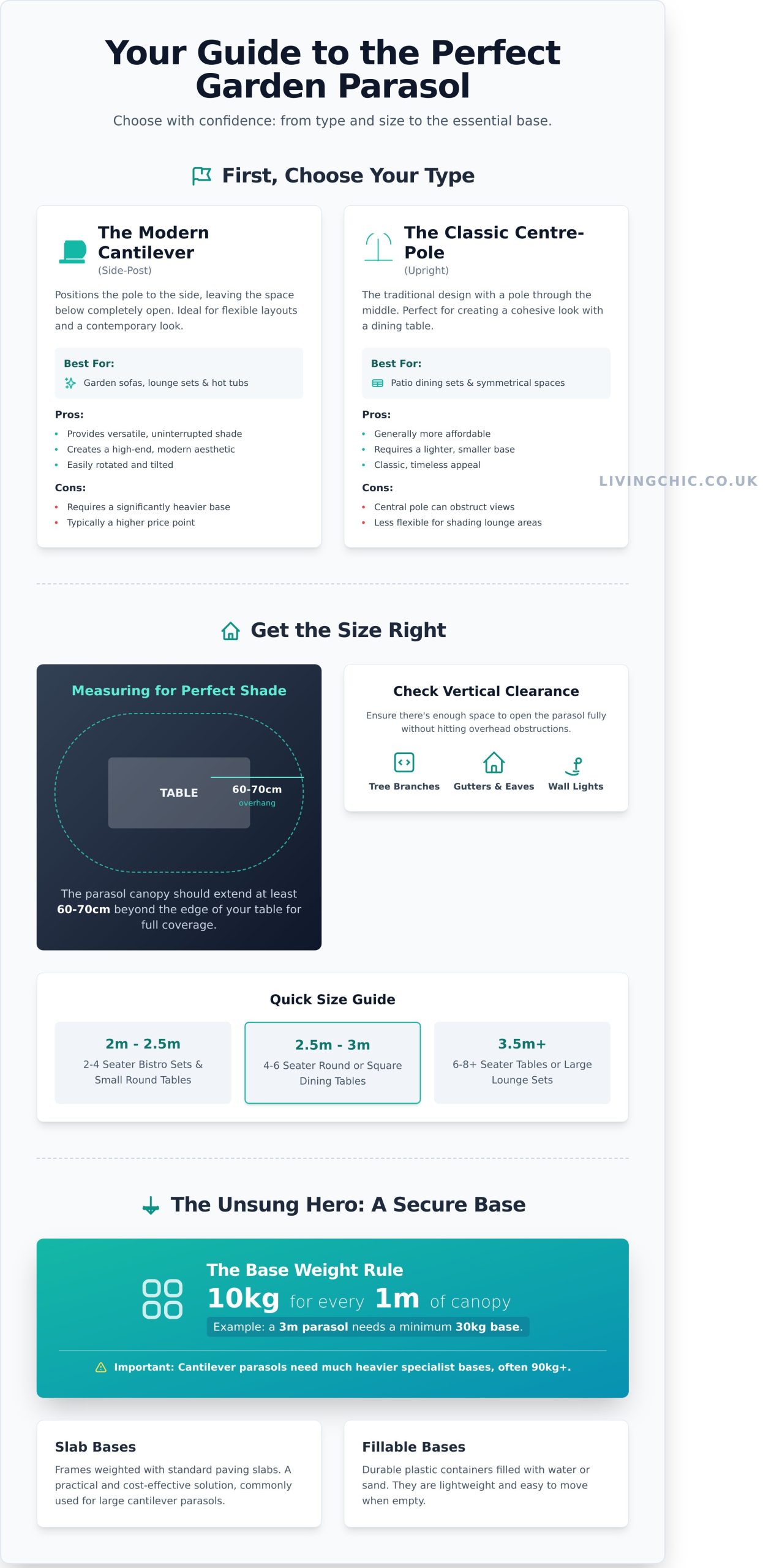
Also known as an upright or market umbrella, the centre-pole parasol is the traditional design most of us picture. Its straight pole is designed to fit neatly through the central hole in a garden dining table, creating a cohesive and elegant look for alfresco meals. They are a practical and often more budget-friendly choice for defined dining spaces.
- Best For: Patio dining sets and smaller, symmetrical spaces.
- Pros: Generally more affordable, requires a lighter base, and has a classic, timeless appeal.
- Cons: The central pole can obstruct views and conversation, and it offers less flexibility for shading lounge furniture or corner sofas.
The Modern Cantilever Parasol
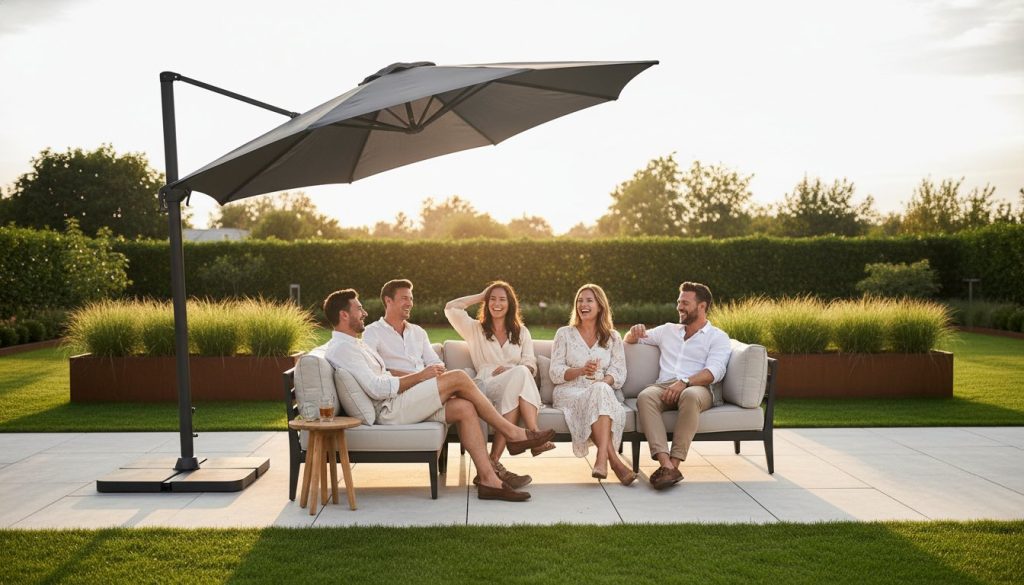
For ultimate flexibility and a chic, contemporary look, the cantilever parasol is an excellent investment. Also called an overhanging or side-post parasol, its pole is positioned off to the side, allowing the canopy to hang freely over your desired area. This clever design leaves the space below completely open and unobstructed, making it ideal for more dynamic garden layouts.
- Best For: Garden sofas, sun lounger sets, hot tubs, and children’s play areas.
- Pros: Provides versatile, uninterrupted shade; can be easily rotated and tilted; creates a high-end, modern aesthetic.
- Cons: Requires a significantly heavier and larger base for stability and typically comes at a higher price point.
While these are the two main types, you may also come across other great options like tilting parasols for all-day sun protection or wall-mounted versions, which are perfect for compact balconies or courtyards where floor space is at a premium.
Get the Size Right: How to Measure for Perfect Coverage
Choosing the right size for your garden parasol is the most important step in creating a comfortable and stylish outdoor space. A parasol that’s too small will fail to provide adequate shade, while one that’s too large can overwhelm your furniture and look out of place. Getting the measurements right ensures perfect function and a balanced, chic aesthetic for your patio or garden.
Measuring Your Table and Seating Area
The first step is to measure the area you want to shade. For dining sets, measure the length and width of your table. As a simple rule of thumb, the parasol canopy should extend at least 60-70cm beyond the edge of your table on all sides. This generous overhang guarantees that everyone seated remains comfortably in the shade, even as the sun moves across the sky. Don’t forget to account for the space needed when chairs are pulled out.
Considering Height and Clearance
Once you know the canopy diameter you need, check your vertical space. Before you buy, it’s crucial to measure the height available to avoid any issues. Look out for potential overhead obstructions such as:
- Overhanging tree branches
- House gutters or roof eaves
- Wall-mounted lights or security cameras
Ensure there is enough clearance to fully open the parasol without it hitting anything. You should also consider the folded height to make sure it can be stored neatly without causing an obstruction.
Parasol Size Guide
To make things simple, we’ve created a quick guide to help you match your furniture to the ideal canopy size. Use this as a starting point to find the perfect shade solution for your home and garden.
| Canopy Diameter | Suitable For |
|---|---|
| 2m – 2.5m | 2-4 seater bistro sets or small round tables |
| 2.5m – 3m | 4-6 seater round or square dining tables |
| 3.5m+ | 6-8 seater rectangular tables or larger lounge sets |
Ready to find your perfect fit? Explore our range of stylish garden parasols available in all sizes to transform your outdoor living area.
The Unsung Hero: Selecting a Safe and Secure Parasol Base
While the vibrant canopy and stylish frame of a garden parasol often get all the attention, the base is arguably the most critical component. It’s the anchor that ensures your shade provider is safe, stable, and secure, even when a breeze picks up. Choosing the wrong base can lead to tipping, damage, and potential accidents. Think of it as the foundation of your outdoor comfort – getting it right is essential for peace of mind.
How to Calculate the Right Base Weight
A simple rule of thumb ensures you get the right foundation for your parasol. As a minimum, you should aim for 10kg of base weight for every 1 metre of canopy diameter. For example, a 3m parasol requires at least a 30kg base. This is a guide for sheltered spots; if your garden is exposed or windy, always opt for a heavier base. Cantilever models, with their offset design, need specialist, much heavier bases, often starting from 90kg to provide proper counterbalance.
Types of Parasol Bases
Bases come in various forms, each offering different benefits in terms of style, practicality, and stability. Finding the perfect match depends on your parasol type and garden layout.
- Slab Bases: These frames are designed to be weighted with standard paving slabs. They are a practical and cost-effective solution, commonly used for large cantilever parasols that require significant weight to stay grounded.
- Fillable Bases: Typically made from durable plastic, these bases are light to move into position and can then be filled with water or sand. For maximum stability, we recommend using sand as it is denser and heavier than water.
- Solid Granite or Concrete Bases: Offering both style and substance, these solid bases are heavy, durable, and ready to use straight away. They often feature polished finishes that complement modern garden furniture and provide unwavering stability.
- In-Ground Bases: For a permanent and space-saving solution, an in-ground base is concreted into the ground. It offers the ultimate stability and frees up floor space on your patio, but does require installation.
Style & Substance: A Guide to Frames, Fabrics, and Features
Once you’ve decided on the right type of parasol for your space, it’s the details that truly elevate it from a simple shade-provider to a stylish and functional garden centrepiece. The right combination of materials and clever features ensures your investment looks great and is a pleasure to use for many summers to come. If you’re also in the process of furnishing your outdoor area, our ultimate guide to stylish garden and outdoor furniture will help you choose the perfect pieces to complement your new parasol.
Frame Materials: Wood vs. Metal
The frame is the backbone of your parasol, offering both structural support and aesthetic appeal. Each material has distinct advantages:
- Wood: Offering a timeless, natural elegance, hardwood frames are a classic choice that pairs beautifully with traditional garden furniture. They require a little more care, such as an annual oil treatment, to maintain their rich colour.
- Aluminium: A modern and highly practical option. Aluminium is lightweight, naturally rust-proof, and usually powder-coated for a sleek, durable finish in various colours. It’s the ideal choice for low-maintenance style.
- Steel: Prized for its superior strength, steel is an excellent choice for larger parasols or gardens exposed to more wind. To ensure longevity, look for a model with a robust powder-coating that protects it from the elements.
Canopy Fabrics and Colours
The canopy is your first line of defence against the sun and summer showers, and it’s also a chance to add a splash of personality to your patio.
- Polyester: As the most common fabric, polyester provides an excellent balance of value and performance. Most are treated with a PU (polyurethane) coating for water resistance.
- Olefin: A premium, hard-wearing fabric that offers enhanced resistance to fading from UV rays and is less prone to staining, making it a superb long-term investment.
- Sun Protection: For total peace of mind, check the UPF (Ultraviolet Protection Factor) rating. A rating of UPF 50+ is the gold standard, blocking over 98% of harmful rays.
- Colour Choice: Light colours like beige or grey are fantastic for reflecting heat, but they may show dirt more easily. Darker shades are better at hiding marks but can feel warmer underneath.
Essential Features to Look For
Modern design has introduced several smart features that make using your garden shade effortless.
- Crank Lift: A simple winding handle that allows you to open and close the canopy with minimal effort.
- Tilt Function: This indispensable feature lets you angle the canopy to block the sun as it moves across the sky, so you don’t have to reposition the entire parasol.
- 360-Degree Rotation: Primarily found on cantilever models, this allows the canopy to pivot around the base, often via a simple foot pedal, providing versatile shade exactly where you need it.
- Air Vent: A vent at the top of the canopy allows hot air to escape and, crucially, lets gusts of wind pass through, improving stability and preventing it from being caught like a sail.
Care and Maintenance: Making Your Parasol Last
A stylish garden parasol is an investment in your outdoor comfort and style. To ensure it remains a chic centrepiece for years to come, a little care and maintenance go a long way. Following these simple steps will protect your parasol from the elements and keep it looking its best season after season, transforming your garden into a perfect retreat.
Regular Cleaning and Upkeep
Keeping your parasol looking fresh is straightforward. For general cleaning of the canopy, simply brush off any loose dirt. For more stubborn marks like bird droppings or tree sap, follow these simple guidelines:
- Canopy Cleaning: Use a soft brush and a solution of mild soap and lukewarm water. Gently rinse with clean water and allow it to air dry completely before closing.
- Frame Care: Wipe down the frame and pole with a damp cloth to remove dust and grime.
- What to Avoid: Never use harsh chemicals, bleach, or a pressure washer, as these can strip protective coatings and weaken the fabric.
It’s also wise to periodically check that moving parts, like the crank handle or tilt mechanism, are functioning smoothly.
Protection and Winter Storage
Protecting your parasol from harsh weather is the key to its longevity. Always close it during strong winds to prevent the frame from bending or the canopy from tearing. When not in use, even on a sunny day, using a dedicated parasol cover is the best way to shield it from UV fading, rain, and dirt.
When autumn arrives, proper winter storage is essential:
- Ensure it’s dry: Before storing for winter, make sure the canopy is 100% dry to prevent mould and mildew from forming.
- Secure the canopy: Close the parasol tightly and use the attached ties to secure the fabric against the pole.
- Store in a safe place: Keep your parasol in a dry, sheltered area over winter, such as a garage, shed, or utility room. Storing it upright is often best to save space and prevent damage.
Your Stylish Summer Starts with the Right Parasol
Choosing the perfect garden shade is simple when you know what to look for. By matching the type-whether a versatile cantilever or a classic centre-pole-to your space, measuring for complete coverage, and securing it with a robust base, you ensure your new parasol is not just a stylish addition but a practical, long-lasting investment for your garden. To complete your outdoor living space, pairing your parasol with the best outdoor sofa for your patio will help you create a truly inviting and cohesive garden retreat. If you’re looking to furnish your entire outdoor area at the best possible price, our guide to the garden furniture sale UK reveals the insider secrets to finding the best deals on stylish, durable pieces. For those considering a complete outdoor furniture refresh, our comprehensive guide to rattan garden furniture covers everything you need to know about style, durability, and care to help you choose the perfect set.
Ready to transform your outdoor living area? At Living Chic, we offer a wide range of cantilever and centre-pole styles, all crafted from durable materials designed to withstand the unpredictable British weather. With free UK delivery on many items, creating your perfect garden oasis is just a click away. Find the perfect shade for your garden. Shop our stylish parasols now.
Frequently Asked Questions
What is the difference between a parasol and a garden umbrella?
In the UK, the terms ‘parasol’ and ‘garden umbrella’ are now largely interchangeable. Historically, a parasol was for sun protection (from the Latin ‘para’ for protect and ‘sol’ for sun), while an umbrella was for rain. However, modern, high-quality materials mean that most garden parasols offer excellent protection from both sun and light showers, making the distinction less important. The key is to choose the style and size that best suits your garden’s aesthetic.
Can I leave my parasol outside in the rain?
While most modern parasol canopies are treated to be shower-resistant, they are not fully waterproof. We strongly recommend closing your parasol during heavy rain and high winds to prevent damage to the frame and mechanism. To ensure its longevity and prevent mildew, always allow the canopy to dry completely before using a protective cover. A dedicated cover is the best way to keep your parasol in great condition season after season.
How do I stop my cantilever parasol from spinning in the wind?
A spinning cantilever parasol often indicates it needs more stability. First, ensure you are using the correct weight for your base; a heavy, well-secured base is the best solution. Many quality models also feature a locking mechanism or a foot pedal brake designed to prevent rotation. For added security on breezy days, you can also use specialist straps to secure the pole, but the correctly weighted base is always the most important factor.
Do parasols offer protection from UV rays?
Yes, providing shade from harmful UV radiation is a key function of a garden parasol. The level of protection is measured by its Ultraviolet Protection Factor (UPF) rating. A higher UPF rating means better protection; for example, a fabric with a UPF 50+ rating blocks over 98% of UV rays. When choosing your parasol, always check the product specifications for its UPF rating to ensure you can enjoy your garden safely and comfortably.
Can I use a parasol without a table?
Absolutely. While traditional centre-pole parasols are often stabilised by a garden table, they can be used as freestanding items with the correct base. It is crucial to use a heavy, sturdy base specifically designed for this purpose to prevent tipping. Alternatively, cantilever (or overhanging) parasols are designed to be used without a table, offering versatile and stylish shade over lounge sets, dining areas, or hot tubs.
What is the best material for a parasol canopy?
Polyester is an excellent and popular all-round choice, offering great durability and UV resistance at a competitive price. For superior performance and longevity, consider premium fabrics like olefin or acrylic. These materials provide exceptional resistance to fading, ensuring colours stay vibrant for longer. They also offer better water repellency and are more resistant to mould, making them a fantastic investment for a chic and durable garden setup.