
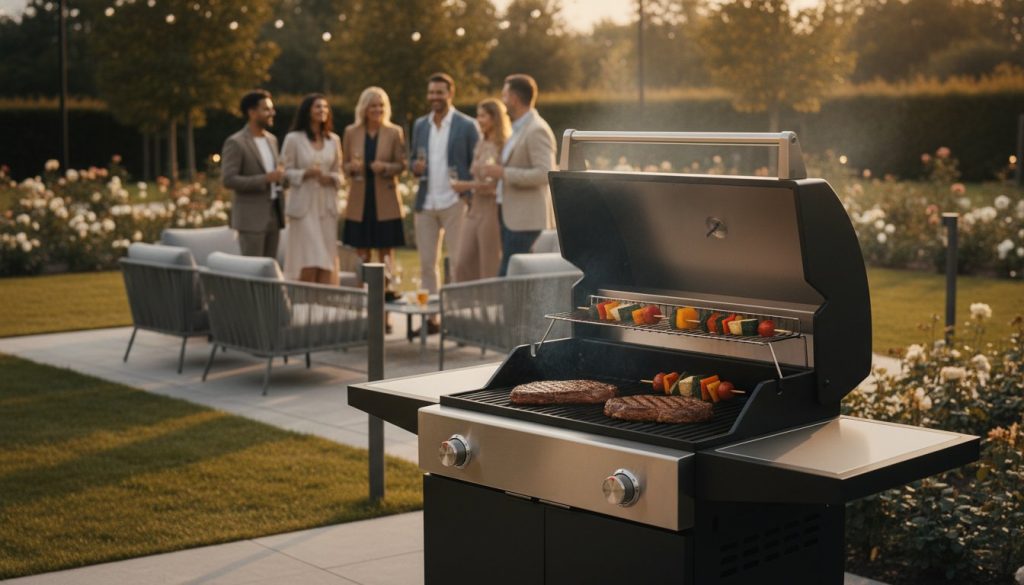
Picture it: a long summer evening, the scent of sizzling food, and friends gathered in your chic garden. Finding the perfect gas bbq to be the centrepiece of these moments should be exciting, but the search can be daunting. With so much technical jargon-from BTUs to burner configurations and grate materials-it’s easy to feel overwhelmed and worry about making a costly mistake on such an important purchase.
That’s where our expert 2026 buying guide comes in. We’re here to cut through the noise, demystifying the essential features and helping you understand what really matters for great-tasting results. We’ll help you decide which extras are genuinely useful versus just gimmicks, ensuring you invest wisely in a model that perfectly suits your cooking style.
From choosing the right size for your family to understanding how to create a truly stylish and functional outdoor cooking area, we have you covered. Read on to gain the confidence to select a high-quality gas barbecue that fits your budget and will make your garden the envy of the neighbourhood for years to come.
Why Choose a Gas BBQ? Convenience, Control, and Flavour
Imagine transforming your garden into an alfresco kitchen at a moment’s notice. With a gas BBQ, the dream of effortless weeknight grilling and spontaneous weekend entertaining becomes a stylish reality. Forget the long wait for charcoal to heat up; simply turn a knob, press an ignitor, and you’re ready to cook in minutes. This level of convenience and speed is a defining feature in the history of the gas grill and a primary reason for its enduring popularity in UK homes.
Beyond speed, the real magic of gas lies in total temperature control. Each burner can be adjusted independently, creating different heat zones on a single grill. This allows you to achieve a perfect, high-heat sear on steaks while gently cooking delicate vegetables at a lower temperature nearby. This precision eliminates guesswork, reduces the risk of burnt food, and ensures consistently delicious results every time.
When the feast is over, cleanup is refreshingly simple. There’s no need to manage hot coals or dispose of messy ash. A quick brush of the grates and a wipe-down of the exterior is often all that’s needed, leaving you more time to relax with family and friends.
And what about flavour? It’s a common myth that gas grills can’t produce that classic, smoky barbecue taste. In reality, as fats and juices drip from your food, they vaporise on the hot metal plates or “flavouriser bars” below the grates, infusing the food with a rich, smoky aroma. For those wanting an even more intense flavour, adding a smoker box with wood chips is a simple and effective upgrade.
Gas vs. Charcoal: The Great Debate
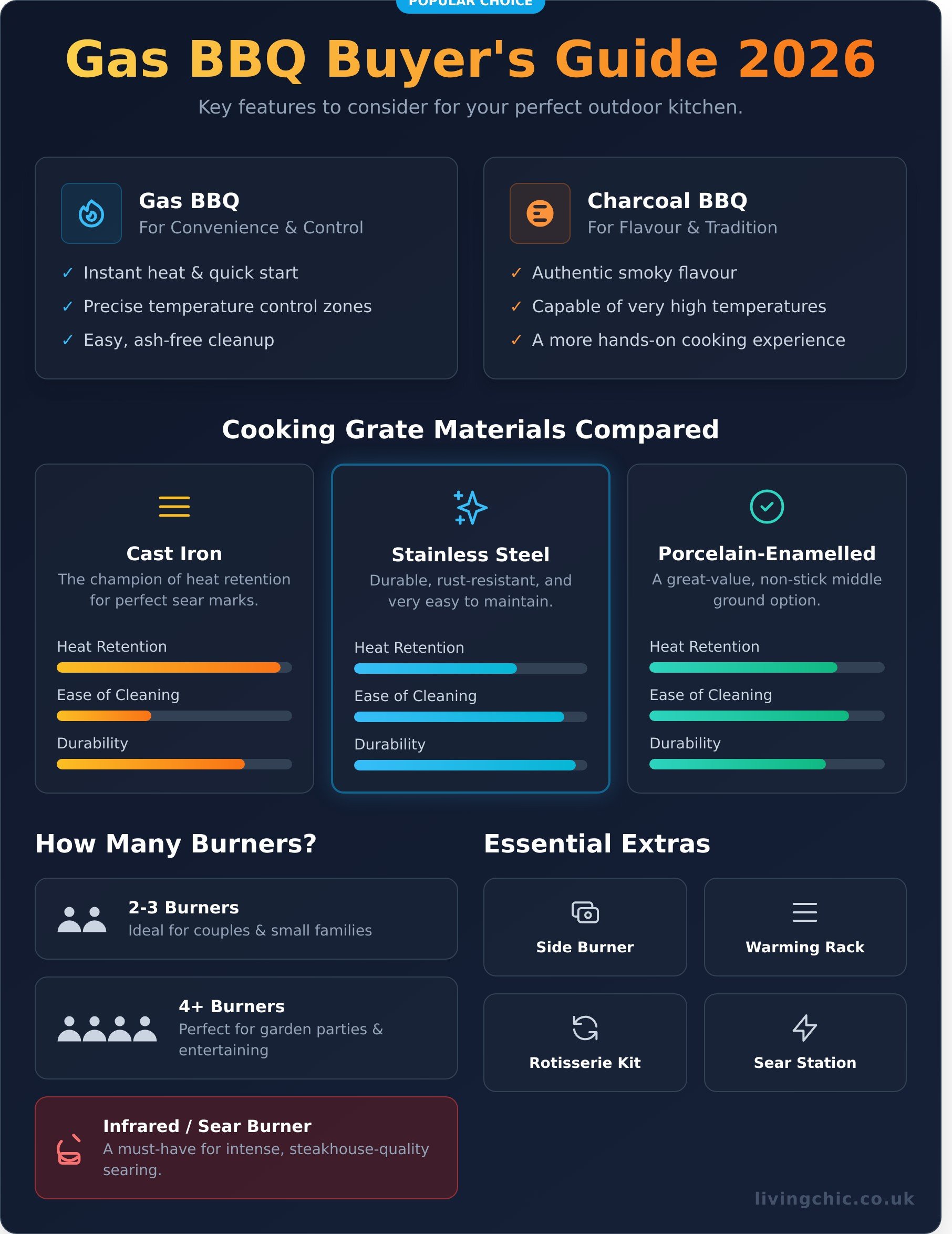
The choice ultimately comes down to your lifestyle. Gas is praised for its speed, convenience, and consistent heat, making it perfect for frequent, hassle-free grilling. Charcoal is loved for its potential for higher temperatures and authentic smoky flavour, but it requires more time and effort. For the undecided, hybrid models offer both fuel types in one unit. If you value ease and spontaneity, a quality gas bbq is the clear winner.
Understanding Your Fuel: Propane vs. Natural Gas
Before you buy, it’s crucial to know your fuel options. Most gas barbecues in the UK use propane (LPG), which comes in replaceable bottles available at petrol stations and garden centres, offering excellent portability. Alternatively, some models can be connected directly to your home’s natural gas supply. This is a permanent, convenient solution but requires an existing outdoor gas line. Most BBQs are designed for one fuel type, and converting a unit from propane to natural gas must be carried out by a qualified Gas Safe registered engineer.
Decoding the Jargon: A Simple Guide to Gas BBQ Features
Shopping for a new gas barbecue can feel like deciphering a secret code. With terms like BTUs, infrared burners, and various grate materials, it’s easy to get lost in the technical details. This guide will break down the most important features into simple terms, helping you understand how they impact your cooking and empowering you to compare models with confidence. Remember, the highest specification isn’t always the best choice; the perfect gas bbq is the one that fits your lifestyle and garden space.
Burners and BTUs: Power and Performance
The engine of your barbecue is its burner system. A model with two or three burners is ideal for couples or small families, providing ample space and control for everyday meals. If you love hosting garden parties, four or more burners will give you the flexibility and cooking area you need. You’ll often see power measured in BTUs (British Thermal Units). While a higher BTU number indicates greater heat output, it isn’t the whole story. A well-constructed BBQ with excellent heat retention will always outperform a poorly made one with high BTUs. While impressive power is great, it’s vital to handle it safely, so always follow the manufacturer’s guidelines and review official grill safety tips before your first cookout. For steak lovers, look for an infrared burner, which delivers intense heat for that perfect steakhouse sear.
Cooking Grates: Cast Iron vs. Stainless Steel
The surface your food cooks on makes a huge difference. The three most common types of cooking grates each offer distinct advantages:
- Cast Iron: The champion of heat retention. Cast iron grates get incredibly hot and stay hot, creating beautiful, professional-looking sear marks. They require a little maintenance (seasoning with oil) to prevent rust but reward you with unparalleled performance.
- Stainless Steel: Valued for durability and ease of care. These grates are rust-resistant and simple to clean, making them a practical, long-lasting choice for frequent grillers.
- Porcelain-Enamelled: A popular and great-value middle ground. Usually made from cast iron or steel with a non-stick porcelain coating, they offer good heat transfer and are relatively easy to clean.
Essential Extras: Side Burners, Warming Racks, and More
Beyond the basics, many models come with clever features that elevate your outdoor cooking. A side burner is perfect for simmering sauces or boiling potatoes without running back to the kitchen. A warming rack is an invaluable tool for keeping cooked food warm while you finish grilling the rest. For a touch of culinary theatre, a rotisserie kit allows you to create delicious, self-basting roasted chickens. Finally, a dedicated sear station provides an extra boost of intense heat, designed to create that perfect, flavourful crust on your steaks.
Finding the Right Size and Style for Your Garden
Choosing the perfect gas BBQ is an exciting step towards transforming your garden into a stylish hub for outdoor dining. But before you get carried away by shiny features, it’s essential to match your new grill to your physical space and cooking needs. A little planning ensures your barbecue not only performs brilliantly but also fits seamlessly into your patio or garden layout. To complete your outdoor entertaining setup, you might also want to consider adding a fire pit to create a chic and inviting garden retreat for those cooler evenings after the grilling is done. And to keep the party going even when temperatures drop, investing in a patio heater to extend your outdoor entertaining season is a smart addition to any garden setup.
Calculating Your Cooking Area
A common mistake is buying a grill that’s either too large for your space or too small for your guest list. As a simple guide, allow approximately 72 square inches of cooking surface per person. This means a grill with a 450-500 sq. inch cooking area is ideal for a typical family of four, giving you enough room for mains and sides. However, remember to measure the BBQ’s total footprint-including side tables and the space needed to open the lid. Ensure you have adequate clearance from fences, sheds, and foliage; you can find excellent official gas grill safety tips on proper placement and use. Ready to find your perfect fit? View our range of sizes to suit any garden.
Freestanding vs. Built-In BBQs
Gas barbecues come in several styles, each designed for a different kind of outdoor space. Understanding the main types will help you find the right match for your home and garden.
- Freestanding BBQs: The most popular choice, offering fantastic flexibility. These models can be moved around the patio and often come with handy cabinets for storing gas bottles and accessories.
- Built-In BBQs: For those dreaming of a permanent outdoor kitchen, a built-in model offers a sleek, integrated look. It’s a premium option for creating a dedicated, high-end entertaining zone.
- Portable BBQs: Compact and lightweight, these are perfect for small balconies, camping trips, or taking to a friend’s house. They offer the convenience of gas cooking on the go.
Materials and Durability: What to Look For
The material of your gas bbq affects its appearance, lifespan, and price. Here’s what to look for to ensure great quality and value for your investment:
- Stainless Steel: The premium choice for a reason. It’s highly durable, rust-resistant, and easy to clean, offering a sleek, professional look that lasts for years.
- Cast Aluminium: An excellent mid-range option that holds and distributes heat evenly. Crucially, it won’t rust, making it a fantastic, long-lasting choice for the unpredictable UK weather.
- Porcelain-Enamelled Steel: A popular and cost-effective option available in various stylish colours. The enamel coating protects the steel from rust and makes it simple to wipe down.
Beyond the main body, always check the quality of the frame, wheels, and lid. A sturdy, well-constructed feel is a clear sign of a barbecue that’s designed to last.
Gas BBQ Safety and Essential Maintenance
Choosing a gas BBQ is an investment in years of effortless outdoor dining and entertaining. To ensure every experience is safe and your grill performs at its best, a simple routine of safety checks and maintenance is essential. Following these expert tips will protect your investment, build your cooking confidence, and keep your BBQ ready for action whenever you are.
Your Pre-Cook Safety Checklist
Before you even think about lighting the burners, run through this quick checklist. It takes less than a minute and is the foundation of safe grilling.
- Position it correctly: Always place your BBQ on a flat, stable, and non-combustible surface. Avoid uneven patios or soft grass.
- Maintain a safe distance: Keep the unit at least 3 metres (approx. 10 feet) away from fences, sheds, trees, and house walls.
- Check the hose: Visually inspect the gas hose for any cracks, holes, or signs of brittleness before you turn on the gas cylinder.
- Never leave it unattended: A lit BBQ should never be left alone, especially if children or pets are in the garden.
How to Perform a Gas Leak Test
This crucial test should be performed whenever you connect a new gas bottle or if you suspect a leak. It’s simple and provides complete peace of mind.
Mix a solution of 50/50 washing-up liquid and water. With the gas cylinder turned on, brush the soapy water over the hose and all connection points. If you see bubbles forming, there is a leak. Immediately turn off the gas at the cylinder, tighten the connections, and test again. If bubbles persist, you may need to replace the hose or regulator.
A Simple Cleaning Routine for a Long-Lasting Grill
A clean grill not only looks better but also cooks more efficiently and lasts longer. Keeping your gas bbq in top condition is straightforward.
- After Every Cook: Once you’ve finished cooking, turn the burners to high for 10-15 minutes to burn off any residue. Then, use a quality wire brush to scrub the grates clean while they are still warm.
- Twice a Year Deep Clean: At the start and end of the season, give your BBQ a thorough clean. With the gas off, remove the grates and heat tents (flame tamers) and scrub them. Clean out any debris from the main cookbox and check the burner tubes for blockages.
- Winter Storage: Before storing for winter, perform a deep clean. Ensure the BBQ is completely dry, disconnect the gas bottle (which should be stored upright and outdoors), and protect your grill with a durable, weather-resistant cover.
Proper care ensures your BBQ is always ready for the next sunny day. Explore our range of high-quality BBQ accessories and covers to protect your grill all year round.
Find Your Flame: Your Perfect Gas BBQ Awaits
Choosing the perfect grill doesn’t have to be complicated. As you’ve discovered, the beauty of a modern gas bbq lies in its unmatched convenience, precise temperature control, and the ability to deliver consistently delicious results. By understanding key features like burner types and BTUs, and considering the ideal size and style for your garden space, you are now fully prepared to invest in an appliance that will become the heart of your outdoor entertaining. Remember, a little routine maintenance goes a long way in guaranteeing safety and performance for years to come.
Now that you’re an expert, the exciting part begins. It’s time to find the model that will transform your patio into the ultimate alfresco dining destination. At Living Chic, we’ve curated a collection to help you do just that. Discover our stylish and high-performance Gas BBQs and explore a wide range of sizes and styles from top brands. With our competitive prices and free UK delivery on most orders, your perfect summer centrepiece is just a click away.
Frequently Asked Questions
Can you get a good smoky flavour from a gas BBQ?
Absolutely. While charcoal provides a distinct flavour, you can easily achieve a rich, smoky taste on a gas BBQ. The secret is a smoker box. Simply fill a small metal box with pre-soaked wood chips-like hickory for meats or applewood for poultry-and place it directly on the grill grates above a burner. As it heats, it will release aromatic smoke, infusing your food with that delicious, authentic barbecue flavour. It’s the perfect way to get the best of both worlds.
What are BTUs and how many do I need in a gas grill?
BTU stands for British Thermal Unit, and it measures a grill’s total heat output. However, a higher BTU number doesn’t always mean a better BBQ. A well-designed grill with quality construction and excellent heat retention can cook more efficiently with fewer BTUs. As a general guide, look for a model that offers around 80-100 BTUs per square inch of primary cooking space. This ensures your grill heats up quickly and maintains a consistent temperature for perfect results every time.
How often should I deep clean my gas BBQ?
For optimal performance and longevity, we recommend giving your gas BBQ a deep clean at least twice a year: once at the beginning of the grilling season and once before storing it for winter. This involves cleaning the burners, interior cook box, and thoroughly scrubbing the grates. For regular maintenance, simply brush the grates clean after each use while they’re still warm. This simple routine prevents build-up, ensures better-tasting food, and keeps your stylish barbecue in top condition.
How long does a standard propane gas bottle last?
The lifespan of a propane bottle depends on its size and how you cook. In the UK, a standard 5kg Patio Gas bottle will typically provide 7 to 10 hours of cooking time on a medium-sized grill. A larger 13kg bottle can last for 20 hours or more. This can vary based on your grill’s heat settings and how many burners you use. To avoid running out mid-feast, it’s always a great idea to have a spare bottle on hand.
Is it difficult to assemble a new gas BBQ?
Most modern gas barbecues are designed for straightforward home assembly. They come with clear, step-by-step instructions and all the necessary parts, which are often labelled to avoid confusion. While you can usually manage it alone, having a second person to help with lifting heavier components can make the process smoother and quicker. Set aside one to two hours, follow the guide carefully, and you’ll be ready to start grilling and transforming your outdoor dining experience in no time.
Can I use charcoal in a gas BBQ?
No, you must never use charcoal in a gas BBQ. They are not designed for it, and doing so is extremely dangerous. The intense heat and ash produced by charcoal can permanently damage crucial components like the gas burners, valves, and hoses, creating a serious fire hazard. Gas grills are specifically engineered for the clean, controlled heat of propane or natural gas. If you love both cooking styles, consider a quality hybrid grill or having one of each.
What’s the best way to store my gas BBQ during winter?
To protect your investment during the colder months, proper storage is key. First, give your barbecue a thorough deep clean to remove any grease and food residue. Disconnect the propane bottle and store it upright in a well-ventilated area, away from the BBQ itself. Cover your grill with a high-quality, weather-resistant cover to protect it from moisture and debris. If you have space, storing it in a dry shed or garage offers the best protection against the harsh UK winter.
Can I cook pizza on a gas BBQ?
Yes, with the right accessories such as a pizza stone, you can achieve excellent results cooking pizza on a gas BBQ. However, if you’re serious about serving restaurant-quality pizza in your garden, you may want to explore a dedicated pizza oven — our buying guide covers gas, wood-fired, and multi-fuel options to help you find the perfect model for your outdoor cooking setup.